





 Portuguese
  English
  Spanish
  4 min of reading
  0 comments


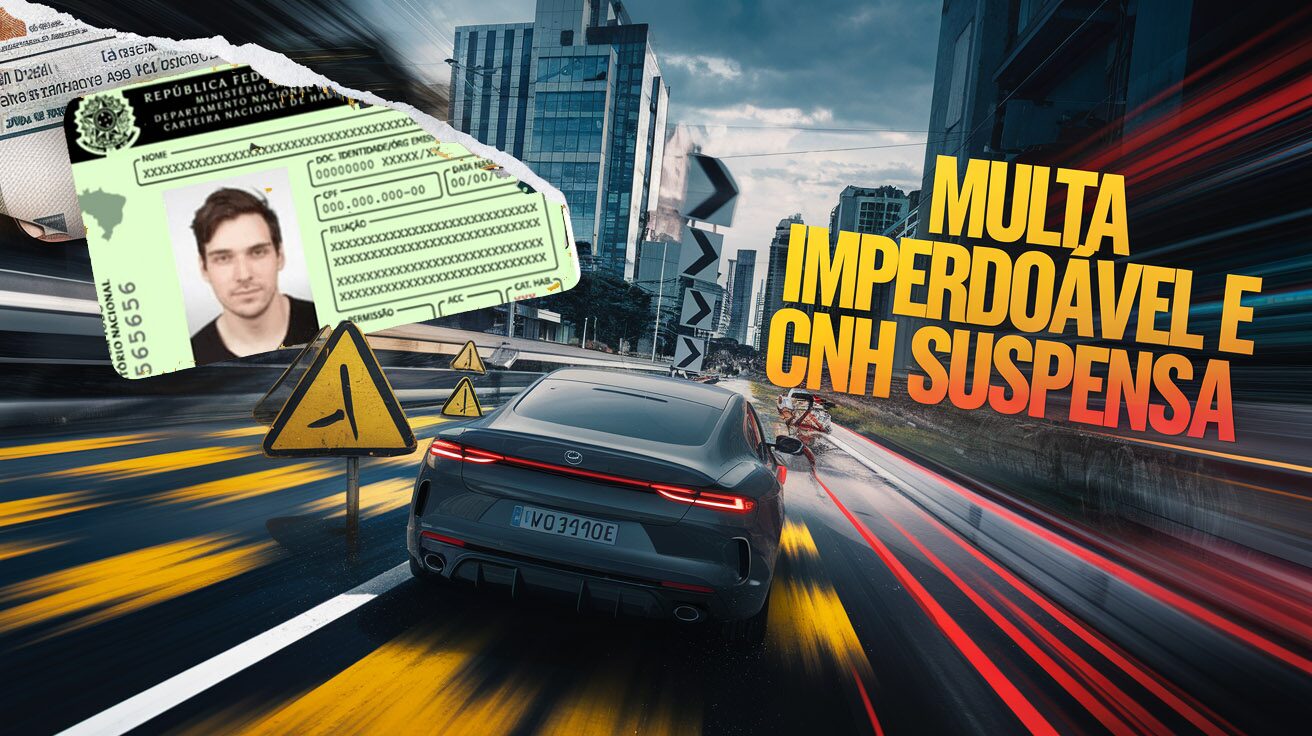
Dangerous Overtaking May Cost Much More Than Expected. A Bill Under Discussion Wants to Harden Penalties and Change Behavior on the Roads, Forecasting Penalties That Go Beyond Fines and Include Long Suspension of the Driver License.
A proposed new traffic law, still under consideration, promises to provoke significant changes in the current legislation.
If approved, it will establish heavy fines and suspension of the National Driver’s License (CNH) for up to two years for drivers who engage in dangerous overtaking, a growing problem on Brazilian highways.
The fine for this infraction would be R$ 2,934.70, which corresponds to ten times the base amount of the severe fine.
-
The government requests the Federal Revenue Service for a new system to automate the income tax declaration, reducing errors, time, and bureaucracy for millions of Brazilians.

-
Friends have been building a small “town” for 30 years to grow old together, with compact houses, a common area, nature surrounding it, and a collective life project designed for friendship, coexistence, and simplicity.

-
Pix in installments, international Pix, and contactless payment without internet: the Central Bank revealed the new features coming to the tool that is already used by almost every adult in Brazil.

-
This small town in Germany created its own currency 24 years ago, today it circulates millions per year, is accepted in over 300 stores, and the German government allowed all of this to happen under one condition.


Moreover, the infraction would result in suspension of the right to drive for 12 months and seven points on the driver’s license.
If the driver reoffends within one year, the penalty will be doubled, meaning the suspension could be extended to 24 months.
This measure is part of the Bill 1405/24, which aims to amend the Brazilian Traffic Code and characterize dangerous overtaking or reckless driving as a maneuver that puts imminent risk to road safety, life, or the physical integrity of individuals.
The proposal is presented as a response to a growing problem, with the goal of reducing the number of accidents involving these infractions.
Alarming Statistics Reveal the Urgency of This Change
Studies from the National Department of Traffic (Denatran) show that the number of infractions for prohibited overtaking has increased dramatically.
In 2023, over 2 million infractions of this kind were recorded.
In the first half of 2024, the number had already surpassed 1.1 million, indicating a growing trend that worries authorities and traffic safety experts.
The World Health Organization (WHO) emphasizes that stricter penalties have been shown to be effective in reducing accidents, especially when combined with public policies that promote driver awareness.
Expected Changes for Brazilian Traffic with the New Law
If approved, the Bill will bring considerable changes to the dynamics of Brazilian traffic.
Experts claim that with the strict enforcement of the new legislation, monitoring on highways and urban roads will be significantly intensified, allowing for more efficient detection of infractions such as dangerous overtaking.
The main expectation is for a change in driver behavior, who, faced with the severe duration of penalties, may feel more motivated to adopt more responsible and cautious driving.
Among the expected impacts of the new law are:
- Increased Monitoring: The new legislation will require more monitoring, with more surveillance cameras and traffic agents on the roads.
- Change in Driver Behavior: The fear of harsher sanctions may lead to safer and more conscious driving by motorists.
- Reduction in Accidents: With the elimination of dangerous overtaking, a decrease in collisions and deaths on the road is expected.
The imposition of harsher penalties has proven effective in various countries around the world, directly influencing the behavior of drivers, who tend to be more cautious with the possibility of severe punishments.
What Is Still Missing for the New Law to Take Effect?
Currently, the Bill 1405/24 is still under consideration in the Chamber of Deputies and will be analyzed by specialized committees, such as those on Transportation and Traffic, Constitution and Justice, and Citizenship.
After that, the proposal will still need to be approved by the Senate before proceeding to presidential sanction.
There is still no forecast for when the law might take effect, which generates some anxiety among drivers and industry experts.
The approval of the measure still faces heated discussions, with some questioning the effectiveness of isolated punitive measures without being accompanied by more comprehensive structural measures.
Despite this, the measure is seen as an important step toward reducing traffic accidents in Brazil, especially focusing on one of the most common and dangerous infractions: dangerous overtaking.
Challenges to the Implementation of the New Traffic Law
Although the proposed new legislation is widely supported by experts, it also faces significant practical challenges.
Some critics argue that stricter penalties alone are not enough to solve the structural problems of Brazilian traffic.
They highlight the need for continuous investment in traffic education and road infrastructure for change to be lasting.
Additionally, the capacity for enforcement is a major concern.
The lack of adequate technology, such as monitoring cameras at strategic points, and limited resources for enforcing the laws can hinder the effectiveness of the new measure.
If resources for enforcement are not expanded, infractions may continue to occur, undermining the effectiveness of the new penalty system.
The Role of Traffic Education and Road Infrastructure
Many experts argue that for the new law to truly take effect, it is essential that it is accompanied by a robust traffic education program.
Instructing drivers on the importance of respecting traffic laws and promoting a culture of road safety in schools and communities is vital for creating long-term changes.
Improving road infrastructure is also another fundamental point.
Poorly marked highways, lack of safety lanes, and various risk points can increase the likelihood of accidents, even with the new legislation.
Investments in safer roads, effective signage, and better maintenance of the roads are essential to ensure that drivers have the necessary conditions to drive safely.
The big question remains: Will stricter penalties be enough to change the behavior of Brazilian drivers, or is more needed to reduce accidents on the country’s roads?








Seja o primeiro a reagir!