





 Portuguese
  English
  Spanish
  3 min of reading
  0 comments


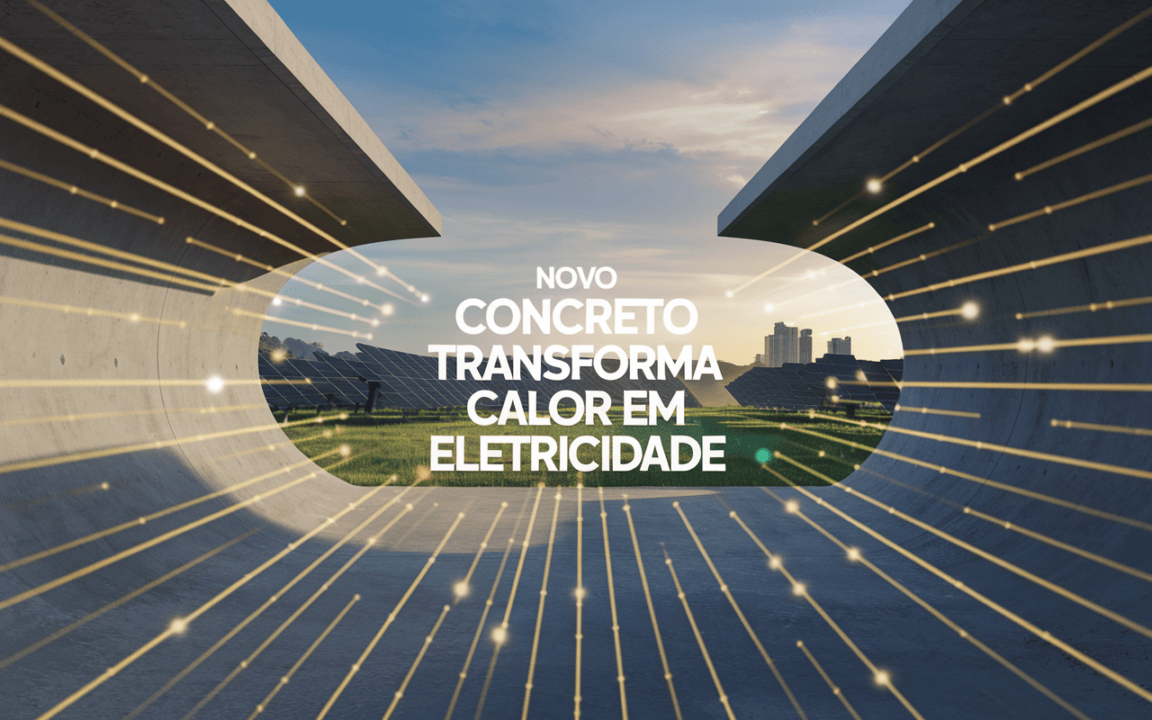
Innovative Material Combines Cement with Hydrogel and Can Transform Civil Construction with Sustainable Solutions and Electricity Generation.
Researchers from Southeast University in China have developed a new type of thermoelectric concrete capable of transforming heat into electrical energy. The material was inspired by natural structures, such as plant stems, and utilizes a combination of cement with hydrogel, creating a solution that fits into the new trends of sustainable materials in construction.
The research, led by Professor Zhou Yang, was recently published and gained international attention for proposing a viable and low-cost alternative to integrate energy generation systems directly into building structures. According to the scientists, the material can be used in floors, walls, and other surfaces exposed to heat, promoting the continuous generation of electricity from the temperature difference between the environment and the interior of the buildings.
How Thermoelectric Concrete Works
The thermoelectric concrete developed in China is based on a concept known as the Seebeck effect, which allows for the generation of electric current when there is a temperature difference between two sides of a material. In the case of this new composite, the innovation lies in how the cement is structured along with the hydrogel, forming layers that mimic the conductive tissues of plants.
-
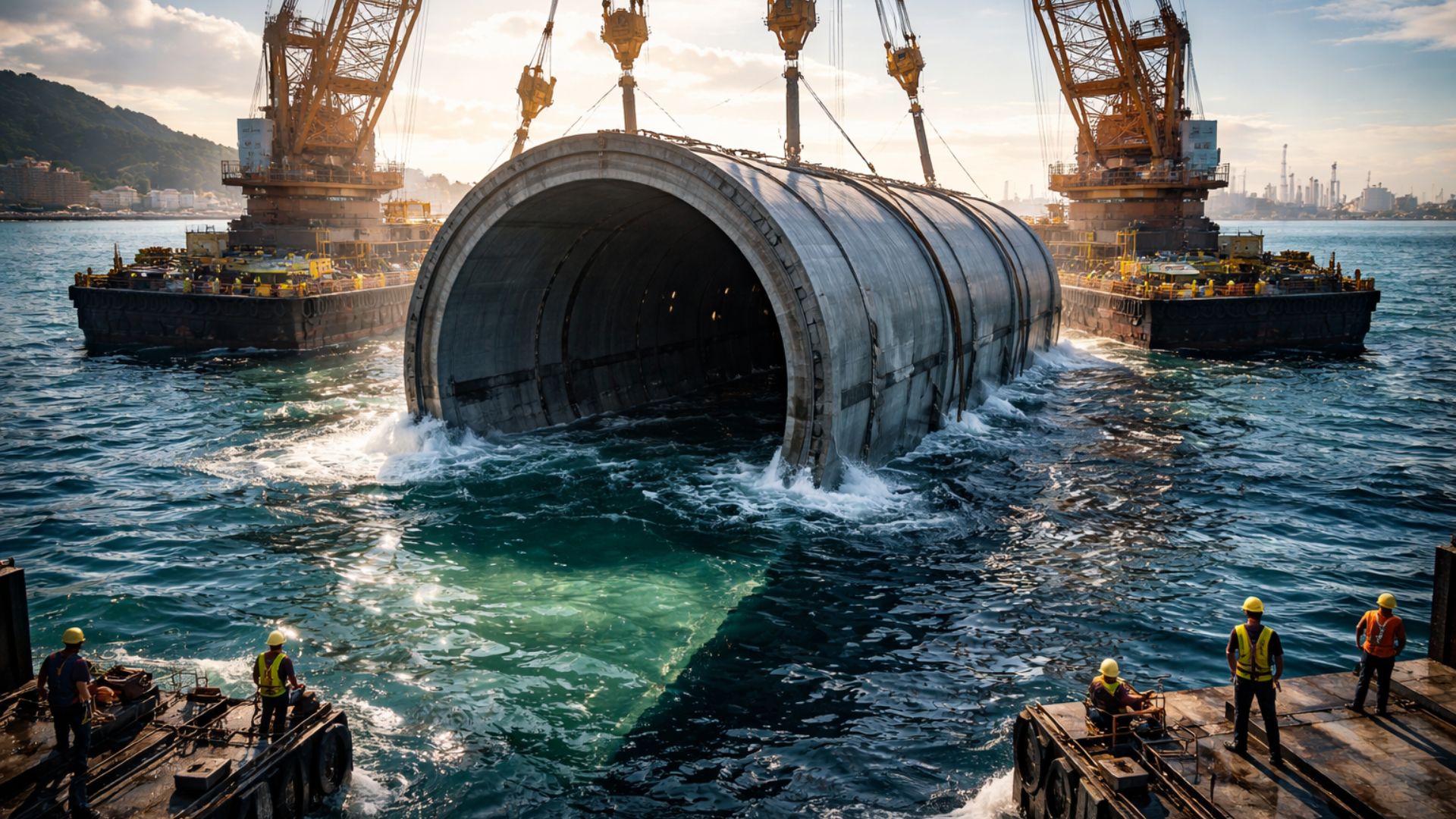
The government opens the vault and deposits R$ 2.6 billion for the construction of Brazil’s first underwater tunnel, with a length of 1.5 km, 870 m under the sea, a total project cost of R$ 6.8 billion, and a 30-year concession.
-
Only 46 meters remain for Brazil and Paraguay to connect via the Bioceanic Route bridge, the project that will link the Atlantic to the Pacific by land and change the logistical map of four countries in South America.

-
The bridge that holds the largest stone railway arch in the world: built over 100 years ago, destroyed in the war, and rebuilt to continue operating to this day, it still carries trains over the Soča River in Slovenia.

-
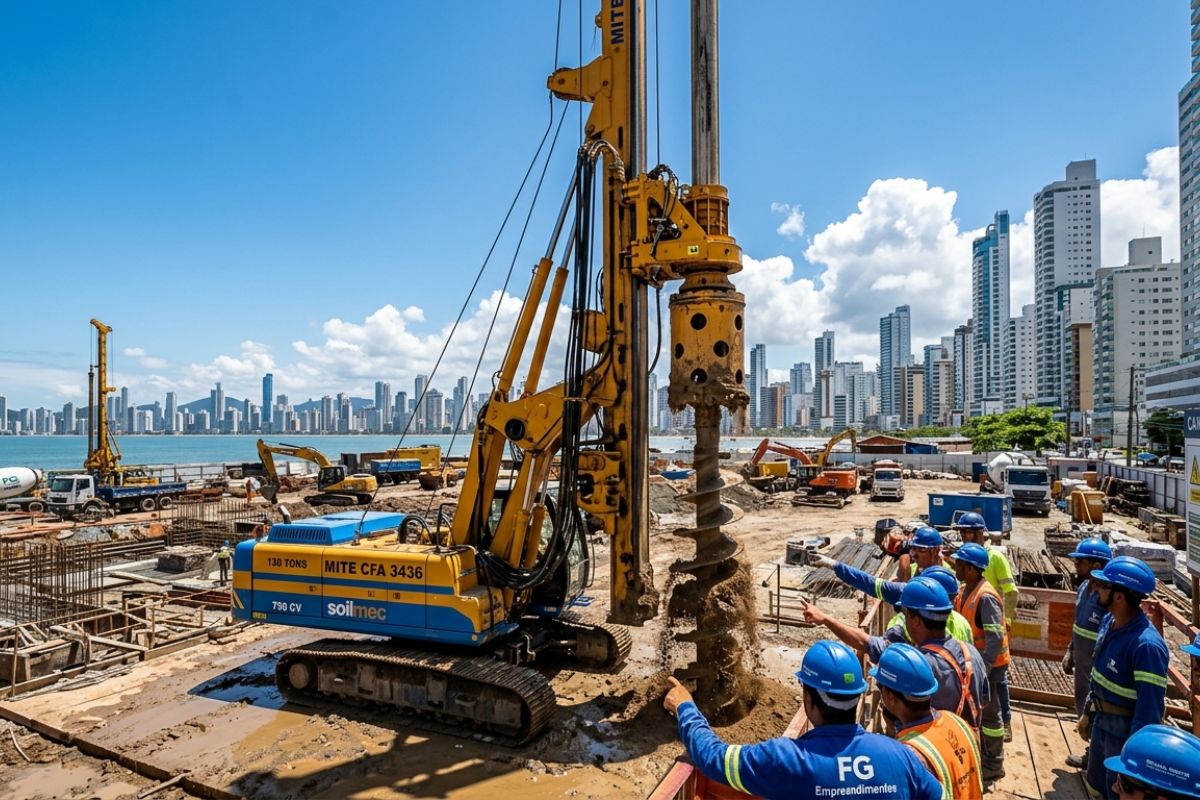
Italian giant of 130 tons arrives at the Senna Tower construction site and accelerates foundations: Mite CFA 3436 drills up to 50 m, 750 hp engine, investment of R$ 20 million, unique in Latin America.



This multilayer structure allows for the transport of ions and creates an efficient separation of charges, continuously generating electric energy while the heat dissipates. The inspiration came from nature, specifically from how plant stems transport water and nutrients. The same principle was applied to the concrete to take advantage of thermal changes common in urban environments.
Potential Use in Sustainable Buildings
The new material can be directly applied to floors, facades, and walls exposed to the sun, contributing not only to thermal comfort but also to local renewable energy production. This energy can be used to power sensors, automation systems, or low-consumption lighting, for example.
The thermoelectric concrete fits into the proposal for sustainable materials in construction, as it utilizes heat sources already present in the environments without the need for external or complex systems. It also has potential for use in areas with large temperature variations, which broadens its applicability in different regions.
Use of Hydrogel and Environmental Impact
The hydrogel present in the new compound acts as a medium for ion conduction and also helps in energy storage, thanks to its porous structure and water retention capacity. This enables the material to function as a kind of battery integrated into the concrete.
The use of cement, a material already widely employed in civil construction, facilitates the adaptation of this technology to existing construction processes. The partial replacement of traditional cement with this compound can also help reduce the carbon footprint of construction, especially when combined with thermal reuse practices.
Applications and Challenges
Despite positive results in the lab, the thermoelectric concrete still needs to undergo validation stages in external environments and at a larger scale. The Chinese researchers state that the next step is to test the performance of the material in real buildings, especially regarding durability, electrical stability, and mechanical resistance.
Other challenges include the cost of producing hydrogel at an industrial scale and the integration of this type of system with the technical and regulatory standards of the construction and energy sectors.
Nonetheless, the study represents progress in the search for sustainable materials in construction, reinforcing China’s role as one of the global hubs for innovation in environmental technologies and energy efficiency.
With increased investments in research and technological adaptation, the use of this material could become common in residential, commercial, and public buildings in the coming decades. Countries with hot climates and high solar incidence, such as Brazil, could also benefit from the application of this type of technology, especially in projects aimed at urban sustainability.
Sources: SynBioBeta









-

Uma pessoa reagiu a isso.