





 Portuguese
  English
  Spanish
  4 min of reading
  0 comments


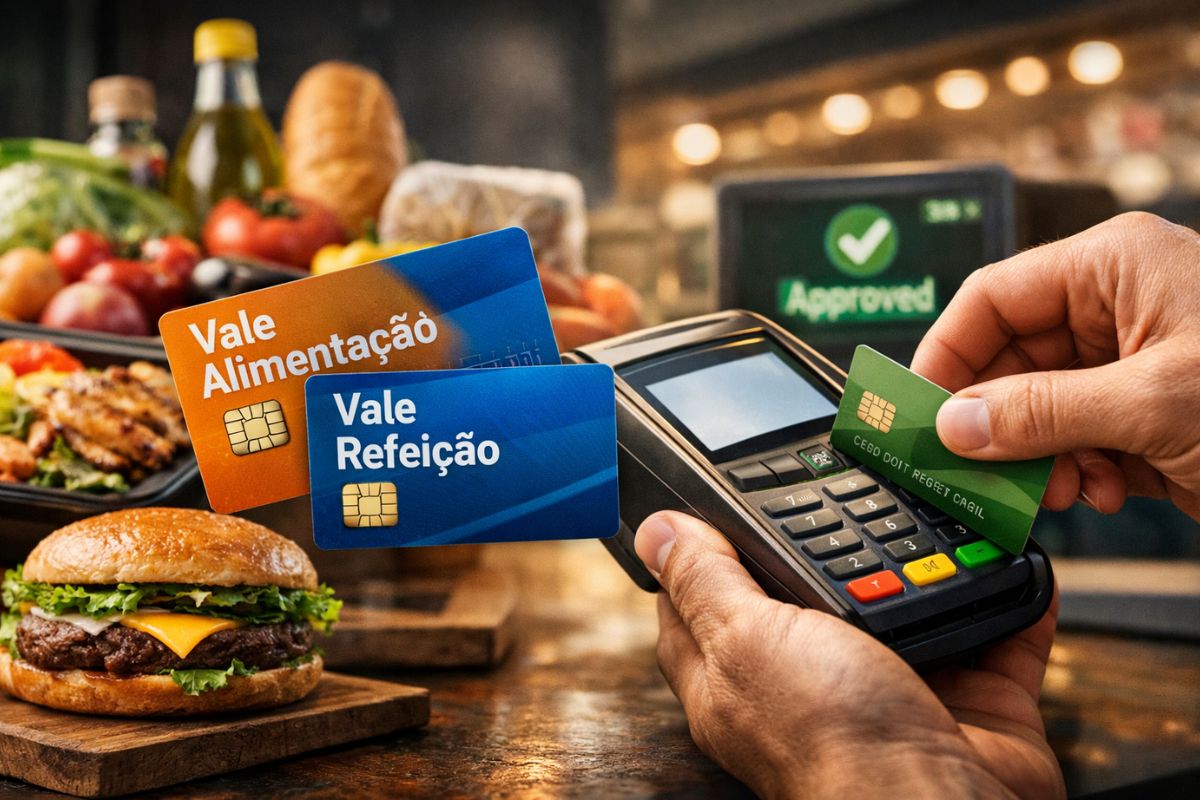
The Change Started in February, Advances in May, and Aims to Complete the Integration in November: The Food and Meal Vouchers Should Circulate with Fewer Barriers, a Cap on Fees, Faster Transfers to Establishments, and the End of Restrictions That Currently Limit Where Millions of Workers Can Buy Food.
The food and meal vouchers are undergoing a reform that directly impacts the daily lives of those who rely on the benefit to eat out or stock their pantry. The main promise is clear: reduce payment rejections by gradually allowing PAT cards to work on any payment terminal.
In practice, the change has been organized in stages and combines network opening, fee limits, and new transfer deadlines. The Declared Goal Is to Reduce Distortions of the current model, increase competition among operators, and provide more freedom of use for workers, without altering the value of the benefit or its purpose.
Opening Schedule: February, May, and November

The new rules have already taken effect in February, but the most noticeable effects for most users are expected to appear over the coming months. The Implementation Is Not Instant: it has been designed to occur in phases, with technical and operational adjustments to the PAT payment system.
-
The government requests the Federal Revenue Service for a new system to automate the income tax declaration, reducing errors, time, and bureaucracy for millions of Brazilians.

-
Pix in installments, international Pix, and contactless payment without internet: the Central Bank revealed the new features coming to the tool that is already used by almost every adult in Brazil.

-
Mercado Livre has just started selling medications with delivery in up to three hours to your door, and this move could completely change the way Brazilians buy medicines on a daily basis.

-
In Dubai, rising tensions from the war in the Middle East are causing super-rich individuals to leave the Gulf and direct their fortunes to a new financial refuge in Asia.


Starting in May, the progressive opening of brands begins, a stage where cards stop being tied to a single capture structure. The official expectation is to complete the full integration in November, when interoperability should be active nationwide. If the schedule is met, the trend is that workers will have fewer surprises at the checkout and more predictability about where they can pay.
Who Gains Flexibility and Who Needs to Adapt
For workers, the most visible impact is in the user experience. Today, even with available balances, many payments fail because the establishment operates with a different arrangement than the presented card. With Interoperability, the Logic Changes from “Where the Card Is Accepted” to “Where Food Is Available”, which expands choices in restaurants and supermarkets.
For establishments, the change involves opportunity and adaptation. By reducing dependence on closed networks, the market tends to become more competitive among acquirers and operators.
This may increase the number of locations able to accept the benefit, but it also requires a review of contracts, acquiring systems, and financial routines to keep up with the new fee and timeline rules.
What Happens with Closed Networks and the 500,000 Worker Limit
Closed networks, where the card only works at establishments linked to a specific operator, do not disappear immediately. They remain allowed for operators serving up to 500,000 workers.
This Numerical Cutoff Acts as a Regulatory Divider Between Smaller Operations and Structures with Greater Market Power.
Above this limit, the requirement changes: the system must become open within 180 days. In practice, this pressures larger operators to migrate to a more interoperable environment, with fewer entry barriers for establishments and greater choice possibilities for contracting companies and end users.
The expected effect is to reduce concentration and increase competition without abruptly interrupting ongoing operations.
How Much Does It Cost to Operate and How Long Does It Take for the Money to Reach the Account
The decree also affects the cost of operation for those selling meals and food. A cap of 3.6% has been set for fees charged to restaurants and supermarkets, along with a limit of 2% for interchange fees.
These Percentages Address a Sensitive Point in the Sector, Especially in Businesses with Tight Margins.
In the financial flow, the rule of transfers within 15 calendar days alters the cash dynamics. Previously, many establishments waited about a month to receive sales made with benefits.
Shortening this timeline can relieve pressure on working capital, reduce the need for short-term credit, and improve planning for purchases, payroll, and suppliers, especially for small business owners.
What Does Not Change in the Benefit and Why the Review Was Done Now
Although the reform is broad in terms of use and processing, the content of the benefit remains the same. There Is No Change in the Amount Received by Workers, and use continues to be restricted to the purchase of food and meals.
In other words, the update regulates infrastructure and the market, not transforming the benefit into free income for other purposes.
Another relevant point is the prohibition of financial bonuses between employers and operators, a measure presented to curb commercial distortions.
The Review Occurs in the Context of 50 Years of PAT, which will be completed in 2026, and is justified as a necessary modernization in light of the advancement of digital payments and the scale the program has reached in the country.
The redesign of the food and meal vouchers combines three fronts simultaneously: greater acceptance of the cards, cost limits for the food retail sector, and shorter transfer deadlines.
If the schedule is executed as planned, November is expected to mark a more concrete turning point for those who currently face payment refusals even with available balances.
In your daily life, in what type of place does your benefit fail the most today: neighborhood market, restaurant, bakery, or another business? And for those who run a business, would the 15-day timeline already make a real difference in cash flow? Share your concrete experience; this portrait helps show if the change will work in practice or remain just a promise.









-

Uma pessoa reagiu a isso.