





 Portuguese
  English
  Spanish
  4 min of reading
  0 comments


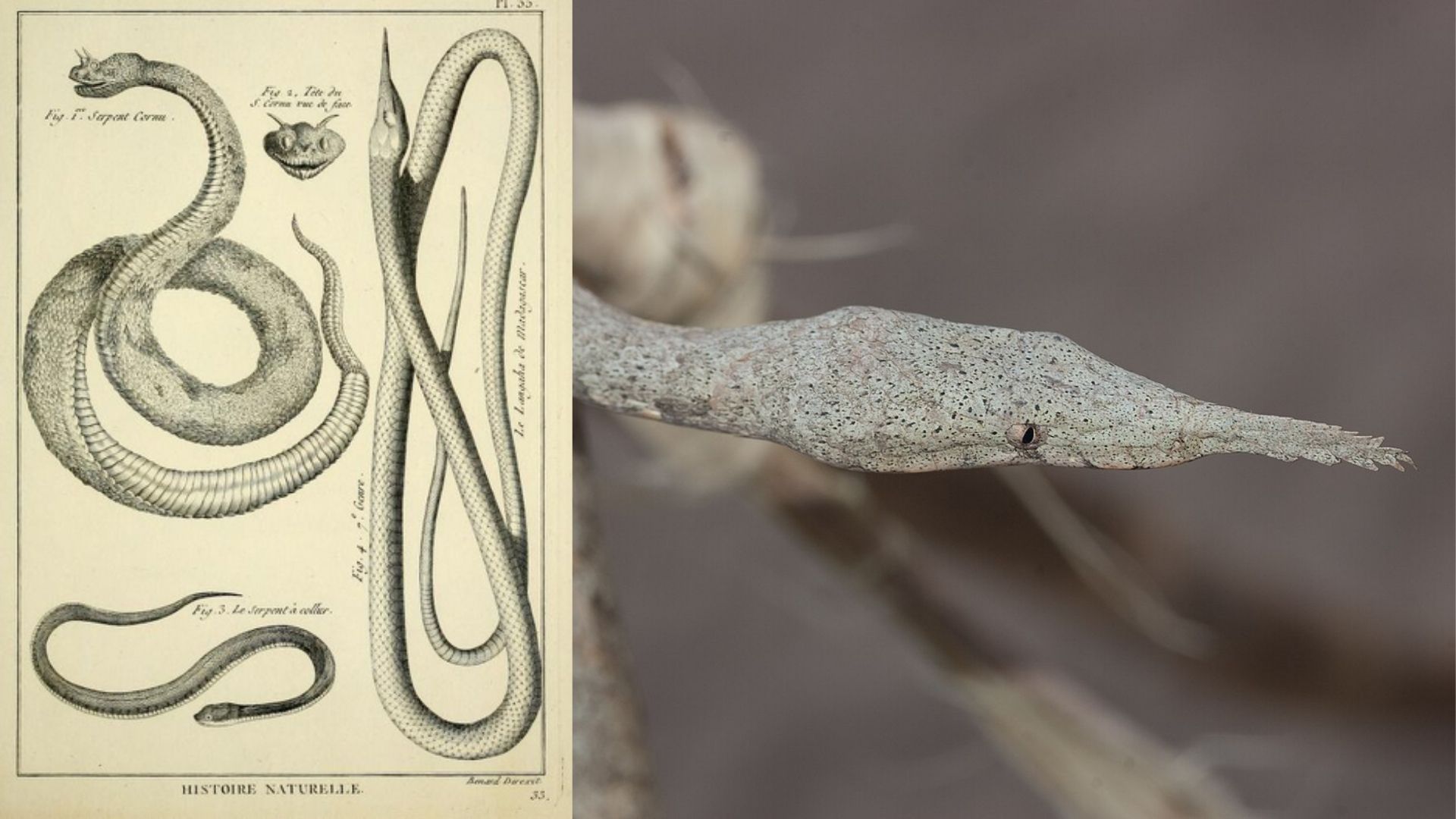
The Mysterious Noseless Snake, Scientifically Known as Langaha madagascariensis, Exhibits Extreme Differences Between Males and Females and a Unique Nasal Appendage That Seems to Defy Evolution.
Known by the scientific name Langaha madagascariensis, this species native to the tropical and dry forests of the African island combines bizarre anatomical features, advanced camouflage strategies, and almost theatrical predatory behavior, according to the scientific database iNaturalist.
A Snake with the Strangest “Nose” in the Animal Kingdom
ARTICLE CONTINUES BELOWSee also
Without help and without heavy machinery, a woman builds a house from scratch with stone, wood, and cement, erects a chimney, creates a complete leisure area, and transforms an empty lot into her dream home.

Couple transforms abandoned house after years of being closed; residence was overgrown with weeds, had a green pool, and a deteriorated structure in the interior of Rio de Janeiro.

Hidden marks on the walls of the site associated with the Last Supper of Jesus for centuries have been deciphered in Jerusalem, revealing medieval inscriptions left by pilgrims, European nobles, and travelers from the Middle East.

One of the most important lakes in the United States for birds, the balance of nature, and the climate has dried to historic levels, leaving boats stranded, revealing salt flats, and showing how the lack of water can transform an entire landscape.

Described for the first time in 1790 by the French naturalist Pierre Joseph Bonnaterre, the Langaha madagascariensis, also known as the leaf-nosed snake or Madagascar leaf-nosed snake, looks like it came straight out of a science fiction story.

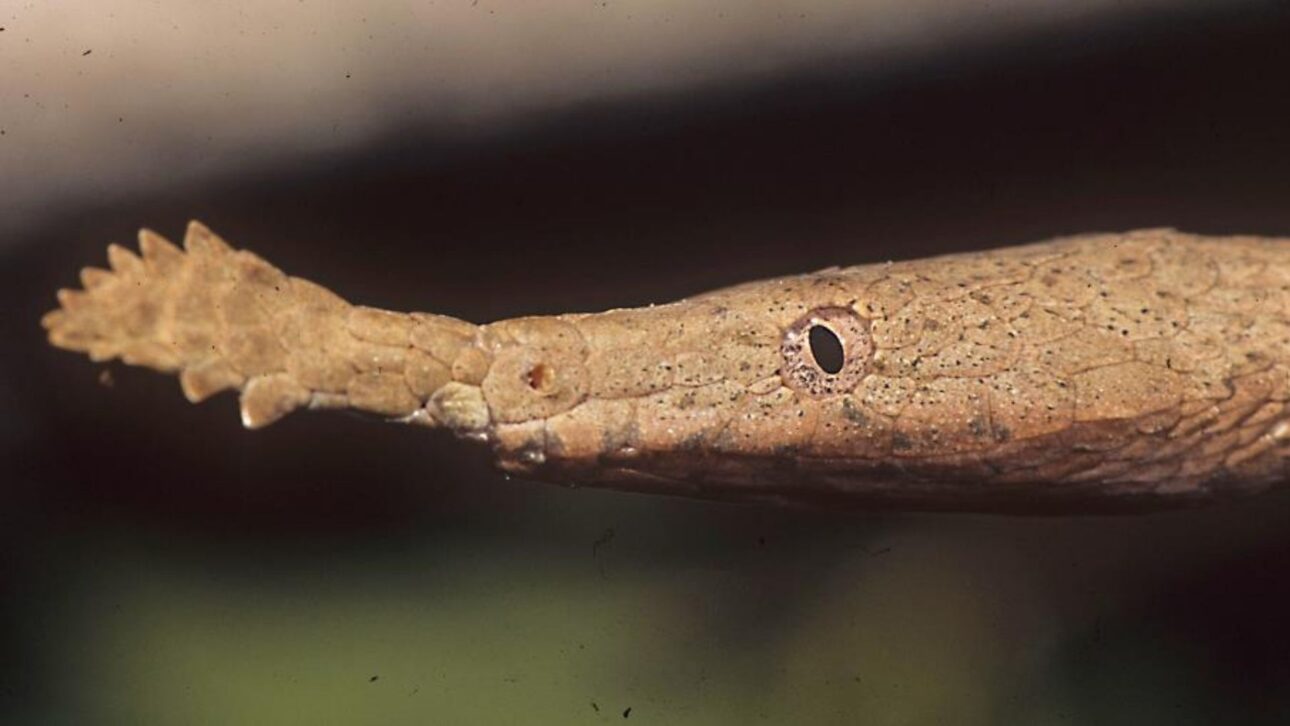
Its “nose” is actually a cartilaginous extension that resembles a dried leaf.
The shape changes depending on the sex: the males have a thin, pointed appendage, while the females exhibit a flattened structure with irregular edges, according to data from Wikipedia.
This difference, known as extreme sexual dimorphism, is one of the most pronounced among known snakes. Scientists believe that the nasal appendage functions as camouflage, allowing the snake to blend in with branches and dead leaves while waiting to ambush its prey.
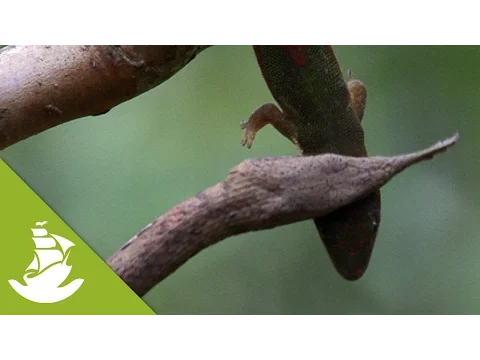

A Patient Predator That Imitates the Wind and Trees
The noseless snake is an ambush predator: it spends hours motionless, hanging upside down, pretending to be a branch swaying in the wind.
Studies published in the African Journal of Herpetology and field observations reported by Jessica Tingle (2012) show that the reptile uses “undulating” and “neck puffing” movements (known as hooding) to enhance its disguise.
With a length of up to 1.20 meters, a slender body, and coloration ranging from reddish-brown to gray-beige, the Langaha madagascariensis is practically invisible in the treetops of forests like Ankarafantsika, Kirindy, and Lokobe.
Its diet consists of frogs, lizards, and small birds, and it strikes with lightning speed when the target is within a few centimeters.
Weak Venom for Humans, But Deadly for Prey
Despite its threatening appearance, the noseless snake poses no danger to humans. According to Madamagazine, it has fangs located at the back of the jaw, capable of injecting small amounts of venom.
In humans, the effect is limited to swelling and pain similar to a wasp sting, but for lizards and small vertebrates, the venom is fatal within minutes.
Another interesting fact: to inject the venom, the Langaha madagascariensis needs to chew its prey, “massaging” the venom until it penetrates the body. For this reason, experts emphasize that it is calm, shy, and rarely aggressive, only reacting when it feels threatened.
Reproduction and Birth: Babies with “Bent” Noses
During the rainy season in Madagascar, males seek females for mating. Each female lays 5 to 11 eggs with a flexible shell, usually glued to leaves or dry twigs.
After about two months, the hatchlings are born with their “noses” bent over their faces, which only “rises” during the first 36 hours of life, an adaptation that, according to herpetologists, facilitates the breaking of the egg.
The young weigh about 2 grams and already hunt alone from birth, hanging on thin branches to avoid predators and make the most of natural camouflage.
The Function of the “Leaf Nose” Is Still an Evolutionary Mystery
More than 230 years after its discovery, scientists still cannot explain the exact function of the nasal appendage. Some hypotheses suggest that it serves to deceive prey or confuse predators, while others propose it may have a role in sexual attraction.
The imitative behavior, described by researchers as “active plant mimicry”, makes the noseless snake one of the most sophisticated examples of evolutionary camouflage ever recorded in nature, according to the Field Guide to Amphibians and Reptiles of Madagascar (Glaw & Vences, 2007).
Curiosities About the Noseless Snake of Madagascar
- Scientific Name: Langaha madagascariensis
- Family: Pseudoxyrhophiidae
- Endemic to: Madagascar
- Length: up to 1.20 m
- Diet: frogs, lizards, and small birds
- Venom: weak for humans, deadly for prey
- Eggs per clutch: 5 to 11
- Behavior: hangs on branches pretending to be a leaf








-

-

-

-

-

-

22 pessoas reagiram a isso.