





 Portuguese
  English
  Spanish
  4 min of reading
  0 comments


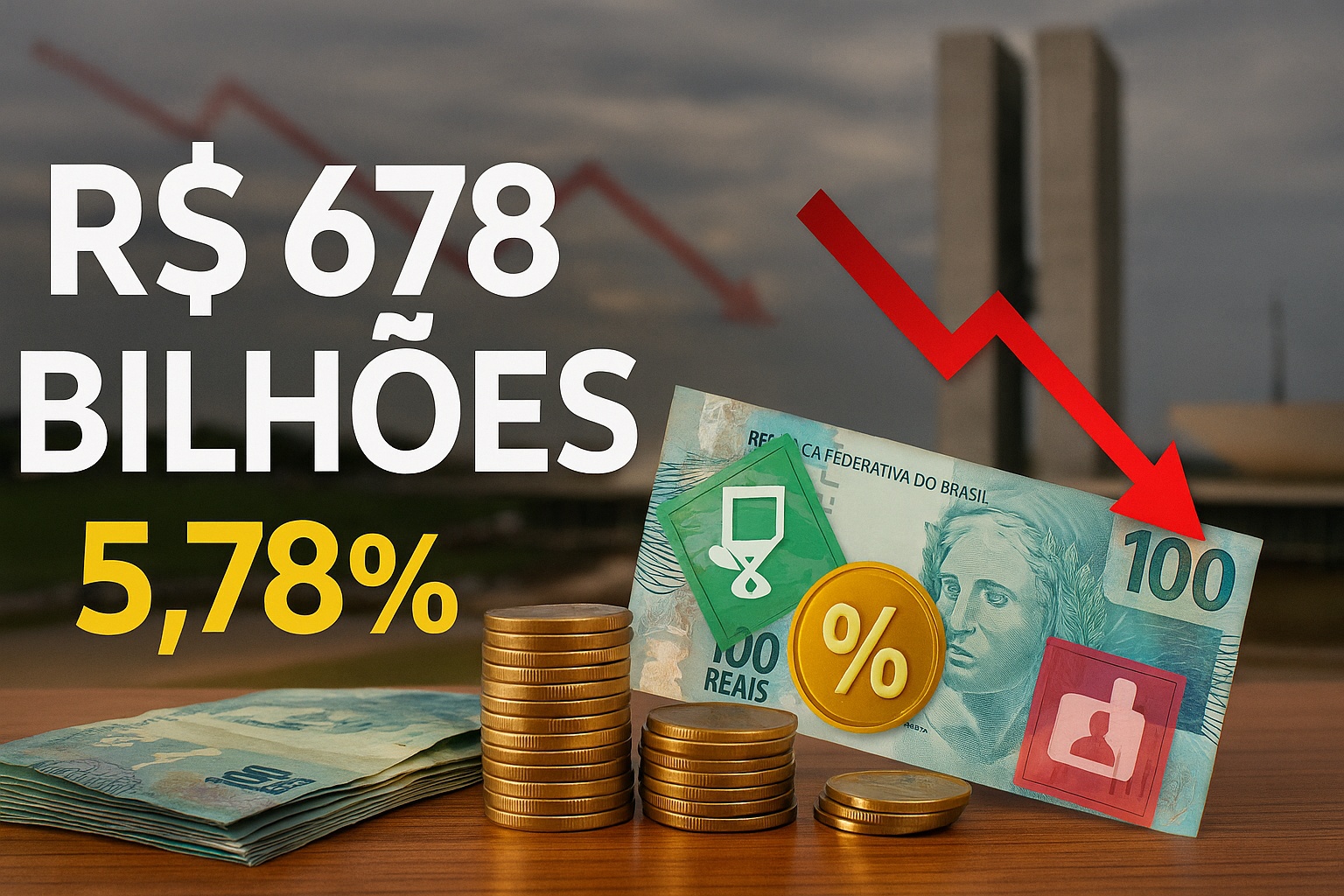
Subsidies in Brazil Reach R$ 678 Billion in 2024, 5.78% of GDP, Becoming One of the Largest Expenditures Among Emerging Economies, Pressuring Public Accounts.
In 2024, Brazil allocated R$ 678 billion to subsidies and tax exemptions, according to a report from the Ministry of Planning and Budget. This amount represents 5.78% of Gross Domestic Product (GDP) and reignites the debate about the sustainability of public accounts. The survey includes benefits of a tax, credit, and financial nature, which, while alleviating strategic sectors of the economy, reduce revenue and create a billion-dollar impact on fiscal balance.
What Is Inside This Number
The official report details that the amount includes:
- Federal tax expenditures: exemptions and incentives that reduced federal revenue.
- Credit benefits: financing programs with favorable rates, such as those offered by BNDES.
- Financial subsidies: mechanisms for interest rate equalization and direct support to certain sectors.
Only the federal tax expenditures represented 4.78% of GDP in 2023, and when combined with state and municipal exemptions, the percentage reached 7.2% of GDP, according to independent studies.
-
China alone accounts for 70% of trade within the BRICS, while Brazil establishes itself as an essential supplier of food and minerals: understand how the group, which already represents nearly 40% of the world’s GDP, is changing the game.
-
Starting in May, those who do not have registered biometrics will not be able to apply for Bolsa Família, sickness benefits, or unemployment insurance: understand the new rule that changes access to benefits for millions of Brazilians.

-
A new law being voted on in Brazil proposes a minimum fare of R$ 10 per trip and R$ 2.50 per kilometer for Uber and 99 drivers, and promises to ensure they earn as well as taxi drivers did during the golden age of taxis in the country.

-
Bauer Group collapses after failed judicial recovery: 25 years, 800 vehicles, and a network of gas stations leave a debt of R$ 50 million and 100 layoffs, exposing costs, tight margins, and expensive credit in Brazil.


Pressure on Public Accounts
The direct impact of subsidies on the budget is one of the central points in the discussion about fiscal responsibility. In a scenario of primary deficit and the need for account adjustment, the maintenance of billion-dollar expenditures on benefits raises questions about the priorities in resource allocation.
Economists warn that although part of the subsidies is aimed at stimulating strategic sectors such as energy, agriculture, and innovation, many benefits end up perpetuating without cost-benefit evaluation, becoming a structural distortion of the Brazilian budget.
International Comparison: Where Brazil Stands Out
Data from the OECD and IMF shows that the level of subsidies in Brazil is among the highest in the emerging world. In comparable countries such as Mexico and Chile, subsidy expenditures rarely exceed 2% of GDP.
This difference places Brazil in a delicate position: while it is one of the largest global economies, the country commits a significant portion of its revenue to exemptions, reducing the margin for investments in infrastructure, health, and education.
Most Benefited Sectors
The main beneficiaries of subsidies in 2024 were:
- Energy and Fuels, with incentives and price equalization.
- Agribusiness, including tax exemptions for export and financing with favorable interest rates.
- Industry and Technological Innovation, with programs to stimulate research and development.
Despite its strategic importance, experts say that the lack of periodic review of the incentives generates a cascading effect, accumulating benefits that total hundreds of billions over the years.
Report Reignited Debates in Congress and Among Fiscal Policy Analysts
The release of the report reignited debates in Congress and among fiscal policy analysts. On one side, there is pressure for maintenance of subsidies as a way to protect productive sectors and generate jobs. On the other hand, there is growing appeal for comprehensive review, with the elimination of incentives considered inefficient or of low socioeconomic impact.
International organizations reinforce that Brazil needs to rationalize its tax expenditures, not only to reduce the deficit but also to create fiscal space that allows for structural investments and more robust social policies.
Long-Term Impacts
The accumulation of subsidies and tax exemptions has long-term consequences. By compromising a significant portion of revenues, the government is obligated to increase public debt or raise taxes to balance the accounts, directly affecting the country’s competitiveness.
Experts emphasize that Brazil’s fiscal credibility depends on measures that bring greater predictability. Without a clear strategy, maintaining expenditures of almost 6% of GDP on subsidies could compromise macroeconomic balance in the coming years.
The expenditure of R$ 678 billion on subsidies in 2024 places Brazil among the countries that allocate the most resources to this type of benefit. Although many subsidies have a strategic role, the weight on the budget and the lack of systematic evaluation of results turn this volume into one of the largest fiscal distortions in the country.
The challenge for the coming years will be to balance the need for economic stimulus with fiscal responsibility. International experience shows that uncontrolled billion-dollar expenditures can become unsustainable. For Brazil, a careful review of this billion-dollar account will be essential to ensure growth with stability.










-

Uma pessoa reagiu a isso.