





 Portuguese
  English
  Spanish
  4 min of reading
  0 comments



Brazilian Exports to the United States Fell in 2025, Pressured by High Tariffs and a Decline in Oil Sales, According to Amcham’s Brazil–U.S. Trade Monitor.
Oil was one of the main factors that helped to drive down Brazilian exports to the United States in 2025, a year marked by the worst performance of bilateral trade in five years. According to data from the Brazil–U.S. Trade Monitor, prepared by Amcham Brazil, sales to the American market totaled US$ 37.7 billion, representing a decline of 6.6% compared to 2024.
The result interrupted a trajectory considered positive since the post-pandemic period. Additionally, it occurred in contrast to Brazil’s performance in other strategic markets, such as China, the European Union, and Mercosur, which recorded growth in imports of Brazilian products.
As a result, the share of the United States in the national export agenda shrank. The country dropped from 12.0% to 10.8% of the total exported by Brazil, reaching the lowest level since 2020.
-
Lula reveals a masterstroke by Petrobras to undo a deal made by Bolsonaro, which involves the return of an important refinery that currently produces less than half of what was expected and makes Brazil dependent on international diesel.
-
A study confirms that the natural gas sector will reduce greenhouse gas emissions in Brazil by 0.5% and accelerate the energy transition by 2026.

-
Petrobras implements a severe adjustment and confirms a 55% increase in the price of aviation kerosene with a proposal for installment payments for the companies.

-
The rise in oil prices could ensure an extra revenue of R$ 100 billion for the Federal Government, indicates a recent economic study.


High Tariffs and Oil Explain the Decline in Sales
The analysis of the Monitor points to two central factors to explain the negative performance. The first involves the direct impact of the surcharges applied to Brazilian products. Goods subject to tariffs between 40% and 50% saw a decline of 9.5% in 2025, equivalent to a loss of US$ 1.5 billion.
Furthermore, products affected by Section 232 measures, which particularly impact the steel sector, experienced an additional drop of 4.1%, amounting to a decline of US$ 353 million. These effects intensified starting in the second half of the year. Between August and December, when the higher surcharges fully came into effect, exports of these items fell by 21.6%.
The second decisive factor was the performance of oil. Sales of crude oil and fuels to the United States fell by US$ 1.2 billion during the year. According to Amcham, this decline was not associated with tariffs, but with the increase in U.S. domestic production, which reduced the need for imports.
Oil Loses Ground and Increases Impact on the Trade Balance
Oil, traditionally relevant in the trade relationship with the U.S., significantly contributed to the negative result. The decline occurred within the context of greater American energy self-sufficiency, which diminished the demand for imported oil.
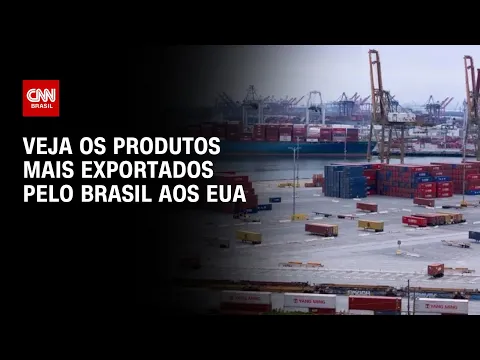

In addition to oil, other products also experienced significant declines. Exports of cellulose dropped by US$ 352.8 million. Semi-manufactured iron and steel products fell by US$ 179.8 million. There were also notable losses in wood, piston engines, iron ore, and civil engineering equipment.
This set of declines shows that the impact was distributed across different segments of the export agenda, going beyond a single specific sector.
Transformation Industry Records First Decline Since 2020
The transformation industry, responsible for more than 80% of Brazilian exports to the United States, also felt the effects. In 2025, the sector recorded a decrease of 4.2%, with sales of US$ 30.2 billion. This marks the first decline since 2020, after years of continuous growth.
Even with the decline, the United States remained the leading destination for Brazil’s industrial exports, accounting for about 16% of the total. The country stayed ahead of the European Union and Mercosur, although the gap has narrowed.
The performance reinforces the strategic importance of the American market for Brazilian industry while highlighting the sector’s sensitivity to tariff barriers.
Imports Grow and Trade Deficit Widens
While exports fell, Brazilian imports of American products increased for the third consecutive year. In 2025, purchases totaled US$ 45.2 billion, an increase of 11.3% compared to 2024 and the second highest value in the historical series.
The growth was driven by items such as non-electric motors and machines, fuel oils, aircraft, and medications. As a result, Brazil’s trade deficit with the United States reached US$ 7.5 billion.
The jump is significant compared to 2024, when the negative balance was only US$ 300 million. In 2025, the deficit with the U.S. became Brazil’s third largest, behind only Russia and Germany.
Prospects for 2026 and the Role of Negotiations
For Amcham Brazil, 2026 emerges as a strategic period to unlock bilateral trade. Currently, products subject to surcharges of 40% or 50% represent about one-third of Brazilian exports to the United States.
In this scenario, progress in negotiations to reduce or eliminate tariffs is considered essential to recover lost dynamism. The expectation is that a review of these barriers could especially benefit industrial goods and reduce dependence on products like oil in the export agenda.









Seja o primeiro a reagir!