





 Portuguese
  English
  Spanish
  3 min of reading
  0 comments


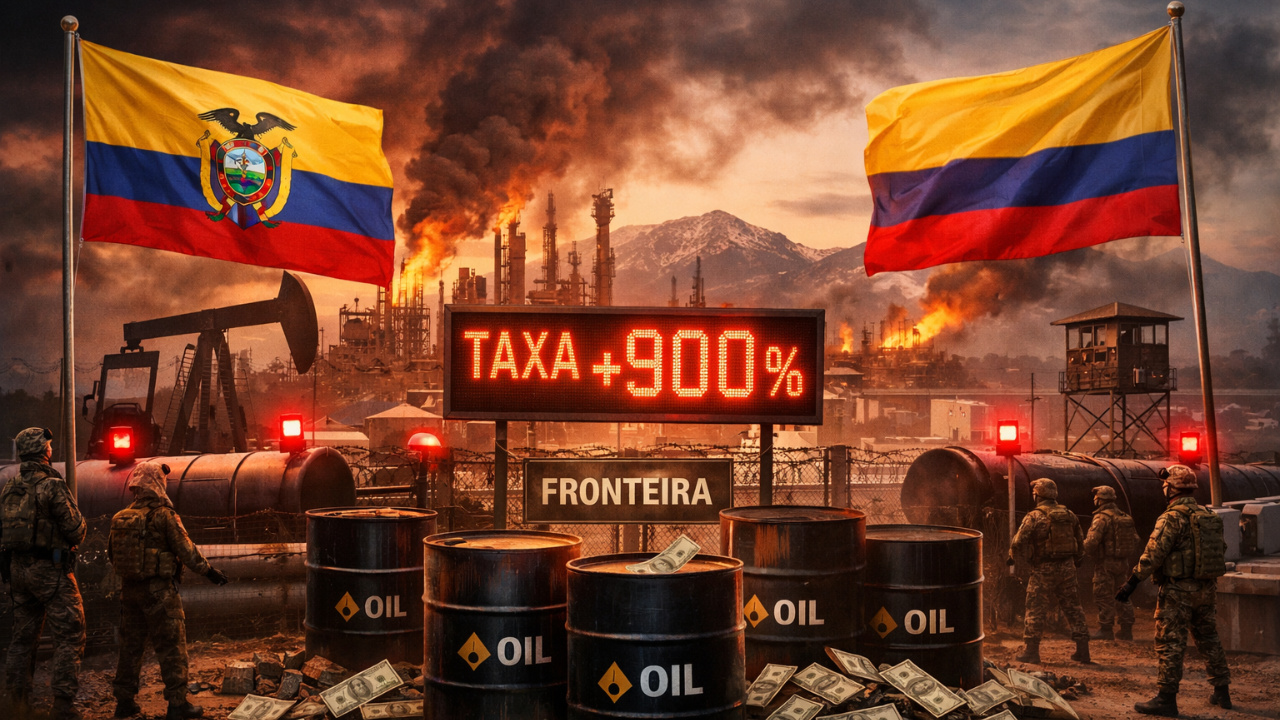
Ecuador Increases Transit Tax on Colombian Oil by 900% in SOTE and Intensifies Trade War with Colombia Amid Accusations, Retaliations, and Energy Tension.
The oil has become the center of a new and intense political and economic dispute in South America.
Ecuador has decided to drastically increase the tax charged for the transit of Colombian oil through its territory, a measure that raised the cost from US$ 3 to US$ 30 per barrel.
The decision represents a 900% jump and comes amid the escalation of the trade conflict between the two neighboring countries.
-
Lula reveals a masterstroke by Petrobras to undo a deal made by Bolsonaro, which involves the return of an important refinery that currently produces less than half of what was expected and makes Brazil dependent on international diesel.
-
A study confirms that the natural gas sector will reduce greenhouse gas emissions in Brazil by 0.5% and accelerate the energy transition by 2026.

-
Petrobras implements a severe adjustment and confirms a 55% increase in the price of aviation kerosene with a proposal for installment payments for the companies.

-
The rise in oil prices could ensure an extra revenue of R$ 100 billion for the Federal Government, indicates a recent economic study.


The affected transportation occurs through the Trans-Ecuadorian Oil Pipeline System (SOTE), one of the main logistical structures in the region. The change took effect on Friday (23) and was confirmed by Ecuador’s Minister of Environment and Energy, Inés Manzano.
Tariff War Intensifies at the Border
In addition to the increase in the oil transit tax, Ecuador also announced the imposition of a 30% tariff on Colombian imports starting Sunday (24).
The Ecuadorian government justified the decision by alleging that Colombia has been making insufficient efforts to combat drug trafficking along the shared border.

The Colombian response did not take long. In direct reaction, the country imposed tariffs equivalent to about 20 Ecuadorian products. At the same time, it suspended the supply of electricity to Ecuador, which is currently facing an energy deficit.
The move further increased pressure on Quito and heightened the climate of regional instability.
According to the local outlet Primicias, the SOTE transported approximately 10,300 barrels per day of Colombian oil in 2025. This volume includes shipments from the state-owned Ecopetrol and private companies that rely on Ecuadorian infrastructure to move their production.
With the new tariff, operating costs significantly increase, which may impact contracts, profit margins, and logistical decisions of the companies involved.
Experts assess that the measure tends to further pressure bilateral trade and could reflect on the final price of Colombian oil.
Technical Decision or Political Message?
Minister Inés Manzano stated that the tariff adjustment is the result of a technical and legal decision. According to her, the measure also sends an “important message” to Colombia regarding security and cooperation at the border.
The statement reinforces the perception that oil is being used as a tool of diplomatic pressure.
Meanwhile, analysts point out that the episode marks a new chapter in the relationship between the two countries, with the energy sector becoming a key element in a dispute that goes beyond economics and touches on issues of security, sovereignty, and foreign policy.
Is this 900% increase in the oil tax a legitimate defense measure for Ecuador or an abuse that could be costly for the entire region?









Seja o primeiro a reagir!