





 Portuguese
  English
  Spanish
 5 min of reading
  0 comments


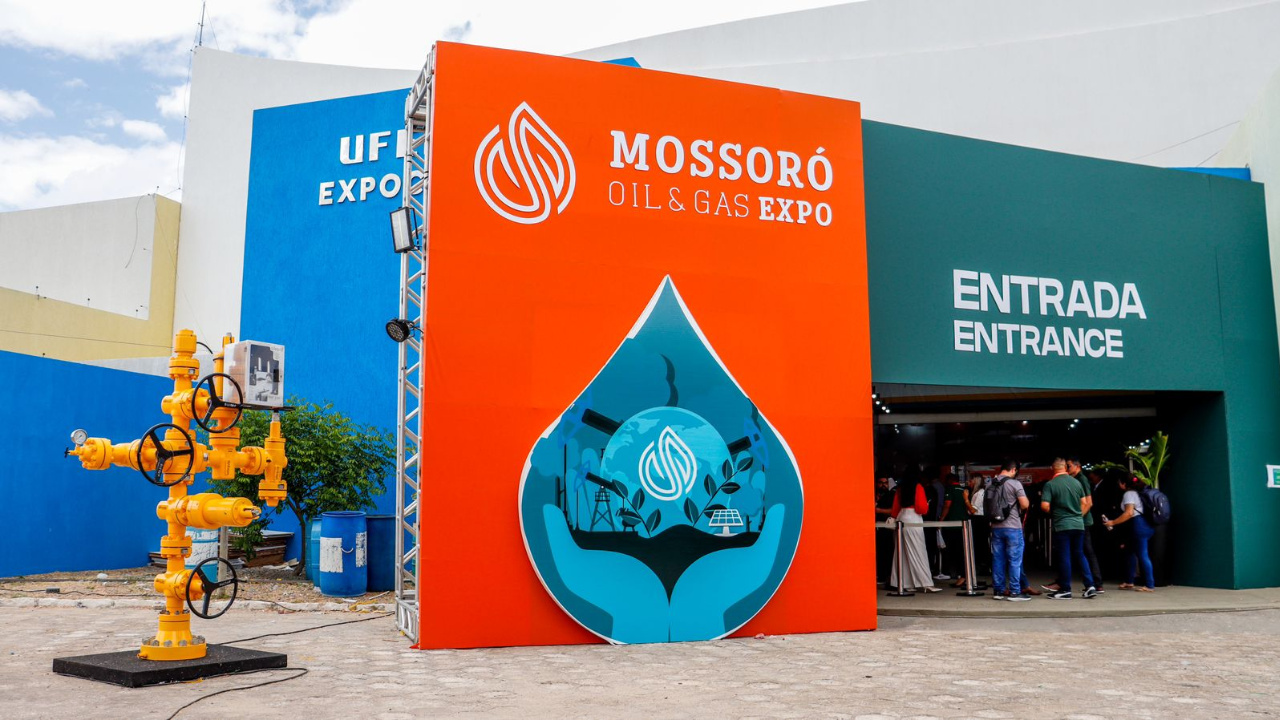
Study Presented at Mossoró Oil & Gas Energy 2025 Reveals How Onshore Oil and Gas Expand Jobs, Income, and Revenue in Rio Grande do Norte, With Direct Impact on Industrial GDP.
The oil and natural gas industry continues to be a structural axis of the economy in Rio Grande do Norte. Data presented during the Mossoró Oil & Gas Energy 2025 reinforces that the onshore extraction activity directly influences employment, income, and public revenue in the state, especially in the Western Potiguar.
At the same time, the study indicates that strategic decisions and regulatory advances could further amplify this impact in the coming years.
The survey was conducted by Neoway, in partnership with Sebrae RN and Nilo Engenharia, and is based on an extensive analysis of producing municipalities and royalty-receiving municipalities across the country. The Potiguar scope, however, draws attention due to the sector’s strength in the composition of industrial GDP and its capacity to energize historically strategic municipalities for land-based oil production.
-
The rise in oil prices could ensure an extra revenue of R$ 100 billion for the Federal Government, indicates a recent economic study.

-
Naturgy begins an investment of R$ 1.6 million to expand the gas network in Niterói and benefit thousands of new residences and businesses.

-
A major turn in the Justice system suspends tax increases and directly impacts oil and gas companies in Brazil by affecting costs, contracts, and financial planning, leaving uncertain what could happen to the sector if these costs had increased.

-
Brava Energia begins drilling in Papa-Terra and Atlanta and could change the game by reducing costs in oil while increasing production and strengthening competitiveness in the offshore market.


Oil Chain Represents a Relevant Share of Industrial GDP
According to the study “Impact of Onshore on Economic Development,” the onshore oil and gas industry is responsible for approximately 40% of Rio Grande do Norte’s industrial GDP. Additionally, the sector accounts for about 23% of the state’s ICMS revenue, establishing itself as one of the primary sources of public income.
This prominence is evidenced more clearly in the Mossoró region, where extraction activity decisively contributes to the support of the local economy. The strengthening of this production chain directly affects services, commerce, logistics, and the hiring of specialized and indirect labor.
Municipalities with Expanding Oil Register Accelerated Growth
By reorganizing the data by economic activity profile, the survey identified significant differences between municipalities. Between 2011 and 2021, cities where the extraction industry gained ground showed a median accumulated growth of 437.6% in the value added by industry. On the other hand, stable sector locations grew by 37.6%, while those that experienced contraction recorded a decrease of 14%.
These figures, therefore, demonstrate that the expansion of onshore oil not only accompanies regional development but also acts as an economic catalyst. Moreover, the impact extends to neighboring municipalities, reinforcing the typical productive chain logic of this segment.
Per Capita GDP Follows Advancement of Onshore Oil
Another relevant indicator analyzed in the study was per capita GDP. In the last decade, municipalities that expanded the presence of the extraction industry experienced a median growth of 116%. In contrast, cities where the sector did not advance showed more modest increases of 111% and 80.8%, depending on the degree of stability or contraction of the activity.
Thus, the data demonstrate that oil contributes not only to increased revenue and industrial production but also to the relative improvement of average income within the population. This reinforces the sector’s role as a tool for local economic development.
Projections Indicate Additional Gains with Industry Expansion
In addition to the historical analysis, the study presented future projections. The modeling considered 1,111 municipalities producing or benefitted by royalties between 2014 and 2024 and simulated the effects of a potential doubling of oil and gas activity.
According to the estimates, doubling the interventions in wells could lead to a 14.3% increase in the number of jobs and an 18% increase in salaries. Furthermore, the expansion of activities related to well abandonment would have an even greater impact, with a 32.4% growth in jobs and a 33% increase in payroll in neighboring municipalities.
Additionally, ICMS revenue could rise by 14.8%, while ISS would increase by 28%, reinforcing the role of oil as a source of tax revenue.
Environmental Licensing Emerges as a Key Factor
Despite the positive scenario, the study highlights that environmental licensing is crucial for enabling new investments and expanding the economic effects of the sector. Technical interventions such as drilling, completion, workover, and well abandonment are identified as direct drivers of job generation and revenue but depend on more efficient regulatory processes.
During the presentation, the CEO of Sebrae RN, José Ferreira de Melo Neto, emphasized the importance of transforming data into strategy. “We need to build, together, a productive arrangement that benefits everyone, is more inclusive, bringing together companies, the industry federation, universities, and other entities to incorporate technological innovation and qualification of human resources into this process. This study presented here today is a roadmap for us to start this journey, which will help us face serious problems in the sector, such as environmental licensing,” he declared.
Industry and Government See Long-Term Potential in Oil
The strategic reading of the study was also reinforced by the president of the Federation of Industries of RN (Fiern), Roberto Serquiz. “Challenge accepted. The agenda for the sector was presented in this study, and now we need to know how to leverage such information for better action direction, and strategically tune this business environment to further develop the giant potential that the sector possesses,” he said.
The event also featured the presence of Governor Fátima Bezerra, the mayor of Mossoró, Allyson Bezerra, and business leaders. The president of Redepetro RN, José Nilo de Souza Júnior, reminded that the companies associated with the network already account for about 12,000 direct jobs, reinforcing the weight of oil in the regional economy.
Carried out by Redepetro RN, with the support of Sebrae RN and Ufersa, the Mossoró Oil & Gas Energy reaches its tenth edition consolidated as one of the main forums of the onshore sector in Brazil and Latin America, gathering data, projections, and discussions that signal the continuing role of oil in the development of Rio Grande do Norte.








Seja o primeiro a reagir!