





 Portuguese
  English
  Spanish
  4 min of reading
  0 comments


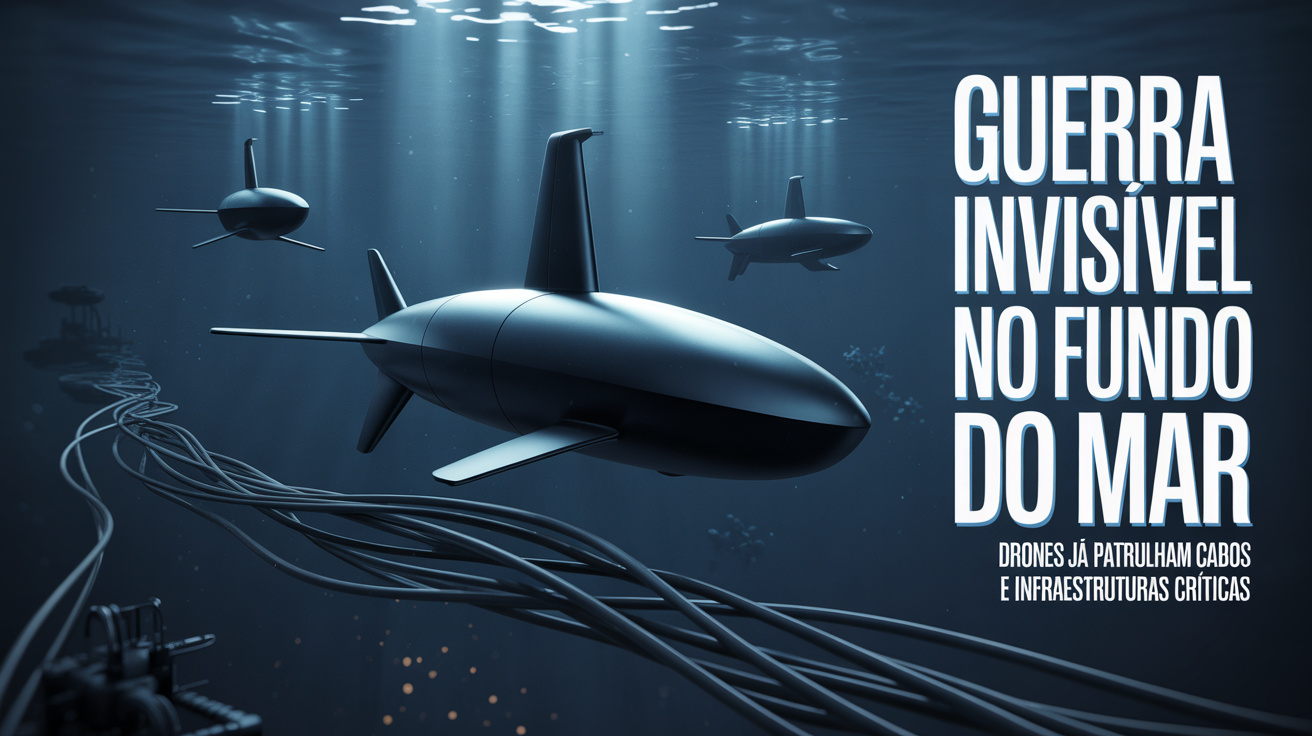
Orca XLUUV, Poseidon Status-6 and HSU-001 Operate Silently at the Bottom of the Oceans with Extreme Autonomy, High Depth, and Strategic Capability That Redefines Naval Warfare in the 21st Century.
For decades, naval power was measured by the size of fleets, the number of manned nuclear submarines, and the visible presence of aircraft carriers at sea. Today, the strategic landscape has changed. The new frontier of maritime power is not on the surface, but thousands of meters below it, where unmanned underwater vehicles operate for weeks or months without any crew on board.
These vehicles are not experimental. They are already part of the military architecture of major powers. And their function goes far beyond simple surveillance.
Orca XLUUV: 26 Meters of Steel, Autonomy Exceeding 12,000 km, and Unmanned Underwater Warfare
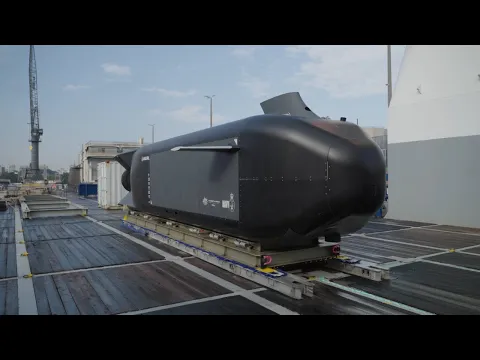
The Orca XLUUV (Extra Large Unmanned Undersea Vehicle), developed by Boeing for the United States Navy, is currently the largest operational underwater drone in the West.
-
Motorola launched the Signature with a gold seal from DxOMark, tying with the iPhone 17 Pro in camera performance, Snapdragon 8 Gen 5 that surpassed 3 million in benchmarks, and a zoom that impresses even at night.

-
Satellites reveal beneath the Sahara a giant river buried for thousands of kilometers: study shows that the largest hot desert on the planet was once traversed by a river system comparable to the largest on Earth.

-
Scientists have captured something never seen in space: newly born stars are creating gigantic rings of light a thousand times larger than the distance between the Earth and the Sun, and this changes everything we knew about stellar birth.

-
Geologists find traces of a continent that disappeared 155 million years ago after separating from Australia and reveal that it did not sink, but broke into fragments scattered across Southeast Asia.

At approximately 26 meters in length, it is close to the size of smaller conventional submarines. Its estimated range exceeds 12,000 kilometers, depending on the mission and payload configuration.
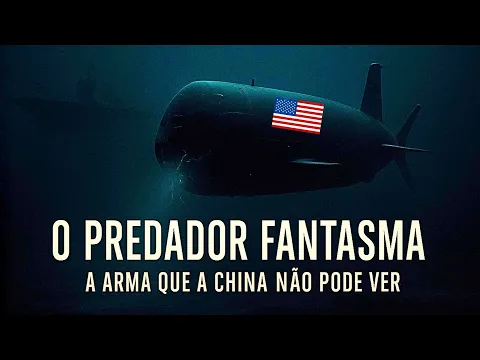

Unlike traditional submarines, the Orca has no life support systems, crew compartments, or internal human infrastructure. This allows its entire architecture to be optimized for structural integrity, energy storage, and mission modularity.
The vehicle is designed to operate completely autonomously, able to perform tasks such as:
• naval mine deployment
• anti-submarine warfare
• strategic reconnaissance
• military oceanographic data collection
• underwater infrastructure surveillance
Its strategic importance lies in operational persistence. A manned submarine needs to periodically return for refueling, crew change, and maintenance. The Orca can remain in sensitive areas for much longer, reducing costs and expanding strategic coverage.
Poseidon Status-6: The Intercontinental Nuclear Torpedo That Uses the Ocean as an Invisible Corridor
If the Orca represents the new generation of autonomous surveillance, the Poseidon Status-6 represents the most extreme face of underwater strategic deterrence.
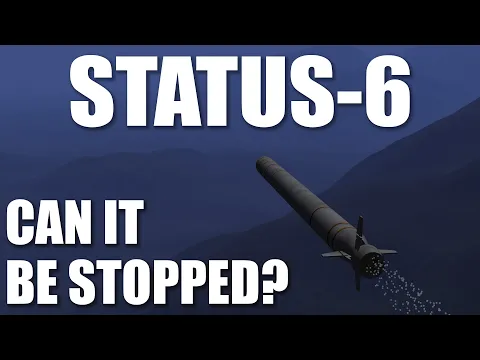
Developed by Russia, the Poseidon is a long-range autonomous nuclear underwater vehicle, officially presented by the Russian government as part of its strategic retaliation doctrine.
According to official Russian statements, the system uses nuclear propulsion, allowing virtually unlimited intercontinental range. Military analysts estimate that the vehicle can reach speeds exceeding 100 km/h submerged and operate at depths beyond 1,000 meters.
Unlike ballistic missiles, the Poseidon does not travel through the air. It uses the deep ocean environment as a strategic route. This makes it extremely difficult to detect and intercept by conventional missile defense systems.
The system is transported by modified submarines, such as the Belgorod, considered one of the largest submarines ever built.
The strategic implication is profound: while defense systems are designed to intercept aerial and ballistic vectors, the deep ocean becomes an alternative corridor for deterrence.
HSU-001: The Chinese Response in the Indo-Pacific
China has also developed its own large-scale autonomous underwater drone, the HSU-001, publicly unveiled in 2019.
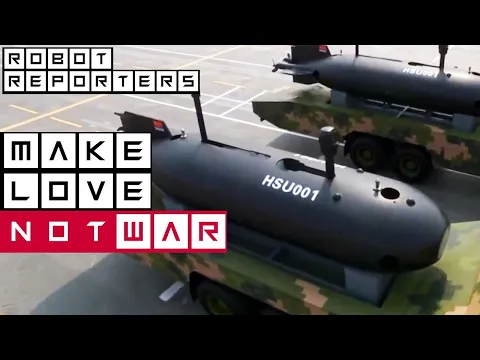
Although complete technical data is not officially disclosed, expert analyses indicate that the vehicle is designed for missions such as:
• underwater reconnaissance
• seabed mapping
• intelligence gathering
• support for operations in the South China Sea
The development of this system occurs alongside the growing strategic importance of maritime routes in the Indo-Pacific and the dispute for control of sensitive maritime areas. The ability to maintain continuous, discreet, and persistent surveillance alters the regional balance.
Submarine Cables: The Infrastructure That Supports 95% of Global Internet
Over 95% of global internet data traffic passes through submarine cables. These cables connect continents and sustain:
• international financial transactions
• diplomatic communications
• military networks
• critical digital infrastructure
They traverse oceans at thousands of meters of depth. Historically, the vulnerability of these cables was treated as a technical risk. Today, it is considered a strategic risk.
Large-autonomy underwater drones with advanced sensors can monitor, map, and potentially interfere with critical underwater infrastructures. The mere ability to operate near these cables already represents significant geopolitical power.
The Naval Warfare Revolution: Autonomy, Depth, and Artificial Intelligence
These systems are not merely large submerged machines. They represent the convergence of three technological revolutions: High-density energy, including advanced batteries and compact reactors.
Embedded artificial intelligence capable of making complex navigation decisions without constant communication with the surface.

High-precision sensors, including long-range sonar, side-scan systems, and magnetic detection technology.
Operating at 1,000 meters depth means facing pressures exceeding 100 atmospheres. Each additional meter exponentially increases the structural challenge.
The absence of crew eliminates human physiological limitations, allowing depths and mission durations that would be unfeasible for traditional submarines.
The New Deterrence Is Not Visible
During the Cold War, power was displayed in military parades and visible naval fleets. In the 21st century, naval power begins to migrate towards invisibility.
Autonomous underwater vehicles allow for strategic saturation of maritime areas, multiplication of vectors, and reduction of human risk.
- They operate in absolute silence.
- They leave no trace on the surface.
- They are not easily tracked.
- And they change the mathematics of contemporary naval warfare.
The ocean has always been considered the last great unknown space on the planet. Today, it is rapidly transforming into one of the most contested environments of modern geopolitics.
While maritime traffic remains visible on the surfaces, an invisible layer of autonomous machines is already patrolling the seabed.
And this silent layer may redefine the global strategic balance in the coming decades.








-

-

-

-

-

-

30 pessoas reagiram a isso.