





 Portuguese
  English
  Spanish
  4 min of reading
  1 comment


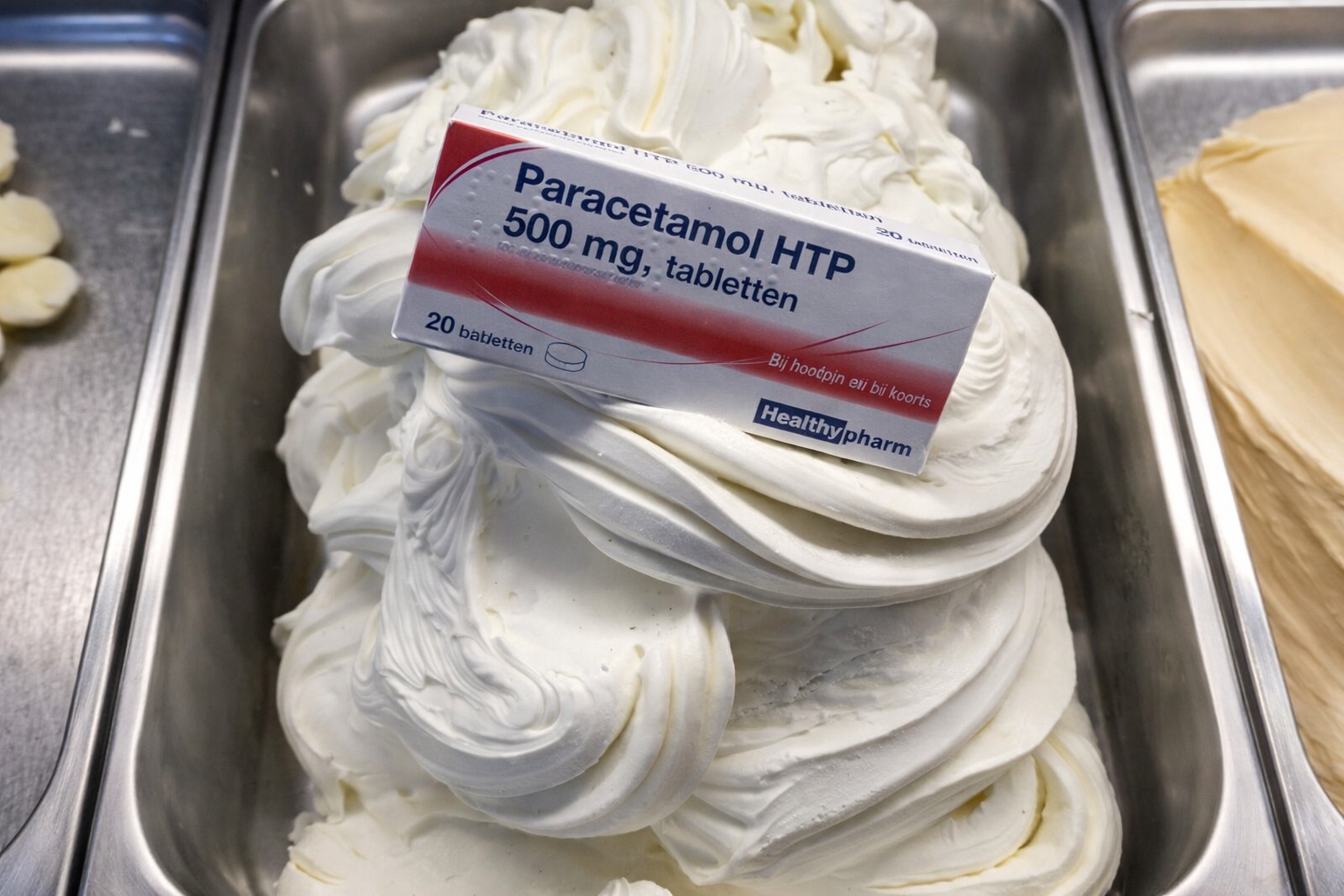


Dutch Paracetamol Ice Cream Went Viral and Promises to Cure Headaches Instantly! Discover the Secret NOW
Have you ever imagined having an ice cream that, in addition to refreshing, relieves your hangover headache with a dose of paracetamol hidden inside? Well, that’s exactly what a viral photo promised: a “paracetamol ice cream” created in the Netherlands to combat the effects of too much alcohol in a “pleasant” way.
The image circulated the world, generated memes, laughter, and a lot of controversy. But is it real? Spoiler: the story is true… but only up to a point.
The Origin of Madness: A Carnival Joke
It all started in February 2016, in the small town of Oudenbosch, in the Netherlands. Jan Nagelkerke, owner of the bakery and ice cream shop IJssalon Nagelkerke (also known as Maddy’s), decided to make a prank for the local carnival.
-
Friends have been building a small “town” for 30 years to grow old together, with compact houses, a common area, nature surrounding it, and a collective life project designed for friendship, coexistence, and simplicity.

-
This small town in Germany created its own currency 24 years ago, today it circulates millions per year, is accepted in over 300 stores, and the German government allowed all of this to happen under one condition.

-
Curitiba is shrinking and is expected to lose 97,000 residents by 2050, while inland cities in Paraná such as Sarandi, Araucária, and Toledo are experiencing accelerated growth that is changing the entire state’s map.

-
Tourists were poisoned on Everest in a million-dollar fraud scheme involving helicopters that diverted over $19 million and shocked international authorities.


He mixed 20 paracetamol (acetaminophen) tablets with lemon juice and produced about 6 liters of creamy white ice cream, with a refreshing lemon flavor to mask the bitterness of the medicine.
Each serving contained 500 mg of paracetamol, exactly the dose of a regular tablet. The idea? To “cure” the hangovers of revelers in a fun and tasty way.
The ice cream was displayed in the shop window, with a box of Paracetamol HTP 500 mg on top to attract attention. And it certainly did: pictures of the display exploded on social media.
Here is the classic image that went viral and continues to go viral to this day:

What Really Happened
Despite the buzz, the ice cream was never sold to the public. Jan Nagelkerke made it clear that it was just a humorous display to attract customers during the carnival.
Dutch health authorities (NVWA – Food Safety Authority) quickly intervened: foods cannot contain medications without strict approval, safety testing, and specific regulation.
Mixing medicine with food is illegal in most countries, including the Netherlands.
As a result: the “product” was removed from the display within a few days. There was no marketing, no official packaging, no distribution. What went viral was just a photo of a carnival display.
Another iconic photo of the display, showing the ice cream stacked with the box of medicine:
Why the Story Is Going Viral Again
The photo resurfaces periodically on social media (Instagram, TikTok, Facebook, and X), usually with captions like “In the Netherlands, they created paracetamol ice cream to cure hangovers!” or “Paracetamol Ice Cream: Genius or Madness?”.
In 2024 and 2025, the rumor gained traction again in Portuguese, Spanish, and English, with thousands of shares.
Many people think it’s a new launch or a pharmaceutical innovation – but it’s the same recycled case from 2016.
Fact-checkers from several countries (like Dutch, Indian, and Brazilian websites) have already debunked it: there is no approved commercial product. It’s a recurring hoax based on a real joke.
The Risks: Why This Would Be a Terrible Idea?
Even if it were just a joke, mixing paracetamol with ice cream poses serious dangers:
- Paracetamol + Alcohol = liver overload. The medicine is metabolized in the liver, and alcohol worsens this, increasing the risk of serious liver damage (up to liver failure in high doses).
- Accidental Overdose: a serving with 500 mg seems harmless, but if someone were to eat several scoops (or take tablets along with it), they could exceed the daily safe limit (maximum 4 g for adults).
- Children and Allergics: imagine a child grabbing a scoop thinking it’s normal ice cream…
- Regulation: agencies like Anvisa (Brazil), FDA (USA), and NVWA (Netherlands) prohibit this type of mixture without clinical studies and approvals.
Doctors always recommend: for hangovers, hydration, rest, light meals, and if needed, a separate pain reliever, never mixed in food.
The “paracetamol ice cream” is a classic example of how a local joke can turn into a global myth on social media. Was it funny? Yes. Innovative? Not really. Safe? Definitely not.
The lesson here is simple: before trying to recreate it at home, check the facts. Creative ideas are great, but health is no joke.
And you, would you have an ice cream like that if it were allowed? COMMENT BELOW AND TAG A FRIEND WHO NEEDS TO SEE THIS!










No sorvete ou com sorvete, a automedicação acontecerá SEMPRE