





 Portuguese
  English
  Spanish
 5 min of reading
  0 comments


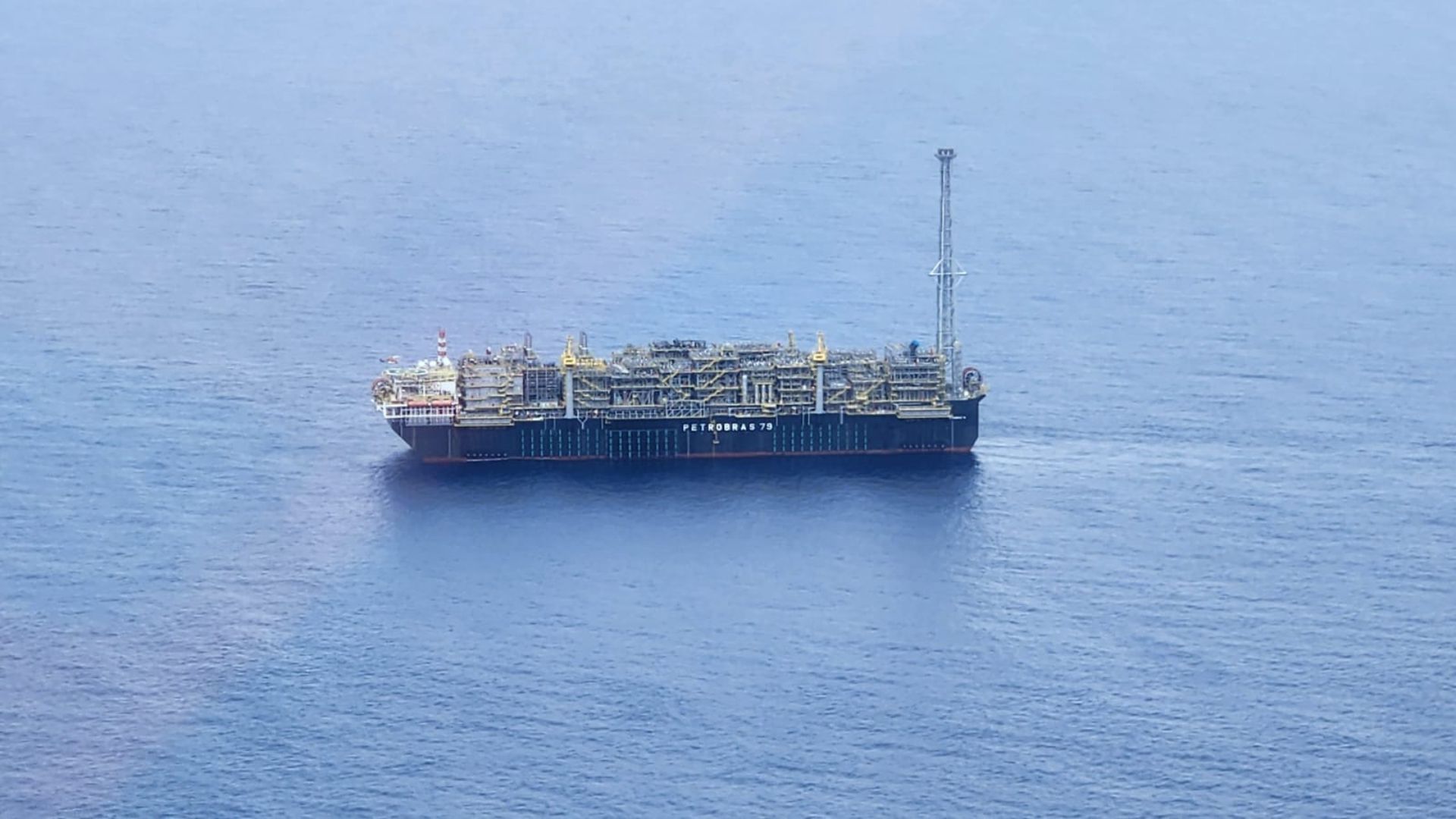
Petrobras Positions New Platform in the Búzios Field and Increases Extraction Capacity in the Pre-Salt with High Daily Production of Oil and Gas, Strengthening the Brazilian Energy Market
On February 10, 2026, Petrobras officially confirmed the arrival of the FPSO P-79 at the pre-salt of the Santos Basin, positioning the unit in the strategic Búzios Field, currently considered the largest deepwater production field of the company.
The platform has the capacity to produce up to 180,000 barrels of oil per day and compress 7.2 million cubic meters of gas daily, numbers that directly expand Brazil’s energy capacity and consolidate the country’s presence in the international oil and gas market.
Strategic Arrival Accelerates Start of Operations in the Búzios Field
Right after the announcement, the state-owned company highlighted that the operation occurred within the planned schedule, a factor considered essential for maintaining operational predictability and investor confidence. Meeting deadlines is one of the main indicators of efficiency in large offshore projects, especially in highly complex technical environments like the pre-salt.
-
Petrobras evaluates suspension of sales to distributors and considers canceling the cooking gas auction following guidelines from the Federal Government.
-
Lula reveals a masterstroke by Petrobras to undo a deal made by Bolsonaro, which involves the return of an important refinery that currently produces less than half of what was expected and makes Brazil dependent on international diesel.
-
A study confirms that the natural gas sector will reduce greenhouse gas emissions in Brazil by 0.5% and accelerate the energy transition by 2026.

-
Petrobras implements a severe adjustment and confirms a 55% increase in the price of aviation kerosene with a proposal for installment payments for the companies.


Moreover, the strategy adopted for the arrival of the unit had been successfully used before, demonstrating institutional learning and continuous improvement of internal processes. The movement of the FPSO P-79 to the Búzios Field followed a logistics model that has become a reference within Petrobras: the transfer of the platform already with part of the crew on board.
This decision reduces the interval between anchoring and the actual start of production, as it allows complex systems to be activated and tested even during the maritime journey. According to technical explanations released by the company, this method avoids interruptions during the commissioning phase and ensures early training of the teams responsible for the operation.
In practice, this means time savings, cost reductions, and increased operational safety, three fundamental pillars in deepwater exploration ventures. Furthermore, the continuity of technical tests during the move allows for immediate adjustments, reducing future risks and increasing the reliability of the systems.
Petrobras Expands Productive Capacity in the Pre-Salt with New Generation of Platforms
The arrival of the new unit adds to a robust set of platforms already operating in the region. Before the FPSO P-79, the Búzios Field already had seven operational units: P-74, P-75, P-76, P-77, Almirante Barroso, Almirante Tamandaré, and P-78. With the new platform, Petrobras strengthens its strategy for continuous expansion in the pre-salt, enhancing productive potential and consolidating the field as one of the most relevant on the planet.
The project to which the platform belongs is called Development of Production of Búzios 8, which foresees the interconnection of 14 wells, comprising eight producers and six WAG-type injectors, a technology that alternates water and gas injection to maintain reservoir pressure. This model increases extraction efficiency and prolongs the field’s lifespan, reducing natural losses and ensuring greater productive stability over the years.
Furthermore, the structural expansion reflects long-term planning. It is not just about installing platforms, but about building an integrated productive ecosystem, capable of sustaining high extraction volumes without compromising safety, the environment, and economic viability.
FPSO P-79 and the Numbers That Drive Brazil’s Energy Protagonism
The technical data associated with the FPSO P-79 highlights its strategic relevance. The capacity to produce 180,000 daily barrels of oil places the unit among the largest in the world in offshore operations, while the daily compression of 7.2 million cubic meters of gas enhances supply for industries and power generation.
The Búzios Field itself had already recorded a milestone in October 2025 by surpassing the production of 1 million barrels of oil per day. This volume positions Brazil as a global reference in deepwater exploration, overcoming geological and technological challenges that few countries can face with similar efficiency.
The field’s location, about 180 kilometers off the coast of Rio de Janeiro and at depths reaching 2,100 meters, demands a high level of technical specialization. Each new installed unit not only represents increased production but also scientific and industrial advancement, reinforcing Brazil’s technological autonomy.
Global Engineering and International Cooperation in the Construction of Petrobras’ Platform
The FPSO P-79 is the result of a broad international production chain. Its hull was built in Geoje-Si, South Korea, while the processing modules were manufactured in different countries, including Brazil, China, Indonesia, and South Korea. This multinational integration highlights the global dimension of the project and the degree of complexity involved in modern offshore engineering.
The unit was built by SAME Netherlands BV, a joint venture formed by companies from Italy and South Korea, demonstrating how the Brazilian energy sector is connected to an international network of specialized suppliers. The journey from the shipyard to Brazil took about three months, a period used for structural checks and technical adjustments essential for operational safety.
This industrial exchange not only guarantees technical quality but also strengthens commercial relations and knowledge transfer. Brazil becomes not just a consumer of technology, but an active participant in the global energy innovation chain.


Economic Impacts and Expansion of the Brazilian Energy Sector
The arrival of the platform generates effects that go beyond the increase in oil and gas production. The investment in new offshore units drives employment, logistics, engineering, technology, and specialized services, creating multiplier effects in the national economy. Royalties, taxes, and indirect contracts strengthen states and municipalities linked to production.
Another significant impact is the expansion of energy security. The greater the internal production capacity, the less dependence on imports and the greater the stability of the national market, a factor that influences prices, industrial planning, and international competitiveness. The compressed natural gas on the platforms also contributes to industrial supply and thermal power generation, broadening the diversity of the Brazilian energy matrix.
Furthermore, advancements in the pre-salt encourage foreign investments and stimulate research in technological innovation. The offshore sector is transforming into a hub of scientific and economic development, generating knowledge that can be applied in other areas of heavy and naval industry.
What the Arrival of the FPSO P-79 Reveals About Brazil’s Energy Future
The confirmation of the arrival of the FPSO P-79 at the Búzios Field in February 2026 symbolizes a milestone of planning, technology, and operational efficiency. More than just a new platform, the project represents the continuation of a national strategy aimed at consolidating Brazil as a global energy power.
The combination of advanced engineering, efficient logistics, and international cooperation strengthens Brazil’s position in the offshore scenario, while generating positive impacts on the economy and creating qualified job opportunities. The Búzios Field establishes itself as a global reference in deepwater exploration, while Petrobras expands its productive capacity in a structured and sustainable manner.









Seja o primeiro a reagir!