





 Portuguese
  English
  Spanish
  4 min of reading
  0 comments


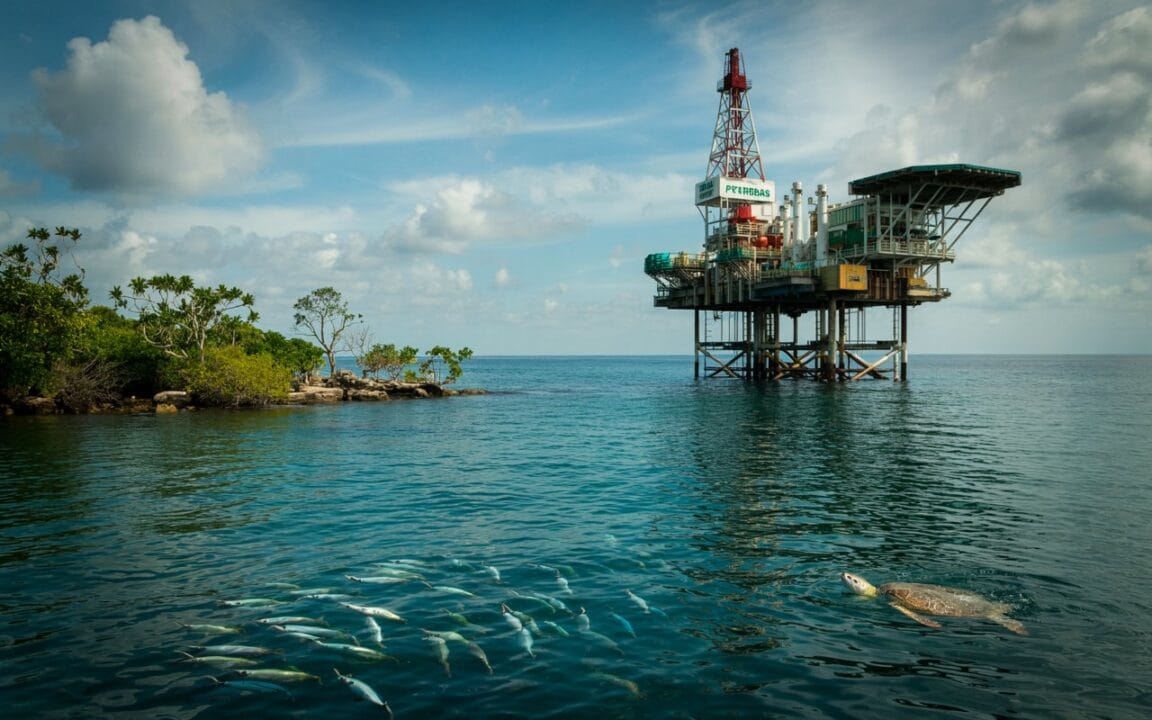
The Question That Divides Experts, Environmentalists, and Brazilian Society Itself
The Petrobras has been insisting on the strategic importance of the Equatorial Margin for the future of oil production in Brazil. However, as projects advance toward the northern part of the country, warnings about the risk of environmental accidents in one of the planet’s most biodiverse regions are also growing.
After all, does Petrobras have the technical capacity and structure to explore oil in the Equatorial Margin without causing environmental damage? The answer is not simple, but involves technical, historical, political, and ecological arguments. Pertinent doubts that have been reinforced by the recent incident involving Cherne-1, in the Campos Basin.
Petrobras Says Yes: Technology and Safety Are Priority
According to the state-owned company, operations in the Equatorial Margin follow international standards for security and environmental protection. Petrobras claims that it has learned from past mistakes and evolved technologically after the success of pre-salt.
-
Petrobras evaluates suspension of sales to distributors and considers canceling the cooking gas auction following guidelines from the Federal Government.
-
Lula reveals a masterstroke by Petrobras to undo a deal made by Bolsonaro, which involves the return of an important refinery that currently produces less than half of what was expected and makes Brazil dependent on international diesel.
-
A study confirms that the natural gas sector will reduce greenhouse gas emissions in Brazil by 0.5% and accelerate the energy transition by 2026.

-
Petrobras implements a severe adjustment and confirms a 55% increase in the price of aviation kerosene with a proposal for installment payments for the companies.


The company cites measures such as:
- Rigorous previous environmental studies, such as the EIA-RIMA (Environmental Impact Study and Environmental Impact Report)
- Oil spill response simulations, based on detailed oceanographic modeling
- Investments in monitoring centers and rapid response vessels
- Updated contingency plans, in partnership with the Navy, universities, and environmental agencies
The state-owned company argues that the development of the region could generate jobs, income, and royalties for the Northern and Northeastern states, without compromising the environment. Marina Silva already has reservations, as she makes clear in the video below:


Environmentalists Disagree: Risks Are High and Uncertainties Even Greater
On the other hand, scientists, NGOs, and Ibama technicians point out failures in Petrobras’s studies. The main criticism is the lack of proof that the state-owned company is prepared to deal with accidents in isolated areas, which are difficult to access, and with ecosystems still unknown.
Among the main points of concern are:
- The direct influence on the Amazon biome, with potential impacts on mangroves, corals, and endemic species
- The distance from logistical support points, which hinders a rapid response in case of a spill
- The lack of transparency about specific emergency plans for the region, especially at the mouth of the Amazon River
Furthermore, Ibama technicians have already denied Petrobras’s environmental license to drill in block FZA-M-59, citing failures in the impact analyses on coastal communities and the so-called “Amazonian reefs,” a unique ecosystem discovered in recent years.
Petrobras’s History Helps… but Also Raises Doubts
Petrobras is one of the most experienced companies in the world in offshore exploration. However, its history also includes episodes that negatively marked the oil industry in Brazil.
Recall some cases:
- In 2000, a rupture in a pipeline in Paraná caused a spill of 4 million liters of oil in rivers of the region
- In 2001, the explosion of the P-36 platform killed 11 workers and resulted in the sinking of the world’s largest production unit at the time
- In 2011, the spill at the Frade Field (operated by Chevron, but involving the sector as a whole) showed that emergency plans do not always work as expected
Although Petrobras has evolved significantly since then, there is no such thing as zero risk, especially in regions as sensitive as the Equatorial Margin.
The Geopolitical Importance of the Equatorial Margin for Brazil
The Equatorial Margin covers five states: Amapá, Pará, Maranhão, Piauí, and Rio Grande do Norte. Petrobras’s expectation is that the region can replicate the success of the pre-salt, with billions of barrels in reserves and the potential to transform the local economy.
Moreover, the competition for blocks in the region is also strategic against the advance of foreign companies like TotalEnergies, which already operates in waters near French Guiana.
Therefore, exploring the Equatorial Margin is not just an environmental issue, but also geopolitical and economic.
So, Should Brazil Allow Exploration or Not?
The answer depends on the point of view. For Petrobras, not moving forward in the region is to give up on a new energy frontier and billions in revenue. For environmentalists, allowing the activity without robust guarantees is risking repeating ecological tragedies in sensitive areas.
Ibama remains cautious. Until April 2025, no definitive license has been granted for drilling at the mouth of the Amazon River. The agency requires more in-depth studies and specific emergency plans. Meanwhile, the debate grows, polarizes, and moves national and international interests.
And you, what do you think about this? Should Brazil prioritize economic growth or protect one of the richest regions in biodiversity on the planet?
️ Main Petrobras Accidents (Timeline)
1972 – REDUC (Duque de Caxias, RJ)
Explosion in liquefied petroleum gas (LPG) tanks caused 38 deaths and dozens of injuries. sindipetronf.org.br
1983 – Bertioga (SP)
Pipeline rupture caused a spill of approximately 3 million liters of oil, affecting mangroves and beaches.
1984 – Vila Socó (Cubatão, SP)
Petrobras pipeline explosion resulted in 93 deaths and 2,500 homeless.
1984 – Anchova Platform (Campos Basin, RJ)
Fire on the platform resulted in the deaths of 37 workers.
2000 – Guanabara Bay (RJ)
Spill of 1.3 million liters of oil due to pipeline rupture, causing one of Brazil’s largest environmental disasters.
2001 – P-36 Platform (Campos Basin, RJ)
Explosions led to the sinking of the world’s largest oil production platform at the time, resulting in 11 deaths.
2003 – Campos Basin (RJ)
Helicopter crash servicing Petrobras resulted in the death of five people.
2015 – FPSO Cidade de São Mateus (ES)
Explosion in the pump house of the floating production storage and offloading unit caused nine deaths and left 26 injured.










Seja o primeiro a reagir!