





 Portuguese
  English
  Spanish
  2 min of reading


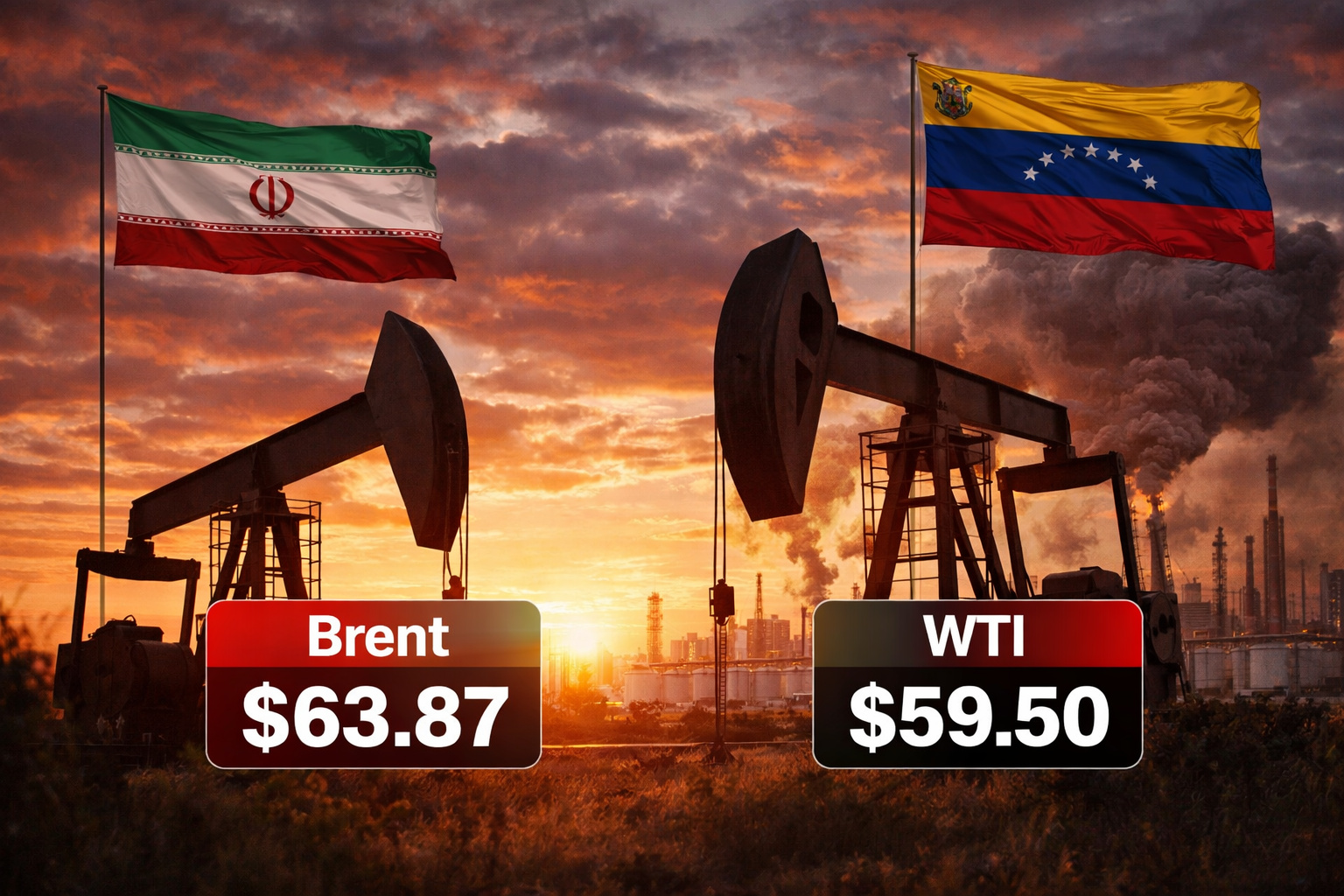
The oil prices closed the session with a moderate increase this week, as investors closely monitored the instability in the Middle East and South America.
The movement reflected both concerns about unexpected supply cuts and growing attention to political crises that may influence oil production and transport.
According to data tracked by the international market, North Sea Brent for March delivery rose 0.84%, closing the day at US$ 63.87 per barrel.
At the same time, West Texas Intermediate (WTI) for February delivery advanced 0.64%, reaching US$ 59.50.
Tension Increases in Iran and Affects Global Price
The rise in prices comes amid growing fears about Iran, one of the main producers in the Middle East.
In recent days, U.S. President Donald Trump threatened direct military intervention if the Iranian government escalates its crackdown on protesters.
-
Lula reveals a masterstroke by Petrobras to undo a deal made by Bolsonaro, which involves the return of an important refinery that currently produces less than half of what was expected and makes Brazil dependent on international diesel.
-
A study confirms that the natural gas sector will reduce greenhouse gas emissions in Brazil by 0.5% and accelerate the energy transition by 2026.

-
Petrobras implements a severe adjustment and confirms a 55% increase in the price of aviation kerosene with a proposal for installment payments for the companies.

-
The rise in oil prices could ensure an extra revenue of R$ 100 billion for the Federal Government, indicates a recent economic study.

Moreover, independent organizations monitoring the anti-government protests mention over 600 dead, a figure that reinforces concerns about a potential escalation of the conflict.
This scenario adds a risk premium to oil, as any instability in the Persian Gulf can disrupt exports and reduce immediate supply in the market.
Venezuela Continues Contributing to Climate of Uncertainty
In parallel with the Iranian crisis, Venezuela remains under significant political and economic pressure.
The country is facing structural difficulties in production and relies on external decisions to export its oil.
Thus, investors are monitoring statements from the White House and the interim Venezuelan leadership, assessing the future of the oil industry in the country.
Any changes in the management of the fields or export routes tend to disrupt the balance between supply and demand.
Therefore, despite the daily increase being moderate, the market views a more tense global scenario than in previous weeks.
Technical Movement and Investor Expectations
Even with political uncertainties, many traders also purchased contracts to adjust recent positions.
Oil has accumulated declines in previous weeks, and therefore some of the market took the opportunity to replenish financial stocks and engage in what are considered defensive operations.
Nonetheless, analysts remind that volatility is likely to continue.
Geopolitical factors continue to weigh on price formation, and any announcement regarding Iran or Venezuela could generate new daily fluctuations.
The prices mentioned were recorded at the close of the international session at the beginning of January 2026 and reported by market platforms followed by industry analysts.
Meanwhile, independent organizations and news reports monitor the protests in Iran and point out more than 600 victims, while U.S. authorities discuss possible military actions.
Thus, oil remains guided by a combination of economic fundamentals and diplomatic tensions and stays at the center of global attention.









Seja o primeiro a reagir!