





 Portuguese
  English
  Spanish
  4 min of reading
  0 comments


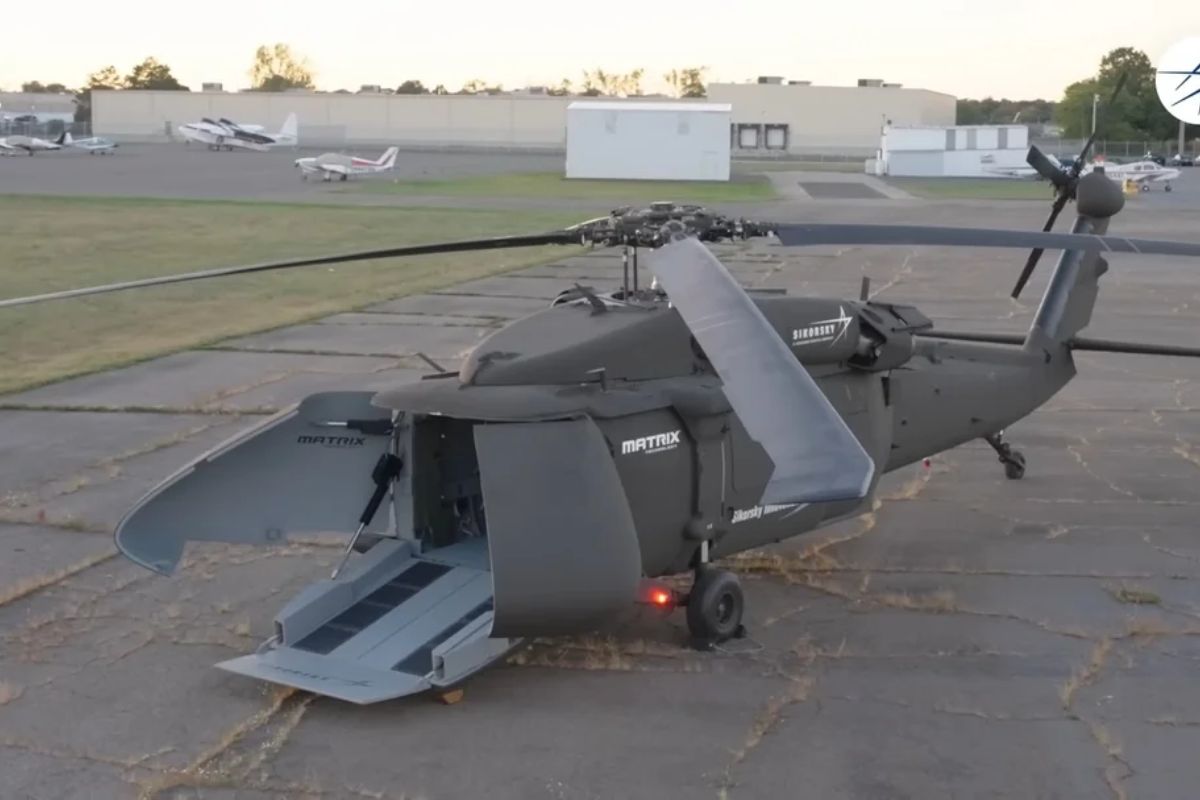
U-Hawk Autonomous Emerges as a Historical Breakthrough in Military Aviation by Transforming the Blackhawk into a Crewless Platform, Extending Range, Reducing Human Risks, and Placing Computers at the Center of Strategic Aerial Decisions
The U-Hawk Autonomous signifies a concrete turning point in the history of military aviation by completely removing pilots from one of the most used helicopters on the planet. The proposal, led by Lockheed Martin, is neither conceptual nor futuristic: operational testing begins in 2026, with real missions already demonstrated in simulated war, logistics, and evacuation scenarios.
Since the first announcement, the U-Hawk Autonomous has made it clear that this is not just about automating flights, but about redefining the doctrine of using the Blackhawk helicopter. By eliminating the cockpit, the project creates physical space, operational autonomy, and new tactical possibilities that were previously unfeasible due to human limitations.
What Changes When the Blackhawk Loses Its Pilots

The U-Hawk Autonomous is derived from the UH-60 Blackhawk, a helicopter created in the 1970s to address survivability issues of the Huey from the Vietnam War. The platform has always been recognized for its versatility, resilience, and ability to operate in extreme environments, but it relied on two trained pilots, human rest, and constant risks to the crew.
-
With a cost per shot close to zero, the DragonFire laser could change naval warfare in 2027 and provide British ships with nearly unlimited defense against drones.

-
A British startup creates tires that generate electricity in electric vehicles when passing over potholes, speed bumps, and cracks.

-
Scientists have created robots made with living cells that have their own nervous system, swim on their own, explore the environment, and self-organize without any genetic engineering, and now they want to do the same with human cells.

-
Students create a solar-powered ambulance that operates without a plug, without fuel, and still keeps medical equipment running in remote areas.
Without pilots, the U-Hawk Autonomous eliminates critical factors such as fatigue, human error, and flight hour limitations. The aircraft is operated via a tablet, with simple commands, allowing soldiers without flight training to plan, execute, and monitor complete missions with reduced training.
This completely changes the logic of who can operate a military helicopter and under what conditions.
Autonomy, Range, and Payload at a New Level

The numbers of the U-Hawk Autonomous explain why it generates so much unease within the Armed Forces. The autonomy reaches up to 14 continuous flight hours, with a maximum range approaching 3,000 kilometers, about 25% higher than the traditional Blackhawk.
The payload capacity also grows decisively. Without a pilot’s cabin, the internal space increases by up to 25%, allowing for the transport of modular containers, unmanned ground vehicles, ammunition capsules, extra fuel, or medical equipment. In prolonged operations, a single U-Hawk Autonomous can move over 33 tons of cargo in continuous cycles throughout a day.
In practice, it accomplishes in hours what previously required multiple crews, rotation, and greater exposure to risk.
Matrix System and Real-Time Decision Making
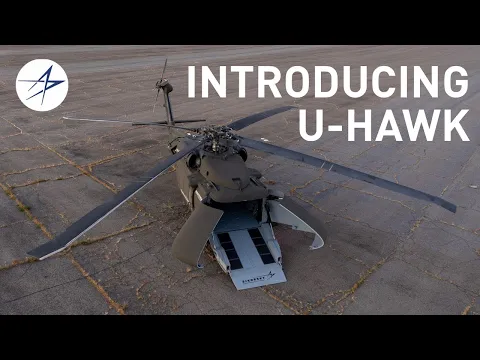

The technological heart of the U-Hawk Autonomous is the Matrix system, developed to allow fully independent flight without continuous remote operators. Unlike conventional drones, the helicopter does not only follow pre-programmed routes.
The U-Hawk Autonomous interprets the environment in real time, identifies obstacles, alters trajectories, maintains low-altitude flight, executes precise landings, and reacts to climatic or tactical changes without direct human intervention.
In previous tests, precursor versions have already demonstrated the ability to fly autonomously for over two hours, avoid threats, and carry out sensitive logistical missions without a crew on board.
Drone Launch and Layered Warfare
Another decisive point is the U-Hawk Autonomous‘s ability to launch and control drones in mid-flight. The aircraft can carry over 30 UAVs, configured for reconnaissance, electronic interference, terrain mapping, surveillance, or attack.
Unlike the conventional Blackhawk, which needs to enter hostile zones to carry out armed missions, the U-Hawk Autonomous can operate from a safe distance, releasing swarms of drones to carry out offensive or defensive tasks.
This creates a layered warfare, where the helicopter acts as a mother platform, drastically reducing the risk of human losses in highly contested areas.
Trust, Fear, and the Military Psychological Factor
Despite the technical advantages, the U-Hawk Autonomous faces an obstacle that cannot be resolved with code: human trust. Studies cited by military personnel and researchers indicate strong resistance to the idea of flying without pilots, especially in missions with direct risks to life.
Even soldiers accustomed to drones and automated systems demonstrate discomfort with the idea of boarding a helicopter controlled exclusively by software. The perception of safety changes when the error ceases to be human and becomes algorithmic.
The central question ceases to be whether the technology works and becomes whether anyone would trust their own life to it.
Where the U-Hawk Autonomous Makes the Most Sense Today
At the current stage, the U-Hawk Autonomous is seen as ideal for transporting supplies, ammunition, fuel, heavy equipment, and logistical support in high-risk areas. It also stands out in humanitarian missions, remote evacuation, and delivery of medical supplies in hostile zones.
Sensitive operations, such as troop transport, complex search and rescue, or special insertions, still face operational and cultural resistance. In these situations, the human presence continues to be considered irreplaceable.
A Watershed That Still Provokes Discomfort
The U-Hawk Autonomous does not immediately replace the traditional Blackhawk, but it inaugurates a new era. It proves that military helicopters can operate without pilots, with efficiency, technical safety, and clear logistical advantages.
At the same time, it exposes the psychological limit of automation in environments where human lives are at stake. Technology advances faster than trust.
If military aviation is heading towards a future without pilots, the question that remains is direct and uncomfortable: would you board a fully autonomous helicopter knowing that there is no one in the cockpit other than a computer?









-

-

-

9 pessoas reagiram a isso.