





 Portuguese
  English
  Spanish
  5 min of reading
  0 comments


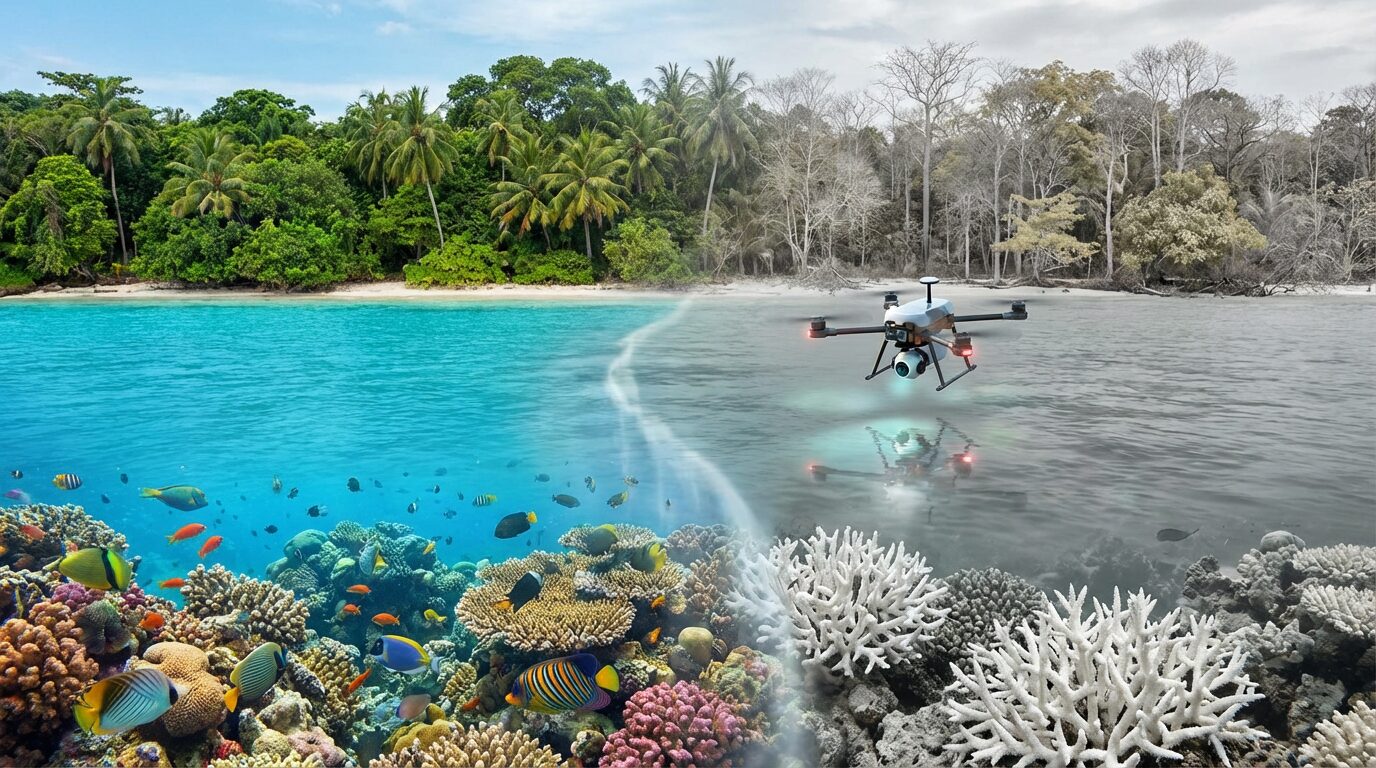
Recent Research Shows an Disturbing Pattern Connecting Seas, Forests, and Cities in the Same Portrait. The Earth is Literally Losing Its Colors, and This Fading Signals Increasing Ecological Stress and Impacts on Climate, Biodiversity, and Food Security.
The planet’s landscapes are changing tone before our eyes. Grayer cities, faded forests, and less vibrant seas form a mosaic that goes beyond the aesthetic and exposes a deep transformation in progress.
Researchers identify that the pale appearance of natural environments is a visual indicator of ecological stress. Color acts as a vital sign, as evident as a fever in an organism.
From the Great Barrier Reef to the Amazônia, the portrait repeats itself with different causes and effects. Common to them is a set of pressures that includes global warming, pollution, and land-use changes, which alter entire ecosystems and the palette they display.
-
Friends have been building a small “town” for 30 years to grow old together, with compact houses, a common area, nature surrounding it, and a collective life project designed for friendship, coexistence, and simplicity.

-
This small town in Germany created its own currency 24 years ago, today it circulates millions per year, is accepted in over 300 stores, and the German government allowed all of this to happen under one condition.

-
Curitiba is shrinking and is expected to lose 97,000 residents by 2050, while inland cities in Paraná such as Sarandi, Araucária, and Toledo are experiencing accelerated growth that is changing the entire state’s map.

-
Tourists were poisoned on Everest in a million-dollar fraud scheme involving helicopters that diverted over $19 million and shocked international authorities.

This new scientific perspective measures, with satellites and sensors, how blue, green, and red are changing over the years. The result was to transform shades into data that help anticipate risks and guide conservation policies.
Colors That Disappear from Seas and Reefs, the Immediate Portrait of Global Warming
Among the clearest signs, coral bleaching has become emblematic. Corals live in partnership with microalgae that provide them energy and pigments, and when the sea water warms beyond the limit for too long, this relationship breaks down, and the corals turn white.
After the marine heatwave of 2016 in the Great Barrier Reef, studies showed a turning point. In just a few months, about one-third of the assessed reefs underwent abrupt structural changes, with loss of species and old colonies, simplifying the habitat.
The impact is not only visual. Healthy reefs function as marine nurseries and support fisheries, tourism, and coastal protection. When they fade and die, the entire marine food chain feels the shock, affecting local economies and food security.
Oceans Lose Green Tones, Satellites Indicate Changes in 40 Percent of the Surface
The change in color goes beyond coastal areas. Analyses of two decades of satellite images detected changes in ocean shades in about 40% of the global surface, signaling transformations in the phytoplankton communities.
These micro-organisms are the foundation of life in the sea and a key piece of the carbon cycle. By swapping one type of phytoplankton for another, the way water reflects light changes, as well as the ocean’s efficiency in storing carbon and supporting fisheries.
Paler Forests in the Amazônia and the World, Prolonged Drought Erodes Chlorophyll and Changes the Role of Carbon
On land, repeated droughts and longer heatwaves reduce photosynthesis and degrade chlorophyll. The result is less green canopies, with yellowish and brownish spots appearing months before autumn in several regions.
In the Amazônia, recurring episodes of drought and wildfires are altering the behavior of segments of the forest. Research cited by the source indicates that areas previously considered powerful carbon sinks now capture less CO₂ and, in some cases, are nearing the balance between emission and absorption.
When the forest loses vigor, the message from the canopy is direct. The paler palette reveals a system under pressure that may lose its capacity to regulate regional and global climate, including rainfall regimes that influence agriculture and urban supply.
This fading also anticipates risks of mass tree mortality. By identifying the change in color in advance, it is possible to direct management and fire prevention efforts more effectively.
Color, therefore, becomes a early alert for environmental managers, indicating where and when the forest needs help.
Less Vibrant Cities and Wildlife, Poor Diet in Carotenoids Weakens Colors and Affects Behavior
The phenomenon also appears in large cities. Studies with common birds in Europe show that chicks raised in urban areas exhibit weaker yellows in their feathers than those from rural areas, an effect associated with the diet available in urban centers.
With fewer fruits and insects rich in carotenoids, the shades of yellow, orange, and red lose intensity. This change in coloration can interfere with mate selection, recognition among individuals, and even defense strategies, affecting survival.
Causes That Add Up: Climate, Pollution, Deforestation, and Restoration Choices Homogenize Landscapes
Global warming is a central driver, but it does not act alone. Deforestation, habitat fragmentation, chemical and light pollution, overfishing, and the use of pesticides create a picture of combined pressures on ecosystems.
There are also unexpected effects from well-intentioned policies. In California, marine prairie restoration projects prioritized a few species considered more resistant, raising initial success but reducing, in the long run, biological and visual diversity.
The result is restored but more homogeneous landscapes, with impoverished color palettes and ecological functions. Less variation means lower resilience to extreme events and rapid climate changes.
These choices, combined with climate and anthropogenic pressures, accelerate fading and consolidate a vicious cycle of ecological simplification.
What Colors Reveal About Ecosystem Health, From Visual Alert to High-Precision Monitoring
The color of an environment functions as a visual blood test. When seas, forests, or prairies become more uniform, the message is that diverse species are giving way to a smaller group of survivors, with loss of ecological functions.
With more precise satellites and sensors, scientists are detecting minimal variations in tone and cross-referencing this data with biodiversity records. This integration allows mapping areas that are becoming more homogeneous and guiding conservation actions where the risk is higher.
What do you think about the planet losing its colors? Should the reading of colors guide conservation priorities, even if it means revising restoration projects and urban practices? Leave a comment, share local experiences of fading in your city or region, and help enrich the debate with examples that confirm or challenge these conclusions.










-

-

-

-

-

20 pessoas reagiram a isso.