





 Portuguese
  English
  Spanish
  4 min of reading
  0 comments


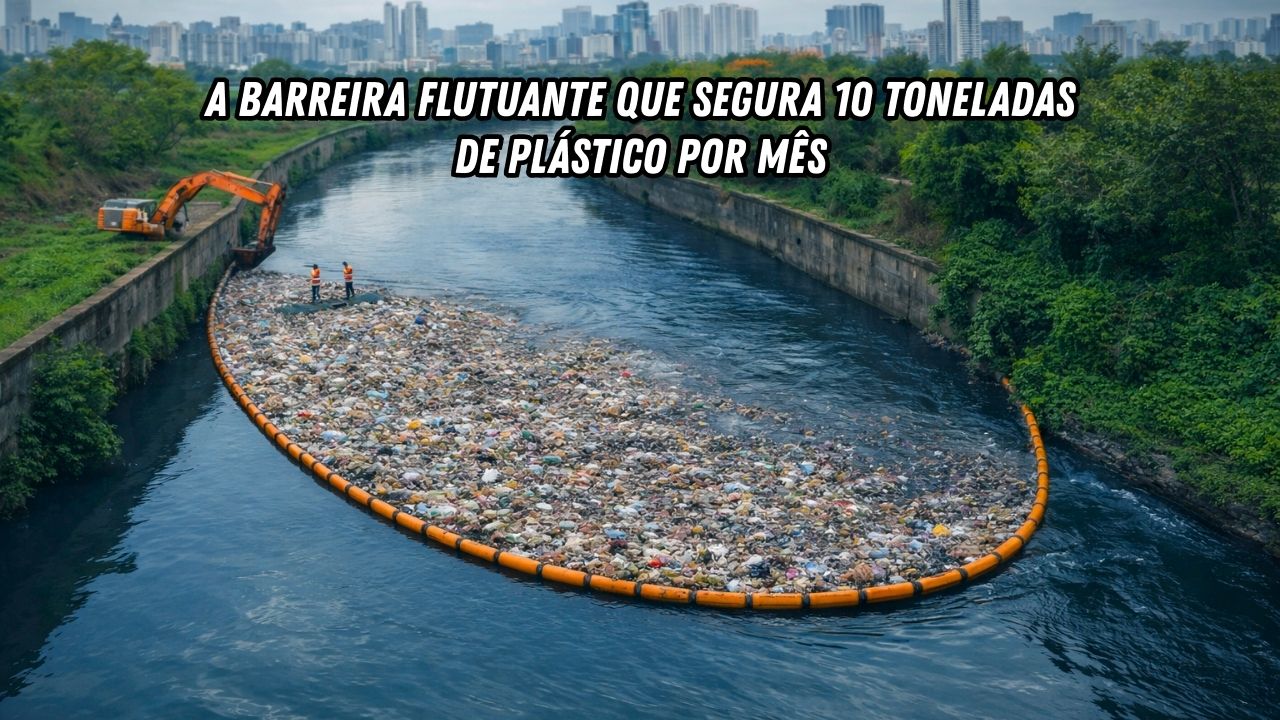
Floating Barrier Installed in Rivers Captures Up to 10 Tons of Plastic per Month Before Waste Reaches the Oceans and Emerges as a Simple Solution to One of the Greatest Environmental Problems.
A simple, inexpensive, and surprisingly effective solution has begun to attract attention in the fight against global plastic pollution: floating barriers installed in rivers and urban canals capable of capturing up to 10 tons of plastic per month before waste reaches the oceans. In a scenario where plastic is already invading food chains and marine ecosystems, this strategy could represent a practical turning point in a problem that seemed impossible to contain.
The project gained prominence after consistent results in densely populated cities like Mumbai, where rivers function as true “conveyor belts” of waste heading to the sea.
Why Stopping Plastic in Rivers Changes Everything
Studies show that most of the plastic found in the oceans does not originate in the sea, but in urban areas. Rivers, drainage channels, and streams transport improperly discarded waste to the coast, where the material breaks down into microplastics and spreads in an almost irreversible manner. Intercepting this flow before it reaches the ocean is strategic:
-
Embrapa’s discovery reveals an unexpected advancement by allowing the production of seedlings from the caatinga using brackish water, opening a new frontier for farmers to face drought more efficiently.

-
6 sources of free fertilizer that you are throwing away every day and can transform your garden without spending anything.

-
With a water crisis on the radar, Sabesp invests in reclaimed water for data centers and transforms sewage treatment into a solution that saves millions of liters and protects public supply.

-
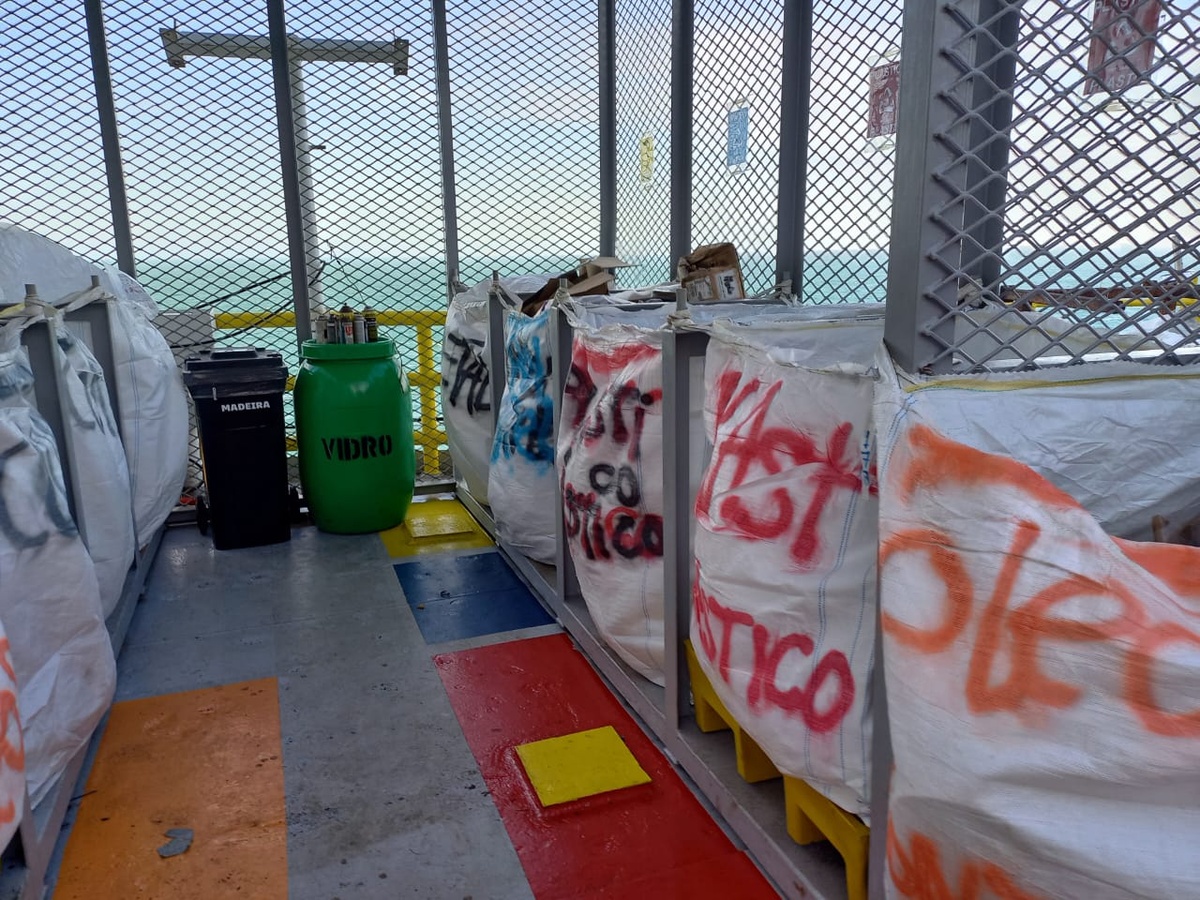
Foresea achieves 100% offshore waste reuse in 2025, eliminates landfill disposal, and consolidates sustainable strategy with 1,500 tons recycled.
- Prevents the fragmentation of plastic into microscopic particles
- Reduces direct harm to marine fauna
- Facilitates the collection and recycling of the material
Instead of trying to “clean the ocean” — a task that is expensive, complex, and of limited effectiveness — the barrier acts at the source of the problem.

How the Floating Barrier Works
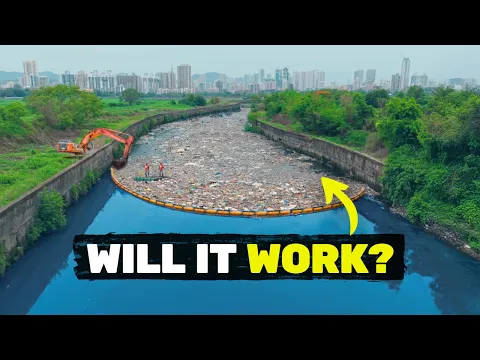
The technology is deliberately simple. The system consists of floating structures positioned transversely to the river flow, forming a funnel that directs plastic waste to a safe and accessible collection point. Some key points of functionality include:
- The barrier does not completely block the water flow, allowing fish and sediments to pass underneath
- It does not use motors or complex systems, operating in a passive manner
- It is modular, able to be adapted to narrow rivers, urban channels, or wider waterways
This simplicity reduces costs, facilitates local maintenance, and makes the system replicable in low-resource countries.
10 Tons per Month That Don’t Reach the Sea
In critical areas, the barriers are already capable of capturing around 10,000 kilograms of plastic per month — bags, bottles, packaging, and household waste that would otherwise go directly into the ocean.
The operation involves frequent collection of the accumulated material, sorting, and forwarding for recycling or proper disposal. The impact is not only environmental but also visual and social: cleaner rivers reduce flooding, odors, and health risks for riverside communities.
Who Is Behind the Initiative
The model has been implemented by organizations such as Plastic Fischer, in partnership with environmental projects and local communities. In some cases, there is support from international initiatives like Planet Wild, which fund the expansion of the barriers and the monitoring of results.
In addition to the physical removal of plastic, these projects generate real data on volumes, types of waste, and seasonality, helping governments and researchers to better understand the problem.
A Powerful Solution — But It Doesn’t Act Alone
Experts are clear: the barriers do not solve the plastic crisis on their own. They act as a crucial line of defense but need to go hand in hand with:
- Reduction of single-use plastics
- Efficient urban collection
- Public recycling and circular economy policies
- Environmental education
Without these fronts, the flow of waste continues. With them, the barrier transcends being just a “filter” and becomes part of a systemic strategy.
Why This Idea Can Be Replicated Worldwide
The greatest strength of the system lies in its scale. Unlike expensive or experimental technologies, the floating barrier can be installed quickly in thousands of rivers — especially those identified as significant emitters of plastic to the oceans.
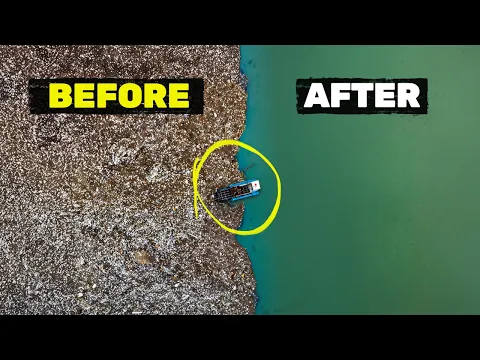
Countries in Asia, Africa, and Latin America, where waste management faces historical challenges, are natural candidates for expanding the model. With low investment and high environmental return, the solution buys time while larger structural changes are implemented.
A Real Brake Before the Point of No Return
Every year, millions of tons of plastic enter the oceans. Stopping even a fraction of that volume before dispersal already represents a huge environmental gain.
The barrier that captures 10 tons of plastic per month proves that it is not necessary to have futuristic technology to create real impact. Sometimes, changing the fate of the oceans starts with something simple, installed in the right place — and at the right time.









-

Uma pessoa reagiu a isso.