





 Portuguese
  English
  Spanish
  3 min of reading
  0 comments


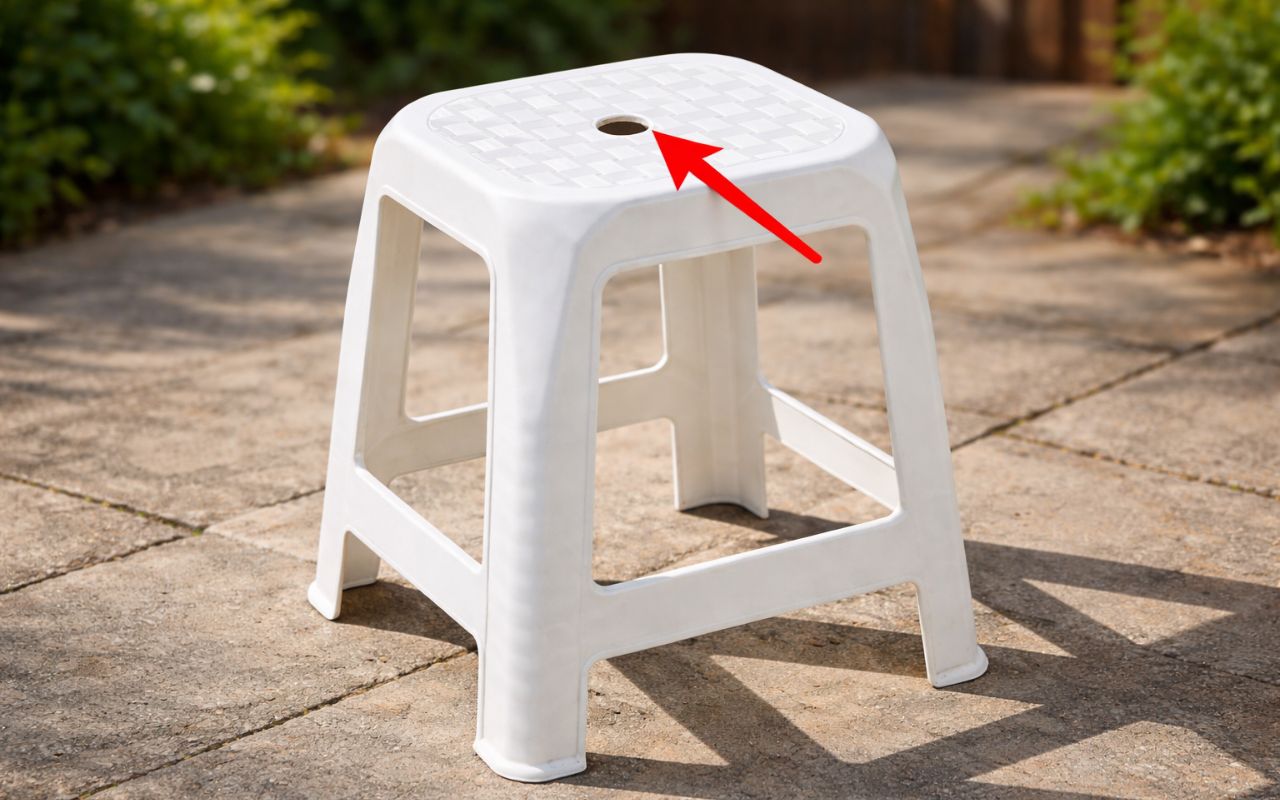
Discover What the Hole in the Middle of a Plastic Chair Is For and Understand Its Practical Functions, from Manufacturing to Durability and Comfort. Learn All About This Little-Noticed Detail.
The hole in the center of a plastic chair may seem just an aesthetic detail, but it exists for important functional reasons. Experts explain that this circle in the seat is designed from manufacturing to daily use to enhance the experience of users and extend the lifespan of the piece.
What Is the Hole in the Plastic Chair?
When you look at a common plastic chair — found in backyards, bars, events, and balconies — a small round hole in the middle of the seat catches your attention. Despite its simplicity, it is not there by chance.
This hole serves multiple functions that go beyond appearance, influencing the durability, comfort, manufacturing, and practicality of the product.
-
Friends have been building a small “town” for 30 years to grow old together, with compact houses, a common area, nature surrounding it, and a collective life project designed for friendship, coexistence, and simplicity.

-
This small town in Germany created its own currency 24 years ago, today it circulates millions per year, is accepted in over 300 stores, and the German government allowed all of this to happen under one condition.

-
Curitiba is shrinking and is expected to lose 97,000 residents by 2050, while inland cities in Paraná such as Sarandi, Araucária, and Toledo are experiencing accelerated growth that is changing the entire state’s map.

-
Tourists were poisoned on Everest in a million-dollar fraud scheme involving helicopters that diverted over $19 million and shocked international authorities.


Why Does the Hole Exist? Functions Beyond Aesthetics
1. Prevents Water Accumulation
The plastic chair is widely used in outdoor settings where rain and water cleaning are common.
The hole allows liquids to drain quickly, preventing puddles that could deform the seat or wet those who sit down.
2. Improves Comfort When Sitting
Plastic can stick to the skin when there is insufficient air circulation.
The hole facilitates airflow, reducing the feeling of heat and “suction” when someone gets up.
3. Contributes to Structural Strength
Contrary to popular belief, the hole does not weaken the plastic chair.
On the contrary, it helps distribute plastic more effectively in the mold during production, reducing stress and preventing the material from cracking or deforming over time.
4. Makes It Easier to Stack and Store
When multiple chairs are stacked, the vacuum between them can make separation difficult.
The hole allows air circulation and makes it easier to disengage the units, speeding up transport and reducing the risk of accidents.
5. Aids in Mass Production
On the production line, the hole reduces the cooling time of the plastic and helps to use less material, making production more efficient and helping to keep prices affordable for consumers.
Where Does This Functionality Stand Out Most?
In Outdoor Areas
In balconies, backyards, beaches, and outdoor parties, the hole in the plastic chair proves especially useful for allowing water drainage and ventilation.
In Businesses and Events
Bars, restaurants, and places with heavy foot traffic rely on light and durable chairs.
The hole facilitates stacking, transport, and quick cleaning between uses.
In Domestic Use
Even in indoor environments, the hole helps keep the seat dry and comfortable, especially in warm seasons.
How to Better Understand This Design?
The round shape of the hole is not random. Circles distribute pressure in the seat better than angular shapes, reducing the risk of cracks and maintaining the integrity of the plastic.
Additionally, this opening — combined with a good thickness of material — ensures that the chair remains durable even under intensive use.
Plastic Chair with Hole vs. Without Hole
Not all plastic chairs have a hole in the middle. Some modern models adopt different openings, side ventilation, or more flexible materials to achieve similar results.
However, the traditional model with a hole in the center continues to prevail for balancing cost, practicality, and durability.
Although small, the hole in the middle of a plastic chair is an example of how apparently simple detail can hide smart solutions.
It improves comfort, increases durability, facilitates daily use, and reinforces an efficient and economical design.
So, the next time you sit in one of these chairs, remember: that hole was designed for much more than just aesthetics — it has a practical function in every moment of use.
Source: Catraca Livre










-

-

-

-

7 pessoas reagiram a isso.