





 Portuguese
  English
  Spanish
  3 min of reading
  0 comments


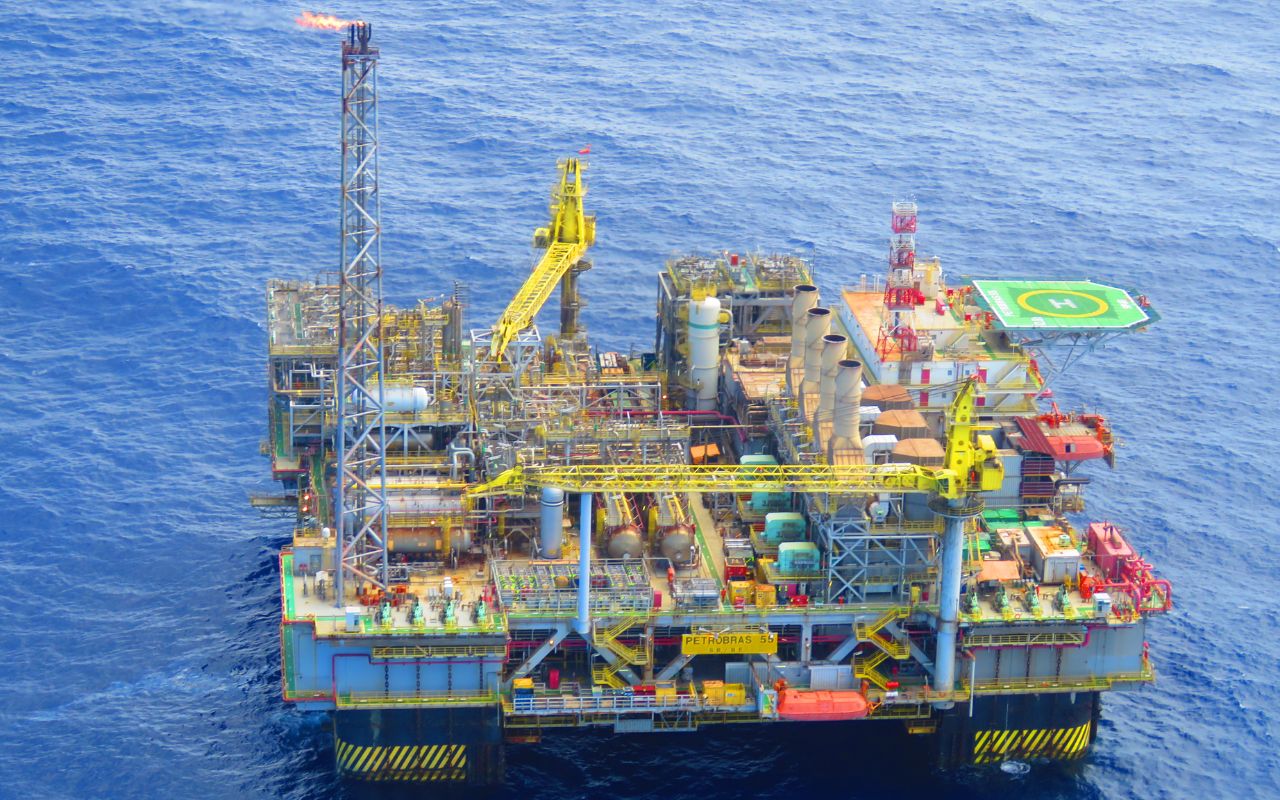
The P-55 Platform Is a Landmark of Brazilian Offshore Engineering, Operating in the Campos Basin and Producing Up to 180 Thousand Barrels of Oil Per Day in Deep Water.
The P-55 platform is one of the largest offshore structures in Brazil and plays a strategic role in the production of national oil. Operating in the Campos Basin, off the coast of Rio de Janeiro, the unit became operational to enable exploration in deep waters, about 1,800 meters below the surface.
The platform ensures energy security for the country, creates jobs, and generates billions in royalties. All of this is possible thanks to a combination of advanced engineering, complex logistics, and strict environmental oversight.
Learn Everything About the P-55 Platform
The P-55 platform operates in the Roncador Field, one of the most productive in the Campos Basin. Unlike fixed structures, this platform is semi-submersible, meaning it floats on the sea.
-
Lula reveals a masterstroke by Petrobras to undo a deal made by Bolsonaro, which involves the return of an important refinery that currently produces less than half of what was expected and makes Brazil dependent on international diesel.
-
A study confirms that the natural gas sector will reduce greenhouse gas emissions in Brazil by 0.5% and accelerate the energy transition by 2026.

-
Petrobras implements a severe adjustment and confirms a 55% increase in the price of aviation kerosene with a proposal for installment payments for the companies.

-
The rise in oil prices could ensure an extra revenue of R$ 100 billion for the Federal Government, indicates a recent economic study.

Even so, it maintains stability even in adverse conditions, allowing for continuous extraction of oil in ultra-deep waters.
The structure of the P-55 platform is supported by large columns and submerged pontoons. Additionally, high-resistance cables and anchors keep the unit secured to the seabed.
This technology is essential for operating where fixed platforms would not be viable, ensuring efficiency and safety in the production of oil and natural gas.
Oil and Gas Production Capacity
In terms of numbers, the P-55 platform is impressive. The unit has the capacity to produce around 180 thousand barrels of oil per day. Additionally, it can compress up to 6 million cubic meters of natural gas daily.
Meanwhile, it also injects approximately 290 thousand barrels of water per day into the wells, a technique used to maintain reservoir pressure.
Structure and Dimensions of the P-55 Platform
With approximately 52 thousand tons, the P-55 platform occupies an area of 10 thousand square meters, equivalent to a football field.
Aboard, there are accommodations for around 100 professionals, who work in shifts to keep oil production running 24 hours a day.
Construction, Jobs, and Local Content
The construction of the P-55 platform was a logistical challenge of great proportions. Modules were manufactured in different regions of Brazil and abroad.
The final coupling, known as “mating,” occurred at the Rio Grande Shipyard in Rio Grande do Sul.
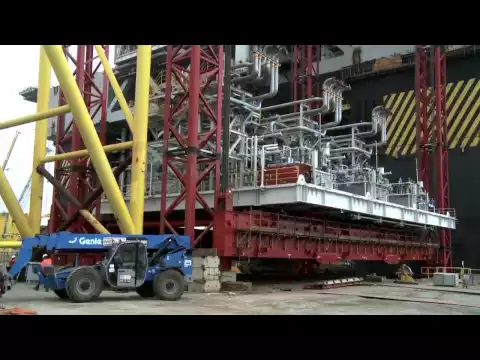

This process prioritized local content and boosted the Brazilian shipbuilding industry, generating thousands of direct and indirect jobs.
Strategic Importance of the P-55 Platform
The P-55 platform is essential for supplying the domestic market as well as for oil exports. Production fuels the economy, strengthens the trade balance, and contributes to energy generation in the country.
Furthermore, the operation is overseen by the National Agency of Petroleum (ANP), ensuring compliance with environmental and operational regulations.
Thus, the P-55 platform remains a symbol of Brazilian technical capability and the relevance of the oil sector for national development.
With information from BM&C NEWS.









-

Uma pessoa reagiu a isso.