





 Portuguese
  English
  Spanish
  4 min of reading
  7 comments


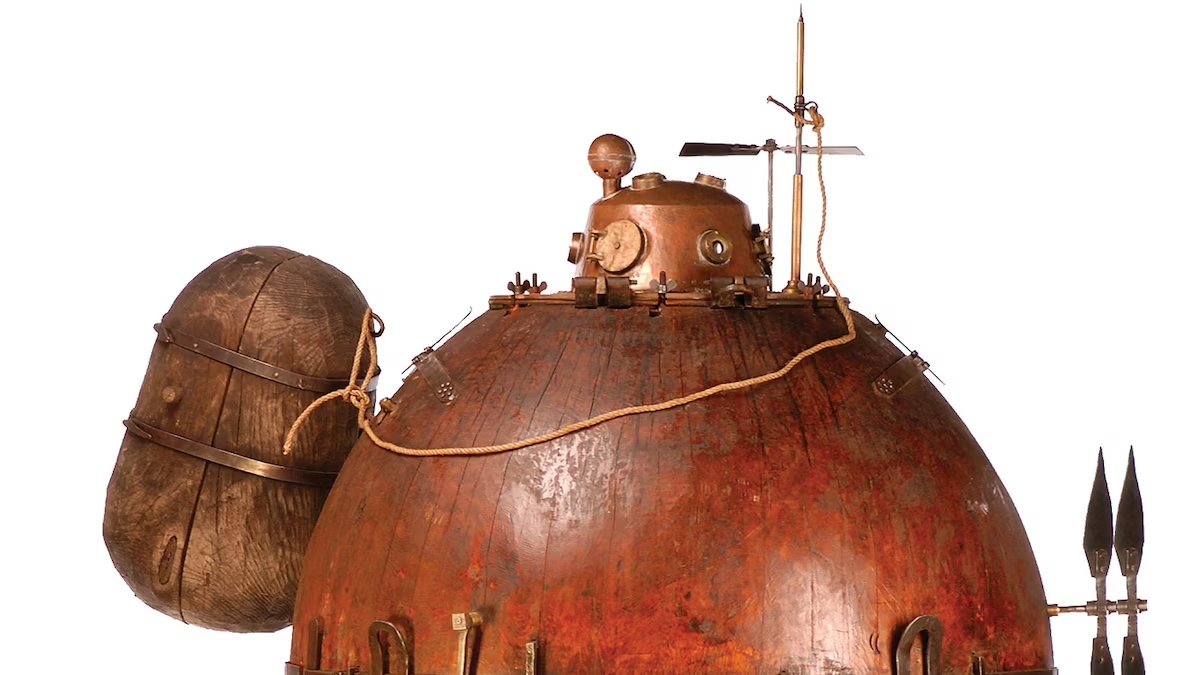


In 1776, The Turtle Became The First Military Submarine In History, Operated By A Single Man And Cranked During The U.S. War Of Independence.
In September 1776, in the midst of the American War of Independence, a small wooden submersible attempted to do something many considered impossible: attack a warship from below the waterline. The device was called Turtle and was designed by David Bushnell, an American inventor educated at Yale. The mission took place in New York Harbor against the British ship HMS Eagle.
The episode is widely recognized by historians as the first documented use of a submarine in actual combat.
The Context Of The War Of Independence And The Search For Asymmetric Weapons
In 1776, British naval power was overwhelming. The Royal Navy controlled the Atlantic, blockaded ports, and supported ground troops with logistical superiority. For American revolutionaries, facing line ships with conventional means was practically unfeasible.
-
Friends have been building a small “town” for 30 years to grow old together, with compact houses, a common area, nature surrounding it, and a collective life project designed for friendship, coexistence, and simplicity.

-
This small town in Germany created its own currency 24 years ago, today it circulates millions per year, is accepted in over 300 stores, and the German government allowed all of this to happen under one condition.

-
Curitiba is shrinking and is expected to lose 97,000 residents by 2050, while inland cities in Paraná such as Sarandi, Araucária, and Toledo are experiencing accelerated growth that is changing the entire state’s map.

-
Tourists were poisoned on Everest in a million-dollar fraud scheme involving helicopters that diverted over $19 million and shocked international authorities.


David Bushnell decided to bet on something radical: a submersible vehicle capable of invisibly approaching an enemy ship and attaching an explosive charge below the waterline.
The proposal was simple yet revolutionary: if it was not possible to win in direct confrontation, it would be necessary to attack from where no one expected.
How The Turtle Functioned – First Military Submarine In History
The Turtle was a single-person vessel, primarily constructed of wood reinforced with metal rings. Its shape resembled two turtle shells joined together — hence the name.
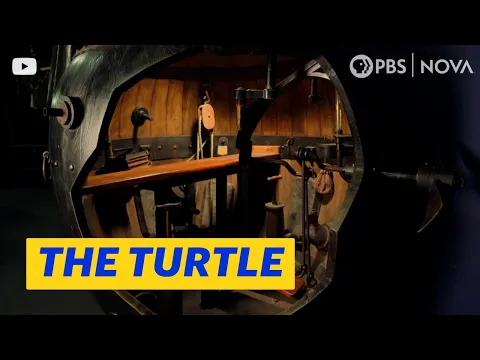
The operator entered through a top hatch and sat inside an extremely cramped space. The entire system was manual.
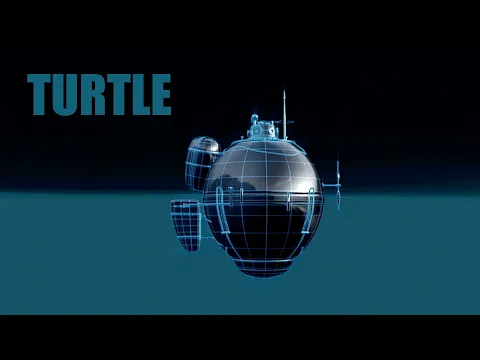

The horizontal propulsion was achieved by a manually cranked propeller.
Vertical propulsion used another manual mechanism to rise or descend.
Stabilization was controlled by water ballast.
The first military submarine in history also had:
• Adjustable ballast tanks
• Limited ventilation system
• Luminous instruments with bioluminescent fungi for nighttime reading
• A drilling mechanism to attach explosives to the enemy hull
It was pure experimental engineering.
The Mission Against The HMS Eagle And The First Military Submarine In History
On the night of September 6, 1776, soldier Ezra Lee was chosen to operate the Turtle. His target was the HMS Eagle, a British ship anchored near Manhattan Island.
Lee managed to approach the ship’s hull, but faced difficulties in drilling into the wood and attaching the explosive charge. Historical accounts suggest he may have struck a reinforced part of the hull or metal sheathing, preventing the attachment.
Unable to complete the attack, Lee left the timed explosive adrift and was able to escape.
The charge later exploded, causing alarm among the British, but no significant damage.
Although it did not sink the ship, the episode marked the birth of submarine warfare.
Why The Turtle Submarine Was Revolutionary For Naval Engineering
Although rudimentary, the Turtle presented concepts that would become standard centuries later:
• Stealthy submerged attack
• Warfare below the waterline
• Individual operation in a confined environment
• Use of timed explosive charges
• Asymmetric strategy against superior naval force
The fundamental principle was established: ships were no longer safe just because they dominated the surface.
This concept would profoundly change naval architecture in the future.
The Indirect Impact On The Evolution Of Submarines
The Turtle did not immediately lead to the creation of modern submarines. The technology of the time limited range, autonomy, and safety. But the idea did not die.
In the 19th century, projects such as the Confederate submarine CSS Hunley emerged. In the 20th century, World War I would consolidate the strategic use of German U-boats.
During World War II, submarines became decisive weapons. All of it started with that manually cranked experiment in 1776.
What Made The Operation Of The Turtle Submarine Extremely Risky
The operator of the Turtle faced severe risks:
• Low visibility
• Manual oxygen control
• Lack of modern instruments
• Unpredictable ocean currents
• Possibility of immediate drowning
It was a virtually suicidal mission in technical terms.
The fact that Ezra Lee survived is already considered a remarkable feat.
Why Many Experts Considered It Impossible
At that time, underwater navigation was considered unfeasible. There were no:
• Reliable engines
• Advanced sealing systems
• Accurate buoyancy control
• Sophisticated hydrodynamic knowledge
The Turtle was a handmade solution to a gigantic military problem.
And even with severe limitations, it managed to prove that warfare could occur beneath the surface.
The Strategic Legacy Of The Turtle
Today, nuclear submarines patrol oceans with virtually unlimited autonomy. Some remain submerged for months, operate at great depths, and carry strategic armaments.
But the central principle remains the same:
The advantage of invisibility. The Turtle inaugurated this logic.
In a world dominated by wooden ships and surface cannons, a man inside a cranked capsule challenged the greatest naval empire of the time.
- Did not sink the HMS Eagle.
- Did not change the immediate course of the war.
- But permanently altered naval military thinking.
From that point on, no ship could consider itself completely safe.










Legal demais então saber que o primeiro sub-marino foi americano
Excelente matéria
Parabéns
Pensei que era uma chaleira de bronze