





 Portuguese
  English
  Spanish
  4 min of reading
  0 comments


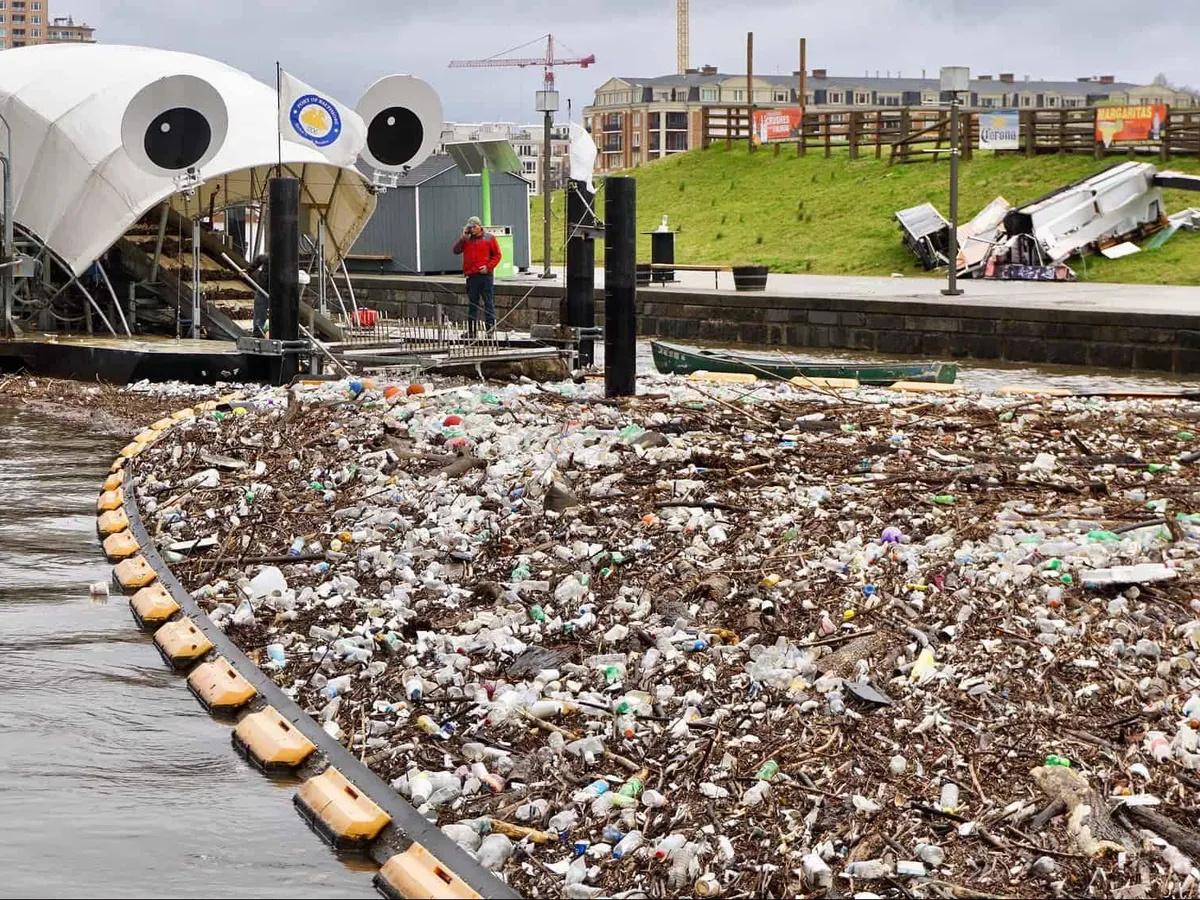
Solar And Hydropowered System Has Removed Over 2 Million Pounds Of Trash Before It Reached The Ocean.
In 2014, the city of Baltimore, in the United States, put an unusual structure into operation in the inner harbor: a large rotating wheel installed at the mouth of the Jones Falls River. The equipment has a peculiar name, Mr. Trash Wheel, but its function is extremely serious. It was designed to intercept urban waste before it reaches the Chesapeake Bay and, subsequently, the Atlantic Ocean.
Since its installation, the system has already removed more than 2 million pounds of trash from the water, according to data released by the organization responsible for the project, the Waterfront Partnership of Baltimore. The volume includes plastic bottles, bags, packaging, Styrofoam, logs, branches, and even unusual items like sports balls and discarded appliances.
The project has become one of the most well-known examples of urban technology applied to combat water pollution.
-
Motorola launched the Signature with a gold seal from DxOMark, tying with the iPhone 17 Pro in camera performance, Snapdragon 8 Gen 5 that surpassed 3 million in benchmarks, and a zoom that impresses even at night.

-
Satellites reveal beneath the Sahara a giant river buried for thousands of kilometers: study shows that the largest hot desert on the planet was once traversed by a river system comparable to the largest on Earth.

-
Scientists have captured something never seen in space: newly born stars are creating gigantic rings of light a thousand times larger than the distance between the Earth and the Sun, and this changes everything we knew about stellar birth.

-
Geologists find traces of a continent that disappeared 155 million years ago after separating from Australia and reveal that it did not sink, but broke into fragments scattered across Southeast Asia.
How Mr. Trash Wheel Works
The equipment combines two energy generation systems. The primary driving force comes from the river’s own current. When the water flows with sufficient intensity, it moves a hydraulic wheel that powers the collection conveyor.
During low flow periods, solar panels installed on the structure provide supplemental energy to maintain continuous operation. This combination allows for practically uninterrupted operation.

The system uses floating barriers positioned in a “V” shape to guide the trash to the conveyor. The conveyor lifts waste from the water’s surface and deposits it into containers installed on a barge attached to the equipment.
When the containers reach maximum capacity, they are removed by boats and replaced with empty units. The process is automated, reducing the need for constant manual intervention.
The Problem The System Tries To Solve
A large part of marine trash originates from land. Waste discarded in the streets is carried by rain to urban drainage systems and subsequently to rivers that flow into the sea.
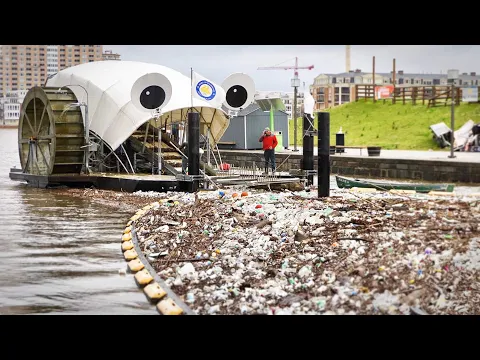

Baltimore faces a significant historical issue with urban pollution, especially after heavy rains, when the volume of waste carried increases dramatically.
The Chesapeake Bay, one of the largest estuaries in the United States, has suffered environmental impacts for decades due to the accumulation of nutrients, sediments, and solid waste.
By intercepting trash before it reaches the bay, the Mr. Trash Wheel acts as a preventive barrier.
Expansion Of Mr. Trash Wheel And Accumulated Results
The success of the first unit led to the installation of additional equipment at other points in the city. Versions such as Professor Trash Wheel and Captain Trash Wheel have emerged, each strategically positioned to intercept waste in different areas.
Together, the systems have already removed millions of pounds of trash since 2014. The number exceeds 2 million pounds in just the original unit.

Among the collected waste are millions of plastic bottles, hundreds of thousands of bags, and tons of organic debris.
This data is periodically updated by the responsible organization, which maintains public counters for the community’s tracking.
Simple Engineering With Measurable Impact
Although the technology involved is not complex in industrial terms, the environmental impact is significant. The combined use of hydraulic and solar energy reduces operational costs and associated emissions.
The model is considered an intermediate solution. It does not replace policies for reducing disposable plastic or improvements in urban collection systems but acts as an immediate containment mechanism.
The visibility of the equipment, with its cartoonish design and painted eyes on the structure, also contributes to public awareness. The character has gained a following on social media and has become an educational tool.
Limitations And Structural Challenges
Experts warn that interception systems are only part of the solution. If the continuous flow of waste is not reduced at the source, the equipment will continue to operate indefinitely.
The cost of maintenance, replacement of parts, and logistics for removing the containers also requires ongoing funding.
Additionally, the equipment mainly acts on floating waste. Microplastics and submerged particles may escape capture.
Still, the project has established itself as a replicable example for other coastal cities.
Mr. Trash Wheel Became A Symbol Of Urban Engineering Against Trash
Mr. Trash Wheel has become a symbol of how relatively simple technological solutions can create measurable impact when applied strategically.
By removing over 2 million pounds of trash before it reached the ocean, the system demonstrated that prevention is more efficient than marine remediation.
The applied engineering has not solved the global plastic crisis but created a concrete barrier against part of the problem. In a scenario where millions of tons of waste enter the oceans every year, initiatives like this highlight that technology, urban planning, and social mobilization can work together.
The wheel that spins in Baltimore’s harbor is not just a hydraulic mechanism. It is a visible reminder that pollution does not have to be inevitable, as long as there is technical decision-making and the will to act before trash reaches the sea.








-

-

-

-

-

-

14 pessoas reagiram a isso.