





 Portuguese
  English
  Spanish
  5 min of reading
  3 comments





Centuries-Old Roofing Technology Gains Ground in Brazil by Combining Asphalt Membrane, Mineral Granules, and Fiberglass, Offering Reinforced Sealing, Wind Resistance, and Specialized Installation, in Contrast to Traditional Ceramic Tiles Still Dominating the National Market.
Red ceramic tiles continue to dominate many Brazilian rooftops.
An American-origin roofing system, already used for over a century, has been appearing more frequently in constructions and renovations: the shingle roof.
Made from a reinforced asphalt membrane with a mesh, usually made of fiberglass, and protected by mineral granules on the outer face, the material has become popular in different countries because it combines sealing, weather resistance, and faster assembly when applied over a suitable base and with correct installation.
-
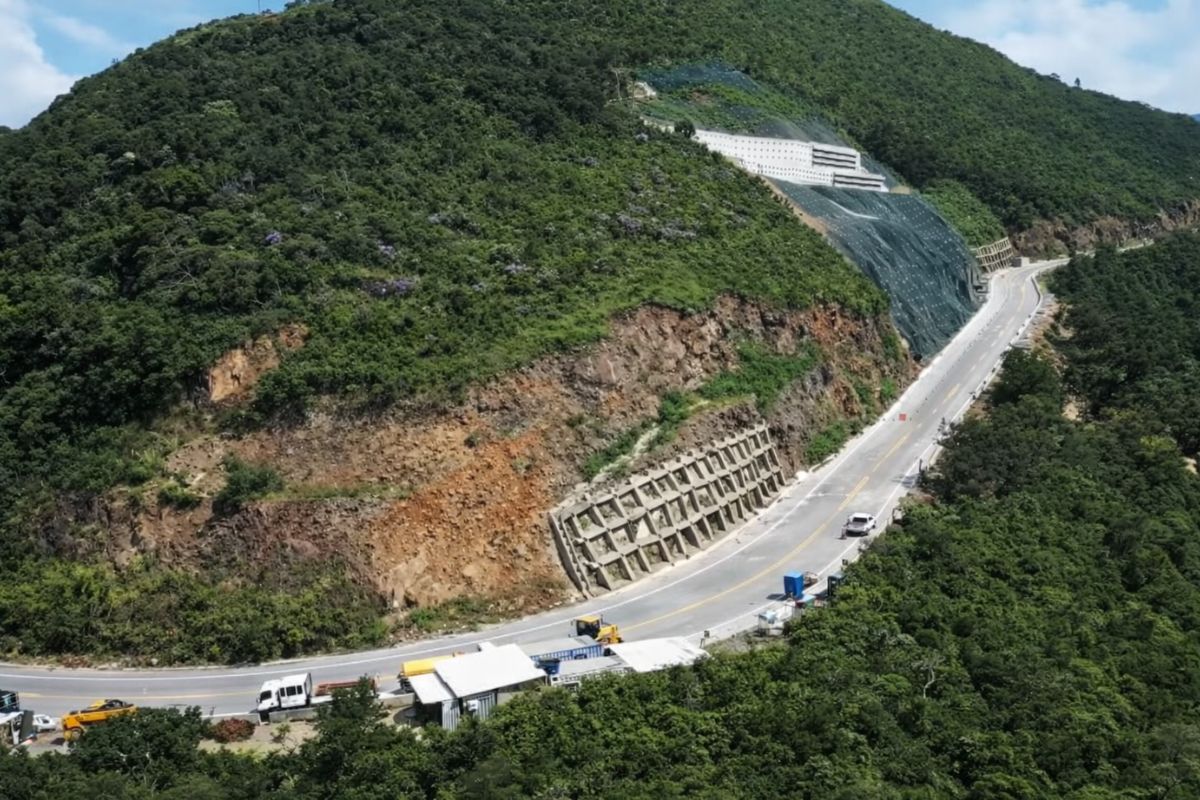
The section of Serra da Rocinha on BR-285 is now open in Timbé do Sul: 50 m tensioned curtains and top-down technique stabilize the slope, with a stairway duct controlling the water.
-
Scientists use sawdust mixed with clay to create a lighter brick, promising efficient thermal insulation and impressing by transforming waste into a solution for construction.

-
With a DNA shape, this bridge in Singapore draws attention in modern architecture and surprises tourists by transforming a simple crossing into an unforgettable visual experience in the urban heart.

-
Giant underwater pipeline begins to take shape with a R$ 134.7 million project at the Port of Santos: the 1.7 km structure uses 12-meter and 700 mm pipes to supply water to 450,000 people in Guarujá.


Although the appearance is different from the traditional tile, the principle is the same.
To form a continuous layer that protects the structure from rain, wind, and weather variations.
The difference lies in the shape and how they are laid.
In shingles, the pieces are overlapped and fixed in sequence.
This system creates a roof with fewer exposed points than solutions where each tile is left loose over battens.
The result tends to be a more uniform finish, especially on roofs with many slopes, cuts, or architectural details.
What Is the Shingle Roof and How Is It Made?

The shingle is a type of asphalt tile.
In general terms, the piece originates from a base of membrane that receives asphalt impregnation and coverage.
On the exposed side, there is a layer of mineral granules, responsible for protecting the asphalt from solar radiation and wear.
This surface also defines the color and texture of the roof.
Another recurring feature is the structural reinforcement with fiberglass, found in most modern products.
This reinforcement contributes to greater dimensional stability and better structural performance.
In practice, it helps the tile maintain its shape, control expansions, and withstand wind and rain when installed according to technical specifications.
It is also common for this type of tile to be described as self-sealing.
In many models, adhesive strips allow one piece to adhere to another with heat and pressure.
This mechanism reduces vulnerable points to infiltration and decreases the risk of lifting caused by wind.
Still, the final performance depends on the complete system, including base, underlayment, and accessories.
Origin in the United States and International Expansion
Asphalt tiles in shingle format began to establish themselves in the United States in the early 20th century.

Historical records place the first use around 1903.
After that period, the material gained industrial scale and began to be widely adopted in the country.
The diffusion intensified throughout the century, especially in North America.
Over time, the technology spread to Canada and countries in Europe.
In many of these regions, shingle became a common solution in single-family homes.
In Brazil, its presence has always been more discreet.
Nevertheless, manufacturers and distributors gradually began to offer the system.
In recent years, greater availability in the market and the search for faster construction solutions have helped boost interest.
Shingle began to appear in residential projects, leisure areas, chalets, and buildings with more contemporary architectural language.
Sealing Against Leaks and the Importance of Professional Installation
The main promise of the shingle roof is to form a continuous and sealed coverage.
As the pieces overlap and may have adhesive strips, the sealing tends to be tighter.
This design can help reduce the occurrence of leaks.
The performance is more evident when the system respects the minimum recommended slopes and uses all the indicated components.
The decisive factor, however, lies in the execution.
The installation requires a compatible base, correct fastening, and special attention to critical points.
Ridges, flashings, junctions with walls, and duct penetrations need to be addressed with precision.
For this reason, the service should be performed by specialized professionals.
The speed of assembly does not eliminate the need for technique.

When the application deviates from the standard indicated by the manufacturer, the performance of the shingle can be compromised.
Like other roofing systems, improvisation reduces durability and efficiency.
Resistance to Strong Winds and Material Durability
The resistance of shingles to strong winds is often highlighted in technical materials and catalogs.
There are testing methods and specific classifications for asphalt tiles in international standards.
Manufacturers usually associate performance with compliance with these requirements and the correct fastening method.
The intensity of wind supported varies according to the model.
Roof design, installation region, and adherence to technical recommendations also influence the outcome.
Higher category products tend to present better performance. This occurs because they are thicker and less susceptible to lifting of the edges.
Durability follows a similar logic. There is no single lifespan.
It depends on the composition of the product, exposure to sunlight, rain, salt air, and the accumulation of debris.
Models of Shingle Tiles Available in the Market
In the market, two models appear more frequently. One features simpler edges and a repetitive design.
The other is known as architectural or dimensional model. This second type has layers and cuts that create visual relief.

Besides aesthetics, there are differences in weight and thickness.
These characteristics can influence wind performance and resistance to light impacts.
Even so, comparisons should be made with caution.
The actual performance is described in the technical sheets and warranties offered by each manufacturer.
There are significant variations within the same category.
Versatility of Shingle in Architectural Projects in Brazil
Part of the appeal of shingles lies in the finish. The roof creates a uniform surface.
This allows for greater freedom in colors and integration with different facades.
The roof can communicate with wood, exposed concrete, painted masonry, or metal structures.
Another relevant point is the adaptation to complex geometries.
In roofs with cuts, ridges, and multiple slopes, the smaller pieces facilitate the finishing.
This benefit depends on the correct execution of junction details.
The issue of security, cited as sealing against theft, is associated with the more closed system fixed over a continuous base.
This factor can reduce easy lifting points compared to tiles that are merely supported.
Nonetheless, performance in this aspect varies according to the project and does not replace specific property security measures.
Between tradition and new solutions, choosing the roof involves budget, aesthetics, and maintenance.
In your assessment, which of these factors weighs more when deciding between a conventional material and a system like shingles?








Instalei as telhas fazem 6 anos e agora vom esses ventos fortes começaram a soltar e vcs dizem que e resistente a ventos fortes o que de fato não é pois a cola que vem não é eficiente.
Há solução nestes casos?
Essa Matéria é Totalmente de cunho Comercial e contraditória porque trabalho no ramo de telhas e sei que há muito tempo a telha vermelha perdeu espaço para as telhas brancas,esmaltadas e agora a telha do momento pelos arquitetos e engenheiros e a CASCATEL PLANA GRAFITADA uma telha em concreto com aspecto rústico de madeira mais com uma durabilidade infinitamente superior,não agride o meio ambiente como suas concorrentes e está presente em todo litoral por conta da residência a oxidação,o que penso sobre essa telha chinesa é que é um produto novo no mercado e não sabemos como vai se comportar com o clima do nosso país, é pagar pra ver!!!!
Fornecemos e instalamos telhas shingle em SC.
É indiscutível a sua resistência a ventos, porém já vi duas residências em que a shingle foi danificada por granizo, em consulta ao meu fornecedor, fiquei sabendo que elas não tem garantia contra granizo, mas a maioria dos revendedores não informa isso aos clientes.