





 Portuguese
  English
  Spanish
  4 min of reading
  0 comments



Reinforced concrete was born in 1867 when French gardener Joseph Monier reinforced plant pots with iron bars, creating the structural base used today in bridges, buildings, and dams.
Today, reinforced concrete is one of the most important materials in civil engineering. It is present in skyscrapers, giant bridges, tunnels, viaducts, and dams that supply entire cities. This technology supports a large part of modern infrastructure and has made it possible to build larger and more resilient structures. What many people do not imagine is that the origin of this structural system began in a rather unexpected way: with a gardener trying to solve a simple problem with plant pots.
The story dates back to the 19th century when the French Joseph Monier sought a way to produce more durable containers for growing ornamental plants. In trying to prevent concrete pots from breaking easily, he ended up creating an engineering principle that would completely transform civil construction.
The Problem of Concrete Pots in the 19th Century
In the 19th century, plant containers were typically made of ceramic or plaster. These materials had two major limitations:
-
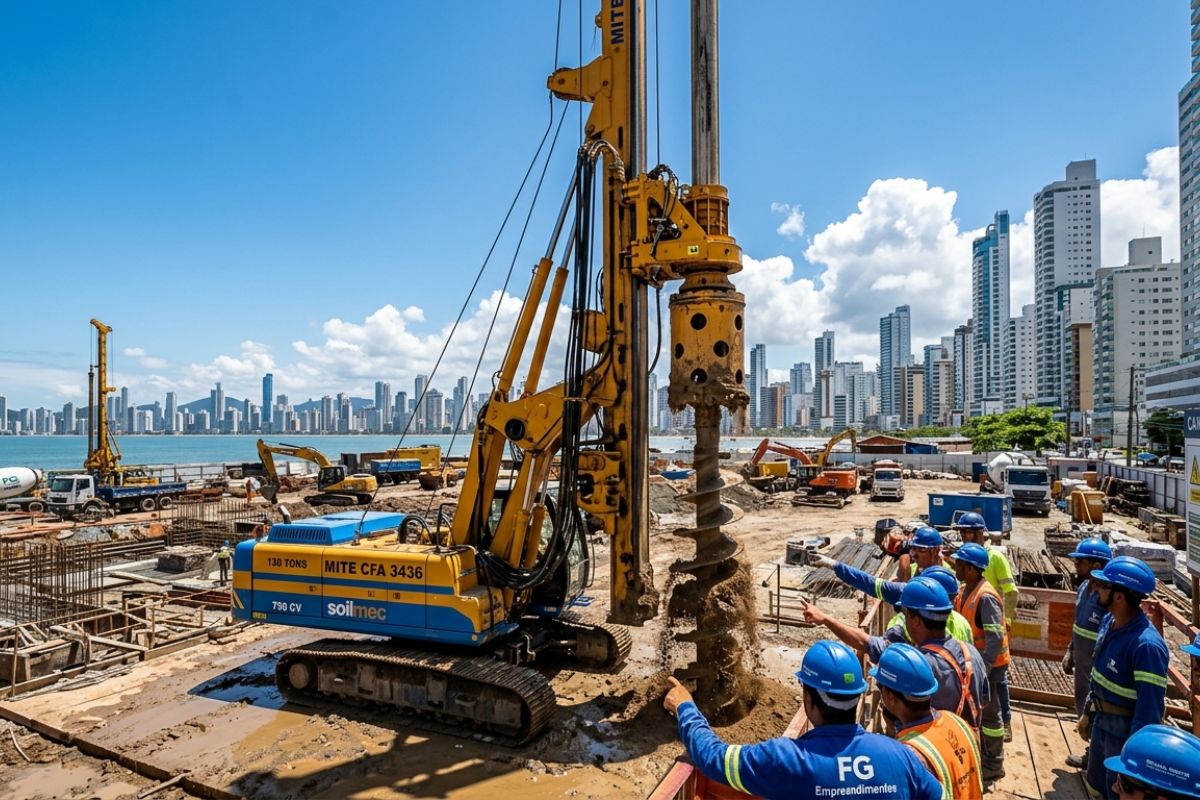
Italian giant of 130 tons arrives at the Senna Tower construction site and accelerates foundations: Mite CFA 3436 drills up to 50 m, 750 hp engine, investment of R$ 20 million, unique in Latin America.
-
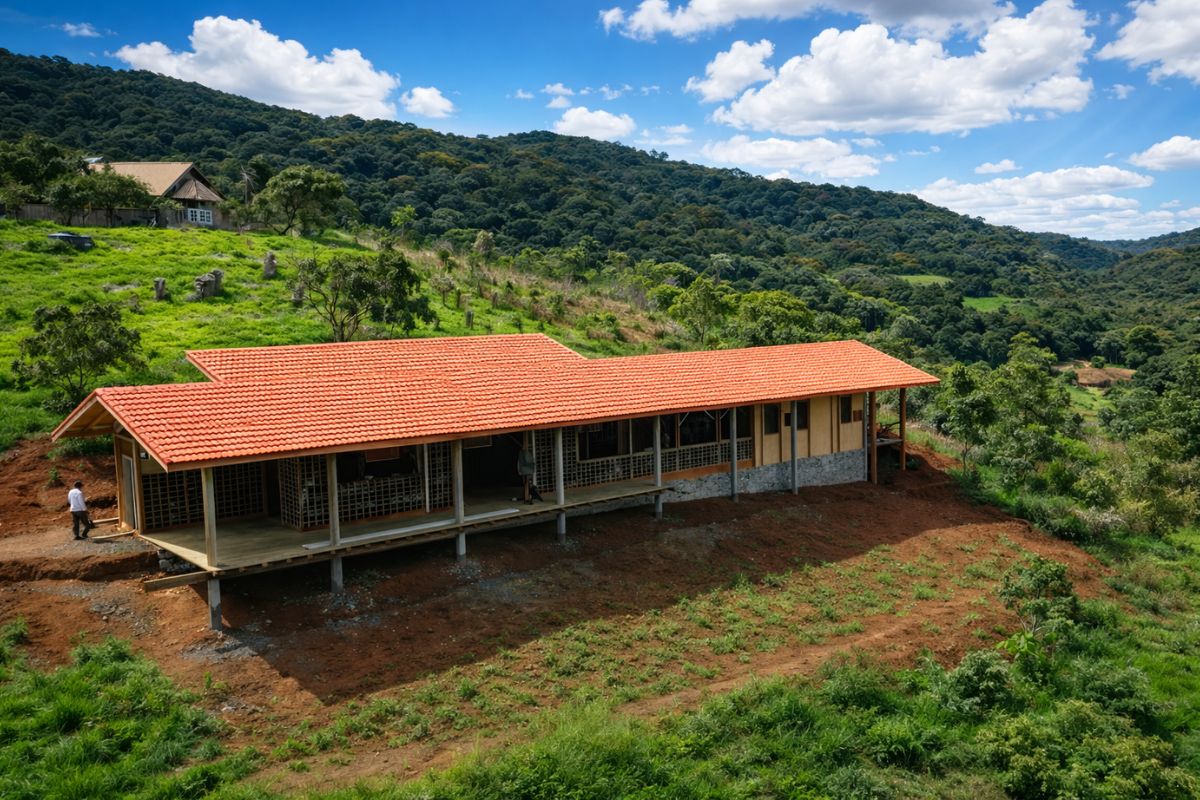
The adobe house in Monteiro Lobato takes shape with bamboo and clay from the land, a stone foundation, and a roof for the wind; cracks are normal, and finishing with lime turns it into a “common house.”
-
Four friends with over 30 years of friendship built a “mini village” by the banks of a river in Texas to grow old together, with houses of just 32 m² and a shared common space. The Bestie Row project has become a model of alternative living that is starting to spread around the world.

-
The ancient Japanese capital, planned over 1,200 years ago, still withstands earthquakes with colossal wooden temples and palaces, built without concrete or modern steel, by masters who created engineering capable of enduring centuries.


- they broke easily
- they cracked with temperature changes
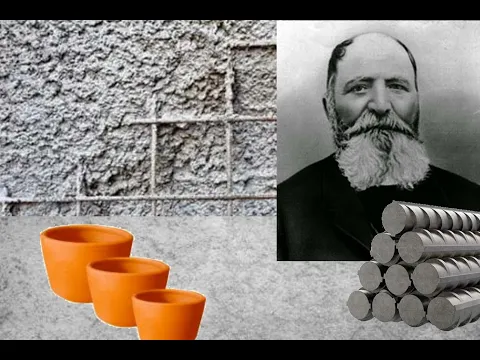

Moreover, larger plant roots could push against the walls of the pots and cause cracks. Joseph Monier worked as a gardener in the Tuileries Garden in Paris and needed to produce durable containers for ornamental plants and trees.
He began experimenting with different materials to improve the durability of these pots. Initially, he tried to produce simple concrete containers. However, concrete alone also had a problem: it cracked relatively easily when subjected to stress. It was then that Monier had a simple but revolutionary idea.
The Idea of Putting Iron in Concrete
To increase the strength of the pots, Monier began inserting iron bars and meshes into the concrete during manufacturing.
The logic was intuitive: the iron could help hold the structure if the concrete started to crack. The result was surprising. The pots reinforced with iron were much more resilient than regular containers.
This combination of materials created a structure capable of withstanding greater stress without breaking. Monier realized he had found something new. He had created the fundamental principle of reinforced concrete.
The Patent of 1867
Recognizing the potential of his invention, Joseph Monier decided to register his technique. In 1867, he obtained a patent in France for the production of iron-reinforced concrete containers.
Initially, his invention was applied only to relatively small objects, such as:
- plant pots
- water tanks
- irrigation pipes
Even so, the idea represented an important innovation. The system combined two materials with different properties:
- the concrete, which resists well to compression
- the iron, which better withstands tensile forces
This combination created a much stronger structure. This principle would become the basis of practically all modern structural engineering.
Why Reinforced Concrete Works So Well
Concrete is an extremely strong material when subjected to compression. This means it withstands loads that press on the structure very well.
On the other hand, concrete is relatively weak when subjected to tensile forces, which pull or bend the material. This is where steel comes in. The metal bars placed within the concrete absorb the tensile forces that concrete alone would not be able to support.
By working together, the two materials complement each other. This combination creates structures capable of supporting enormous loads. This principle explains why reinforced concrete is so widely used in large engineering projects.
The Expansion of Technology to Engineering
After Monier’s patent, engineers began to realize that the same principle used in pots could be applied to much larger structures.
In the following decades, various researchers and builders began developing structural methods based on reinforced concrete. Among the pioneers who helped expand the technology were:
- François Hennebique, who developed reinforced concrete structural systems
- European engineers who applied the technique in bridges and buildings
- builders who began using steel bars within concrete structures
By the end of the 19th century and the beginning of the 20th century, reinforced concrete was already starting to appear in large infrastructure projects.
Bridges and Buildings Changed Completely
With the advancement of this technology, it became possible to construct structures that would have previously been unfeasible. Reinforced concrete allowed for the development of:
- long-span bridges
- taller buildings
- more resilient tunnels and viaducts
- giant reservoirs and dams
In addition to its strength, the material also had other important advantages. It was relatively cheap, could be molded into different shapes, and required less maintenance than many metal structures. These characteristics helped popularize reinforced concrete worldwide.
The Material That Shaped Modern Cities
Throughout the 20th century, reinforced concrete became the primary material in civil construction. Skyscrapers, subways, stadiums, and highways began utilizing steel-reinforced structures. Major engineering projects, such as hydroelectric dams and suspension bridges, also depend on this structural system.
Today, practically every city on the planet has buildings constructed with reinforced concrete. This material remains essential for urban development.
A Simple Invention That Changed Engineering
The story of reinforced concrete shows how a simple solution can lead to a technological revolution. In trying to prevent plant pots from breaking, Joseph Monier ended up creating a structural principle that would completely transform civil construction.
Today, more than a century after the patent was registered in 1867, reinforced concrete continues to be one of the cornerstones of modern engineering.
The idea that started in a French garden has become the structural basis that supports bridges, buildings, and dams worldwide.






Seja o primeiro a reagir!