





 Portuguese
  English
  Spanish
  4 min of reading
  0 comments


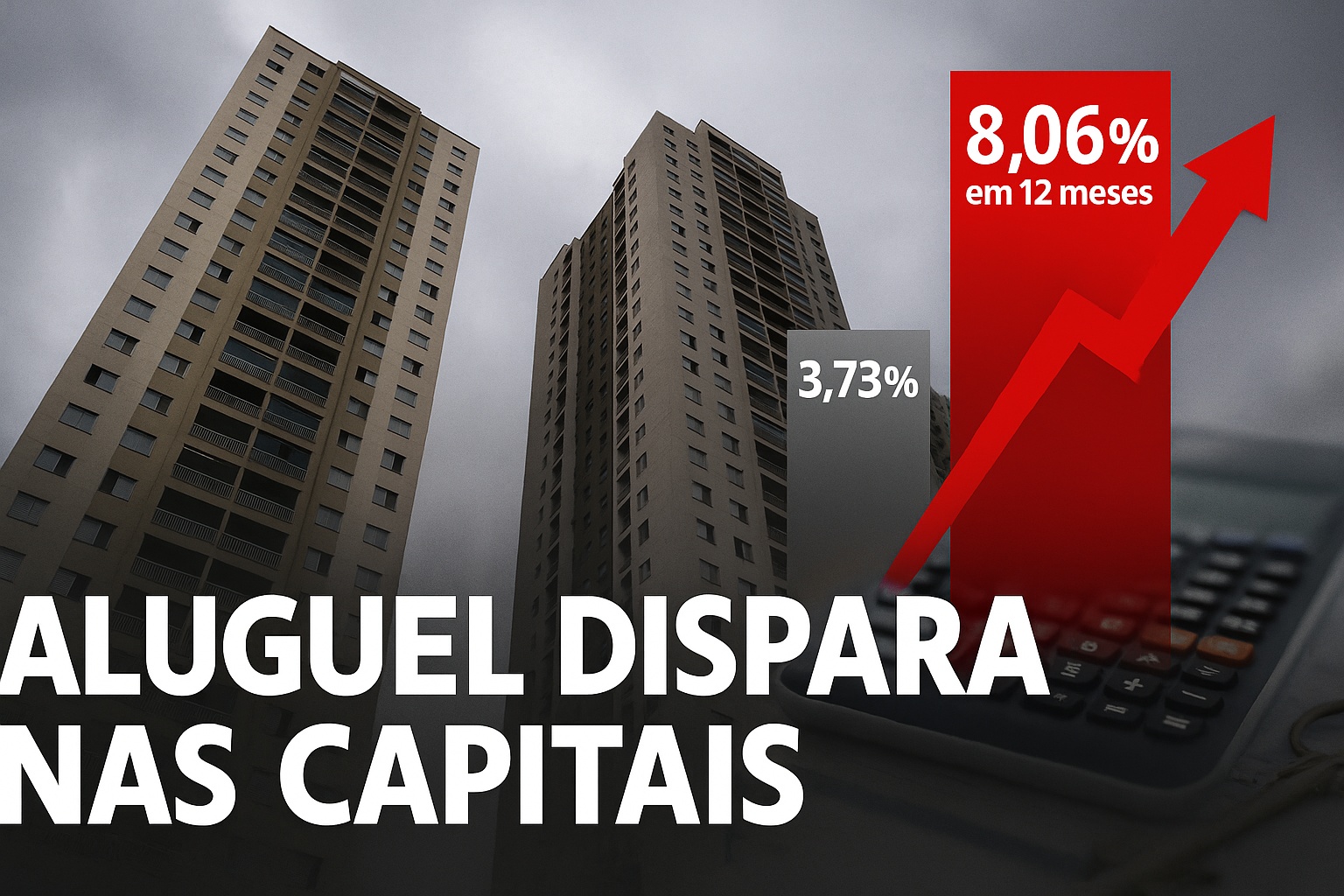
Rent Increased by 8.06% in 12 Months, Surpassing Double the Inflation and Pressuring Families in Brazilian Capitals, According to FipeZap Survey Released in November 2025.
The Brazilian real estate market is experiencing one of the most tense periods since the pandemic. According to the latest report from the FipeZap Index, released on November 18, 2025, the value of residential rent recorded a mean increase of 8.06% in the last 12 months – more than double the official inflation, measured by the IPCA, which accumulated 3.73% in the same period. The disparity between the cost of living and the general price increase opens a new discussion about income, access to housing, regional inflation, and pressure on low and middle-income families. In many capitals, the rise in rent already exceeds the capacity for salary adjustments, creating a direct impact on household budgets.
The study reinforces that the rental market continues to accelerate, even with a slowdown in inflation and relative stability in macroeconomic indices. Rent follows its own dynamics — strongly influenced by urban demand, limited supply, and migration to metropolitan areas after the pandemic.
8.06% Increase: Why Did Rent Rise So Much?
The FipeZap report points to a set of factors that explain the significant increase:
-
Mercado Livre “opens the vault” and announces a record investment of R$ 57 billion in Brazil in 2026, a value 50% higher than the previous year, with an expansion plan that includes 14 new logistics centers, totaling 42 units in the country and hiring an additional 10,000 employees.

-
How investment in technology can revolutionize the national economy and enhance industrial gains, according to a study that highlights the direct impact on productivity, innovation, and wealth retention within Brazil.
-
The largest food company on the planet, JBS, has just opened a 4,000 square meter laboratory in Florianópolis to develop customized proteins that modulate muscle mass gain, immune response, and metabolic performance.

-
After nearly 30 bids and competition among industry giants, a Spanish company purchases one of the largest airports in Brazil for almost R$ 3 billion and takes over the management of Galeão in a concession that will last until 2039.


Higher Demand for Well-Located Properties
The return of workers to offices and the resumption of in-person routines have rekindled interest in central neighborhoods.
Limited Supply of Rental Units
Fewer launches and reduced stocks are putting pressure on prices.
Increase in Maintenance and Condo Costs
Even with controlled inflation, condominium fees and mandatory works have increased.
Change in the Profile of Tenants
Young professionals have started competing with families for smaller properties closer to work hubs.
Delayed Effect of Previous Inflation and Interest Rates
Contracts signed during years of higher inflation continue to apply accumulated adjustments.
The result is an imbalance: demand is rising faster than supply can keep up.
Capitals Where Rent Increased the Most
Although the national report indicates an average increase of 8.06%, several cities have surpassed this percentage. The scenario is more critical in metropolises with intense urban occupation:
- São Paulo continues to lead the pressure on compact units and neighborhoods near the subway.
- Rio de Janeiro, especially in areas with access to rapid transport, sees continuous growth.
- Florianópolis and Curitiba are experiencing a strong influx of students, technology professionals, and long-term tourism.
- Belo Horizonte and Fortaleza follow a similar trend, with appreciation above inflation and reduced stocks.
The market behavior shows that the increase is not isolated, but spread across nearly all regions evaluated.
When Rent Increases Faster Than Income, Budgets Fall Short
The most concerning data reported by FipeZap is the mismatch between average salary adjustments and the increase in rent costs.
While rent increased by 8.06%, formal salary adjustments, according to data from collective agreements compiled by labor organizations, ranged between 4% and 5% in the same period.
The math is simple and alarming: rent is the largest item in families’ budgets, and when this expense grows faster than income, the purchasing power directly shrinks.
This has led to:
- contract renegotiations;
- moves to more distant neighborhoods;
- sharing of properties among more residents;
- increased search for smaller units.
In capitals with accelerated appreciation, many families have had to change neighborhoods to continue affording housing.
Controlled Inflation, but Housing Is Out of Reach
The contradiction of the Brazilian economic moment is clear: official inflation is relatively contained, but the category “housing” including rent, maintenance, and condominium continues on an upward trajectory.
The accumulated IPCA of 3.73% until October 2025 contrasts sharply with the escalation of the rental market. This difference creates the feeling that “life is more expensive than inflation indicates,” a common perception among consumers.
In other words: even though the economy shows signs of inflationary slowdown, the real cost of living in big cities continues to rise rapidly.
The Structural Impact Explaining Why Prices Do Not Decrease
The Fundação Instituto de Pesquisas Econômicas explains that rent does not immediately respond to variations in the economic cycle. The stock of properties is rigid and takes years to adjust. Additionally:
- there is a housing deficit in major capitals;
- investors have migrated to fixed income instead of rental;
- property owners held off on adjustments during the pandemic and are now reinstating values;
- the interest rate still influences property purchases, maintaining pressure on rent.
This combination makes the price curve more resistant to decline, even when general inflation is slowing down.
What to Expect in the Coming Months
Experts consulted by the real estate market believe that, without a significant increase in the supply of new residential properties, the upward trend should continue, albeit in a more moderate way. The expectation is that the pressure on rent will remain until:
- new residential developments are delivered;
- the interest rate drops enough to encourage purchases instead of rentals;
- there is a migratory redistribution after years of urban concentration.
For now, the alert is on: rent continues to rise faster than inflation, faster than income, and faster than the Brazilian budget can keep up with.
The FipeZap report not only shows an 8.06% increase in rentals but also exposes a structural problem that directly affects urban life in the country. Housing has become the primary vector of individual inflationary pressure. And while inflation declines, rent advances, opening a new frontier of urban exclusion and housing inequality.










Seja o primeiro a reagir!