





 Portuguese
  English
  Spanish
  4 min of reading
  0 comments


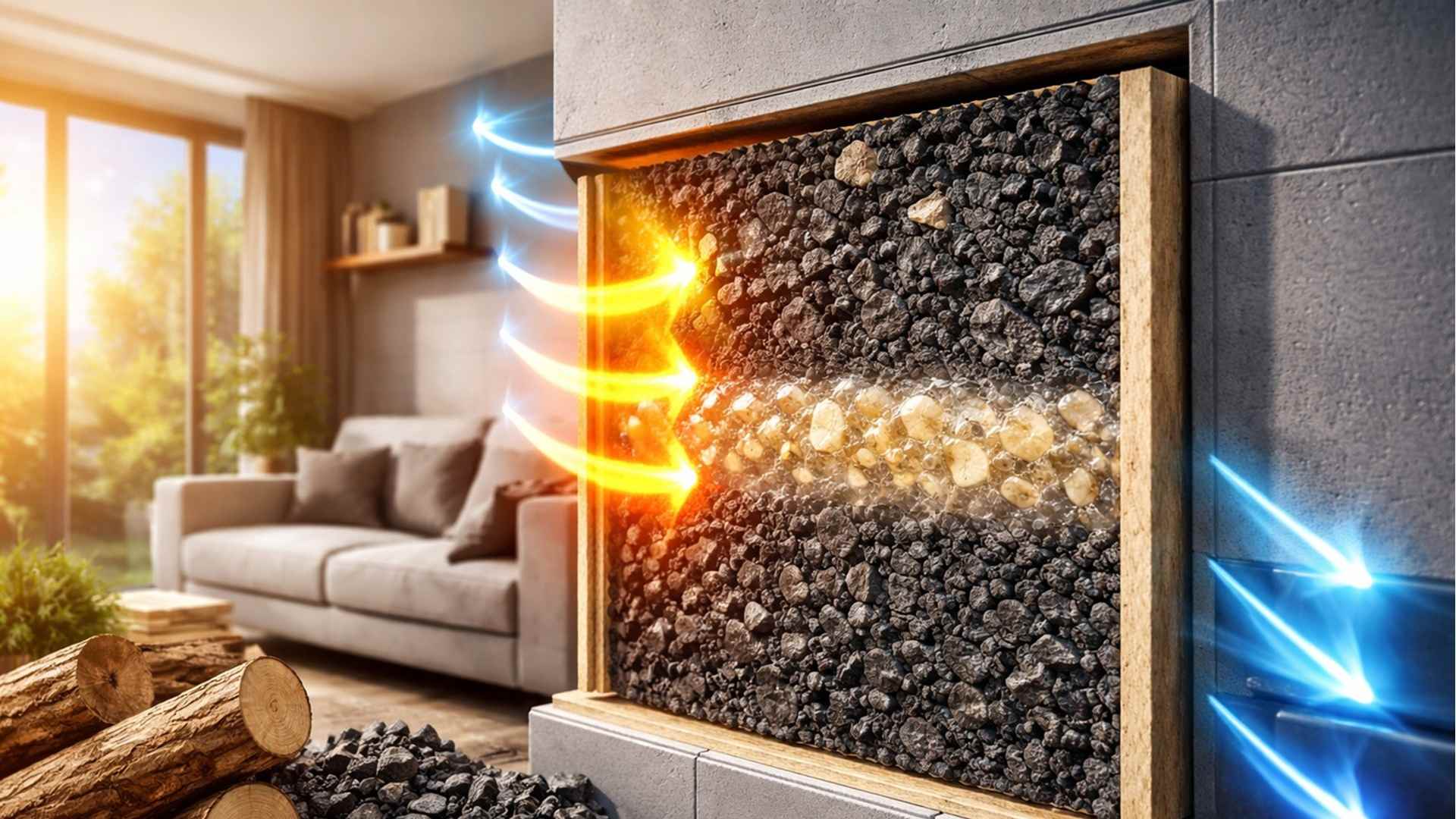
Research Conducted in South Korea Describes the Development of a Solid-State Thermal Battery Made from Wood Waste, Biochar, Natural Clay, and Paraffin, Capable of Passively Storing Heat, Reducing Internal Temperature Peaks, and Decreasing Energy Consumption of Buildings by Up to 54%
South Korean researchers have developed a thermal battery made from wood waste that can reduce energy consumption in buildings by up to 54% by storing and releasing heat without direct electricity, using biochar, natural clay, and paraffin integrated into passive construction systems.
Turning Wood Waste into a Thermal Battery
The proposed thermal battery converts forest waste into a solid-state heat storage material. The system acts as a biomineral thermal sponge, capable of absorbing heat during temperature spikes and gradually releasing it when the environment cools, stabilizing indoor comfort.
This mechanism introduces a circular logic into the thermal management of buildings. Materials previously considered waste with no structural value now play a passive energy function, smoothing daily thermal variations and reducing dependence on active air conditioning systems.
-
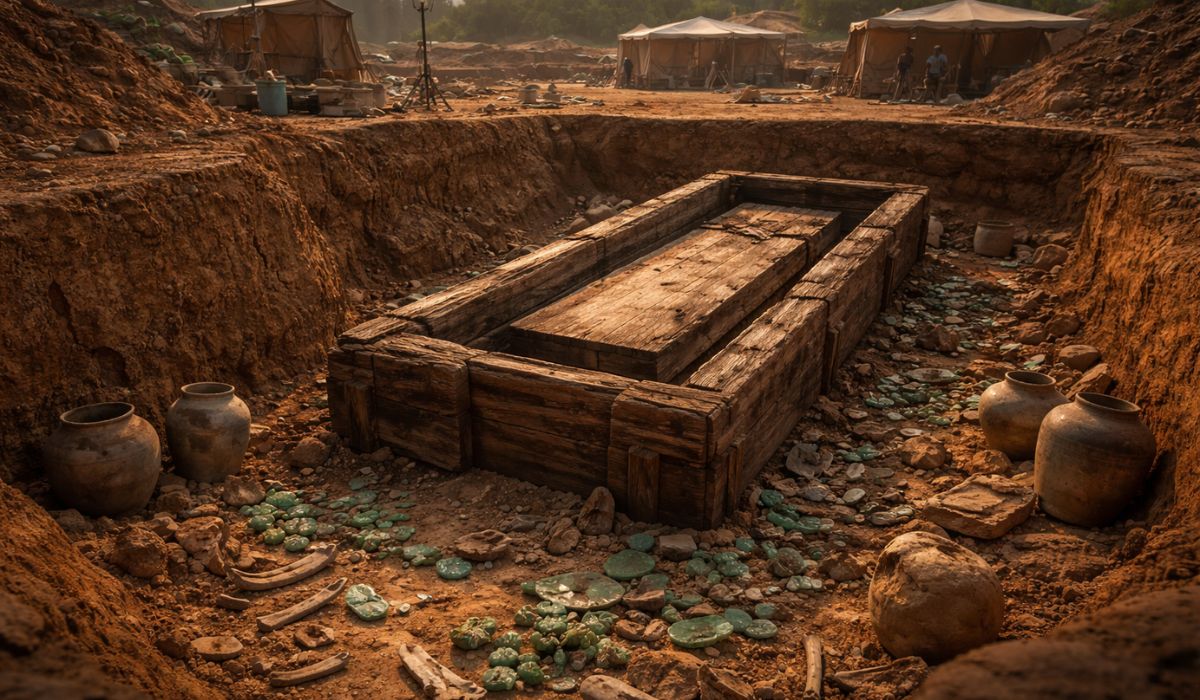
Archaeologists discover in China a 5,000-year-old tomb with over 350 artifacts, nearly 200 jades, and signs of intentional destruction, in a discovery that could be the gateway to a lost prehistoric kingdom.
-
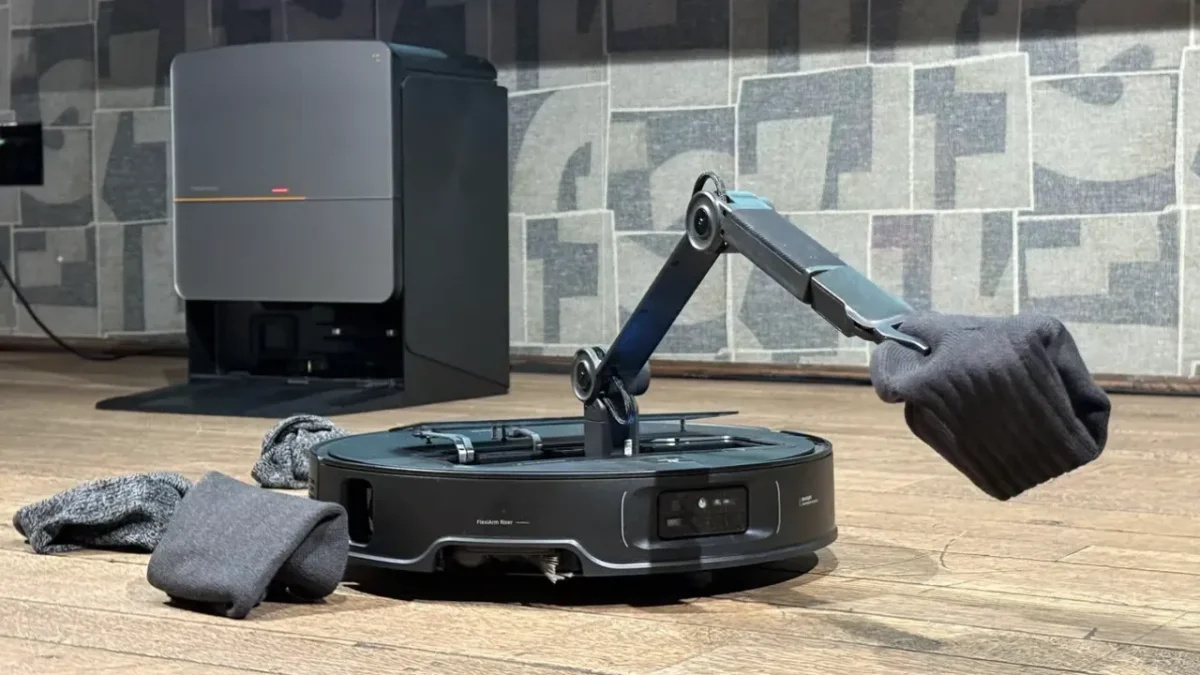
A vacuum robot with a five-axis mechanical arm capable of picking up objects from the floor, avoiding obstacles in real time, and continuing to clean on its own inaugurates a new generation of appliances that see, think, and act within the home.
-
Geographers redefine the Brazilian relief and confirm the presence of mountains in 14 states with a new system that changes historical criteria and alters the way the territory is classified.

-
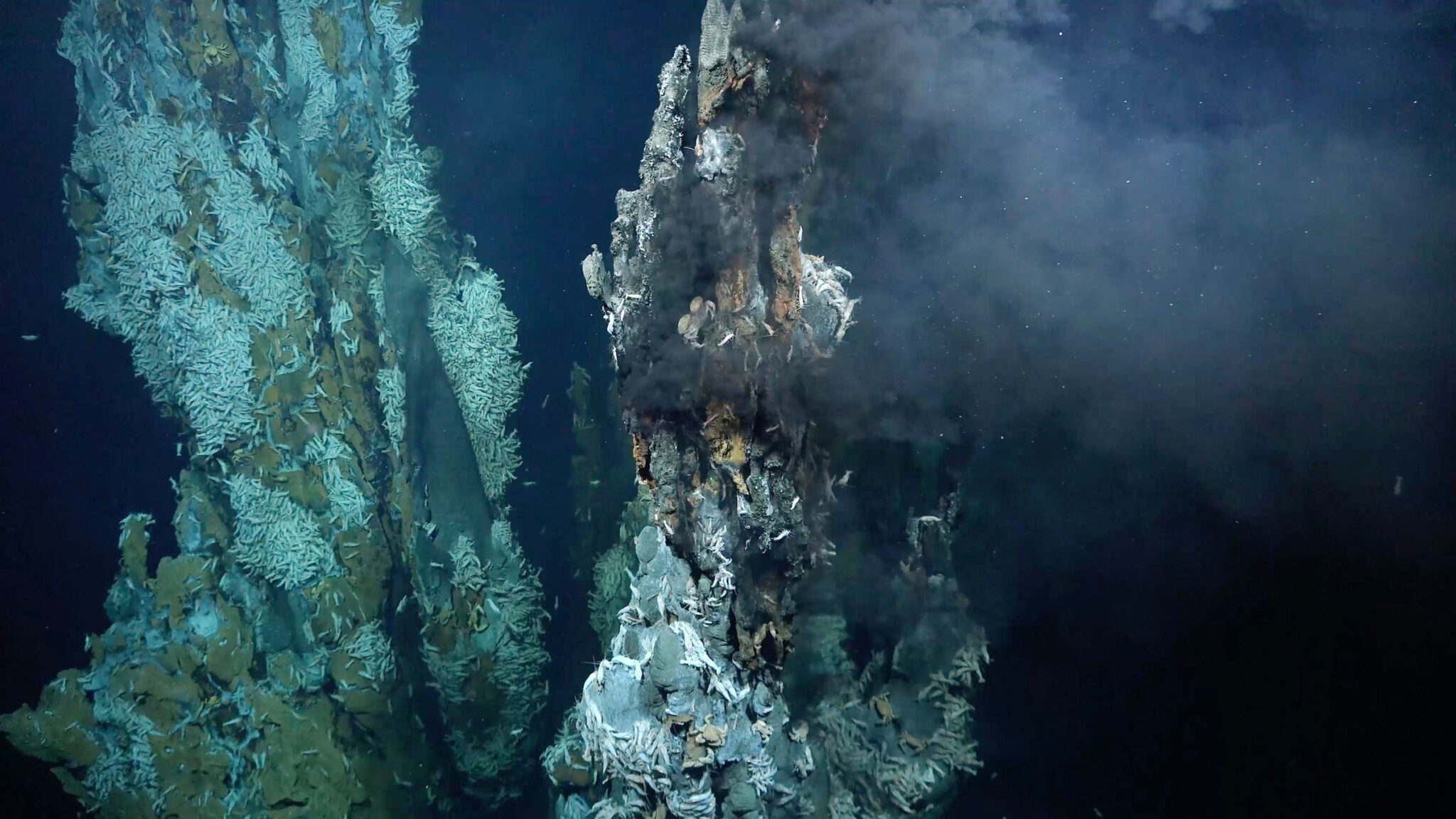
At a depth of 3,800 meters in the Atlantic, scientists have discovered a “lost city” with white towers up to 60 meters tall that has been active for over 120,000 years without relying on volcanoes.

In urban environments, where demand for cooling rises at noon and falls at night, the thermal battery functions as a thermal buffer. It absorbs heat when the temperature exceeds the melting point of paraffin and releases it slowly with the temperature drop.
The result is a more stable indoor environment, with less air conditioning use and more predictable electrical consumption. The technology operates without motors, sensors, or direct electrical supply, functioning solely through the phase change of the material.
Technical Composition and Functionality of the Material
The thermal battery is composed of paraffin, biochar, and natural clay. The use of hexadecane, a specific type of paraffin, is due to its phase change range being close to the internal temperatures considered comfortable for buildings.
This characteristic allows for the integration of the material into facades, suspended ceilings, and internal walls. The application eliminates the need for complex mechanical systems, facilitating its incorporation into existing structures and new architectural projects.
Biochar is obtained from fir waste and features a network of microscopic pores. These pores act as thermal capillaries, absorbing and releasing heat in a controlled manner throughout daily cycles.
Modified montmorillonite, a natural clay, stabilizes the composite structure and enhances its overall thermal conductivity. This combination prevents the leakage of paraffin after multiple melting and solidification cycles.
Ecological Structure and Environmental Advantages
Unlike scaffolding made from graphene or carbon nanotubes, which require intensive industrial processes, the thermal battery utilizes abundant raw materials with low environmental impact. Wood waste and natural clay form the foundation of the system.
The approach reduces the complexity of the supply chain and facilitates the scalability of the material. The process does not require exotic inputs or high-energy industrial treatments, making production more accessible and replicable.
Biochar also offers an additional advantage. It retains carbon in solid form for decades, functioning as a small carbon sink when integrated into the urban infrastructure of buildings.
Each installed square meter simultaneously contributes to thermal control and carbon retention. This dual function reinforces the role of the thermal battery as a solution aligned with emission reduction and the efficient use of local resources.
Integration in Buildings and Practical Applications
The transition from the lab to real applications depends on adapting to existing construction systems. Research explores the incorporation of the material into prefabricated drywall panels, lightweight concrete blocks, and modular coverings.
In this format, the thermal battery can be installed without altering traditional construction methods. This compatibility is considered essential for adoption in energy renovation projects of old buildings.
In regions of East Asia and Central Europe, where thermal renovation programs for social housing are expanding, the technology aligns with policies aimed at reducing energy demand at the source.
There is also interest in agricultural warehouses and logistics centers. Thermal stabilization in large spaces with limited insulation can reduce food spoilage and decrease the need for active refrigeration, impacting the sector’s carbon footprint.
Energy Potential and Limits of the Technology
In realistic scenarios, the thermal battery does not replace air conditioning systems. It acts as a complement, reducing energy demand during peak times, when electrical grids are under greater pressure.
In the medium term, integration with passive solar buildings expands its potential. Excess heat captured during the day can be stored in walls and roofs and released at night, especially in cold or mid-season climates.
The system operates quietly, without compressors or motors. This feature favors its use in schools, homes, and offices, contributing to more stable and energy-efficient indoor environments.
The proposal also fits into models of local material economy. Waste from pruning, forest cleaning, or the lumber industry can be transformed into biochar close to the place of use, reducing transportation and closing productive cycles.
Although it is not a miracle solution, the thermal battery represents a relevant piece in the energy transition. It points to buildings capable of coexisting with heat and cold passively, rather than combating them with continuous dumping of kilowatts onto them.






Seja o primeiro a reagir!