





 Portuguese
  English
  Spanish
  4 min of reading
  0 comments


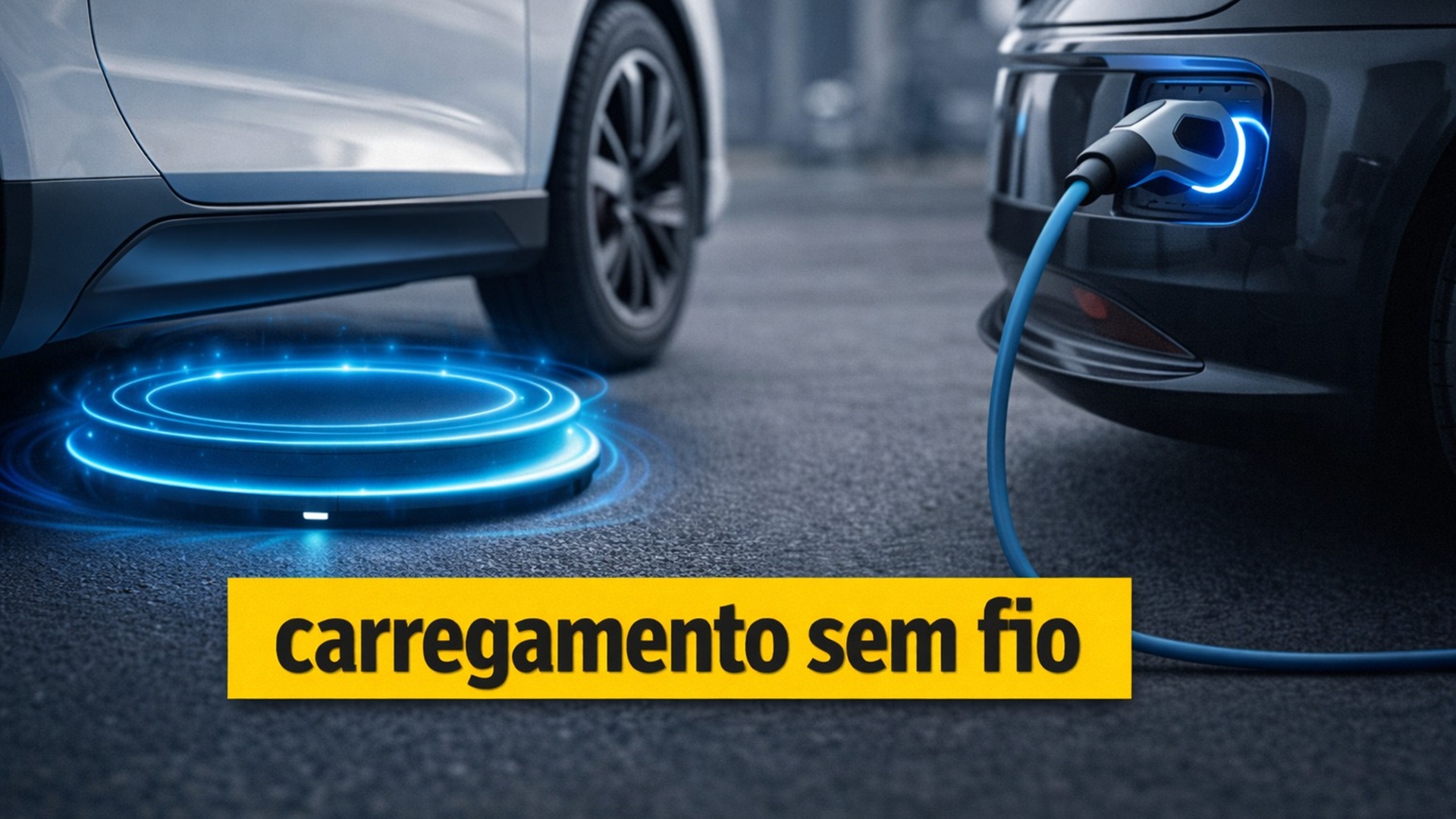
The New Research Developed By The Swiss Laboratory EMPA Confirms That Wireless Charging For Electric Vehicles Has Reached An Energy Efficiency Level Of 90% In Real Tests, Eliminating Previous Technological Barriers And Offering A Practical And Automated Alternative To Traditional Cables For Supplying Urban Fleets And Residential Garages
Researchers from the Swiss laboratory EMPA have demonstrated that wireless charging of electric vehicles has reached 90% efficiency in real tests. Inductive technology now competes with conventional systems and promises to automate energy refueling.
For years, inductive charging for electric cars was seen as unrealistic. The idea of charging a vehicle wirelessly is convenient, but the inefficiency was a concern.
The historical downside was the energy loss compared to traditional charging. The conventional method requires long waiting periods but ensures greater energy utilization.
-
Motorola launched the Signature with a gold seal from DxOMark, tying with the iPhone 17 Pro in camera performance, Snapdragon 8 Gen 5 that surpassed 3 million in benchmarks, and a zoom that impresses even at night.

-
Satellites reveal beneath the Sahara a giant river buried for thousands of kilometers: study shows that the largest hot desert on the planet was once traversed by a river system comparable to the largest on Earth.

-
Scientists have captured something never seen in space: newly born stars are creating gigantic rings of light a thousand times larger than the distance between the Earth and the Sun, and this changes everything we knew about stellar birth.

-
Geologists find traces of a continent that disappeared 155 million years ago after separating from Australia and reveal that it did not sink, but broke into fragments scattered across Southeast Asia.
Recent technological advancements and real test data are changing this perception. Wireless charging now presents concrete numbers that compete with conventional systems.
Technical Operation Of The Induction System
The operating principle of this technology is considered relatively simple by technicians. Inductive charging is based on the transfer of energy through electromagnetic fields.
The process occurs between two distinct coils operating together in the system. A transmitter is installed in the ground, and a receiver is integrated into the vehicle.
Both coils operate at the same frequency to maximize energy transfer. There is no need for physical contact between the parts for conduction to occur.
This system eliminates plugs and exposed connectors during daily manual operation. This represents a clear advantage in terms of convenience and automation of the process.
Performance Comparison And Real Data
Energy efficiency has always been the great question for commercial viability. Wired charging maintains minimal losses, especially using domestic AC power.
The overall efficiency of cables varies from 94% to 98% under normal conditions. This depends on the charger, the vehicle’s electronics, and the power grid.
Inductive charging has significantly lagged behind these numbers for a long time. This technical limitation restricted its practical viability for the mass automotive market.
Recent research from the Swiss laboratory EMPA shows a shift in this technical landscape. Modern inductive systems can achieve efficiencies close to 90% in real conditions.
The tests were not only conducted under ideal laboratory conditions. They involved real vehicles, slight misalignments, and everyday weather variations.
The difference compared to wired systems still exists today. However, data indicates that it is no longer a decisive factor.
Operational Advantages And Fleet Management
The system can be activated automatically when the vehicle is parked correctly. This reduces mechanical wear and avoids problems caused by external dirt.
The technology facilitates charging for people with reduced mobility or disabilities. In urban environments, the simplicity of the process can make all the operational difference.
One area where induction shows the most potential is in fleets. Electric buses can recharge automatically at stops during their routine routes.
Electric taxis recover energy while waiting for passengers at specific waiting points. Delivery vehicles recharge their batteries during operational pauses in distribution.
The slightly lower efficiency is offset by better time management. The operation becomes simpler and integrated into the daily workflow.
Inductive charging focuses on medium and low power levels. It is ideal for residential garages, public parking lots, or urban public transport.
Limitations And Development Of New Solutions
The comparison with wired charging favors the latter in terms of power. Fast and ultra-fast chargers still depend on physical contact for high performance.
Inductive charging does not compete directly with fast charging for trips. It serves as a complementary technology for long-duration parking situations.
Research is also advancing towards dynamic inductive charging on roads. This approach would allow vehicles to be partially recharged while traveling on the roads.
The technology would be integrated into the asphalt in specific sections of the road network. This would reduce the need for large batteries and improve overall efficiency.
The key to success lies in integrating the system as a whole. An efficiency of 90% validates the technology in an intelligent and automated network.
Inductive charging for electric cars has moved past the laboratory experimental phase. It has become a technically viable option to compose the future mobility infrastructure.







-

-

6 pessoas reagiram a isso.