





 Portuguese
  English
  Spanish
  4 min of reading
  1 comment


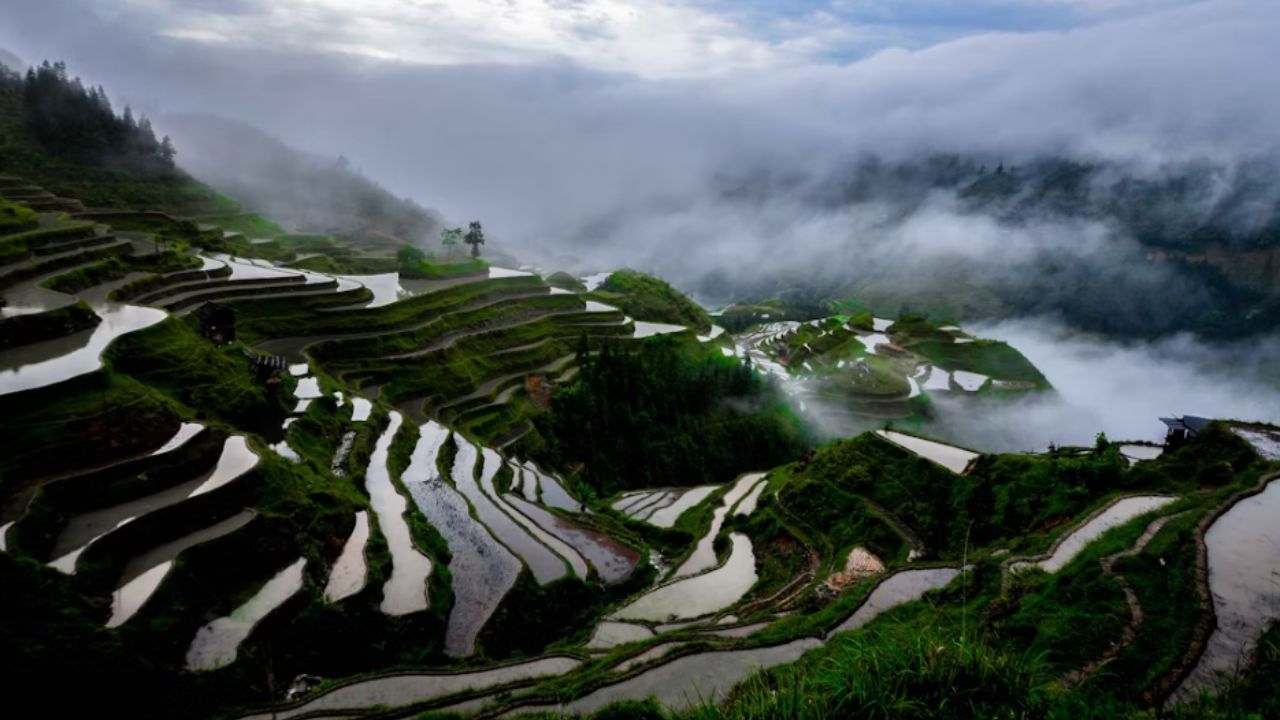


Understand How the Ifugao People Carved the Rice Terraces of Banaue at 1,500 Meters Without Modern Tools, Using a Social and Ecological “Technology”.
In the remote mountains of the Philippines, the rice terraces of Banaue represent one of the most spectacular feats of human engineering. Often hailed as the “Eighth Wonder of the World”, these green steps that reach 1,500 meters in altitude were carved into the steep slopes. According to UNESCO, which classifies them as a World Heritage Site, they are not a static ruin, but a “living cultural landscape”, shaped about 2,000 years ago by profound ancestral knowledge.
This monumental work, if aligned, would stretch for half the circumference of the Earth, was built entirely by hand. The secret of the Ifugao people did not lie in advanced tools, but in an ingenious irrigation system drawn from forests at the tops of the mountains and, above all, in a powerful cooperative social organization that mobilized generations of community work to transform a hostile environment into a productive granary.
A Social Engineering
The creation of the Ifugao terraces is an engineering feat that dispensed with modern technology. The process involved digging the steep slopes, meticulously moving earth and rocks, and building retaining walls with stones taken from the mountain itself or with compacted mud. UNESCO emphasizes that this colossal work was done with “minimal equipment”, likely using only rudimentary tools like wooden shovels, levers, and wicker baskets.
-
Russia reveals that it is already conducting 95% of all its business with China without using a single dollar; dedollarization has ceased to be a promise and has become a reality in record time, and the West watches helplessly.

-
While Brazilians work more than 44 hours a week, Norwegians leave the office at 3 PM and are now testing a four-day workweek with full pay and no loss of productivity.
-
A legend of Brazilian TV is 75 years old, returned to narrate the World Cup for SBT, and still finds time to manage a farm of over 100 hectares in Rio Grande do Sul where she produces award-winning wines, olive oil, and raises cattle.

-
Family buys mansion destroyed by fire for $1.5 million, faces over 500 days of construction, transforms loss into high-end property, and leaves neighbors in awe.
The true “technology” employed by the Ifugao people was, in fact, social. The driving force behind the construction and, crucially, the incessant maintenance, was a deeply rooted system of community cooperation, based on kinship ties. As detailed by the Encyclopædia Britannica, Ifugao society is structured into clans, without a centralized political government. The ability to mobilize, organize, and coordinate hundreds of people over generations, coordinated by mutual obligations, functioned as the “megamachine” that erected the walls.
The Source of Life: The Muyong Irrigation System
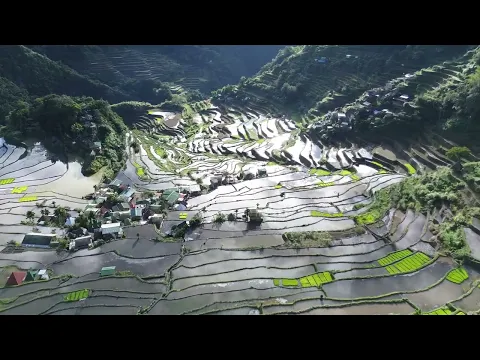

The productivity and sustainability of the rice terraces of Banaue entirely depend on a constant supply of water, a formidable challenge in a mountainous environment. The solution developed by the Ifugao people, described by UNESCO, is a sophisticated irrigation system that captures water directly from its most reliable source: the tropical forests that crown the mountain peaks, above the terraces.
These forests, locally known as muyong, are managed by the community as protected watersheds. They act as natural sponges, absorbing rainwater and gradually releasing it, ensuring a steady flow into the channels. Once captured in the muyong, the water is skillfully guided entirely by gravity through a complex network of channels, dikes, and gates made of stone or bamboo. Water is introduced into the highest terrace and flows in a controlled manner to the lower levels, irrigating the entire slope in a perfect example of ecological management.
The Baki and the Hudhud: The “Cultural Software” That Operates the Terraces
The maintenance of the terraces is guided not only by physical necessity but by a deep and complex spiritual cycle that synchronizes the community. As documented by the Ifugao Heritage Galleries, the cultivation of traditional rice (Tinawon) is governed by at least seventeen annual rituals, known as Baki. These rituals, conducted by religious (mumbaki) and agricultural (tumonak) leaders, mark each phase of cultivation, from soil preparation to harvest celebration, invoking blessings and protection from deities.
These rituals function as a vital social technology. In a society without written calendars or centralized project management, the Baki serves as a signal for collective action, ensuring that the whole community plants, repairs the channels, and harvests in perfect synchrony. This complex knowledge is transmitted orally through epic songs Hudhud, recognized by UNESCO as Intangible Cultural Heritage of Humanity. Sung by women, these epics are the living library, legal code, and technical manual of the Ifugao people, detailing agricultural practices and social values that sustain the terraces.
A Living Legacy Under Threat
Despite their impressive resilience, the rice terraces of Banaue today face a set of complex threats that jeopardize their very existence. The greatest threat is not the physical erosion of the soil, but the erosion of the system of values and knowledge that sustains them. The rural exodus is intense, as young Ifugao migrate to the cities in search of education and less arduous, more lucrative jobs, breaking the intergenerational transmission chain of ancestral knowledge.
Tourism, while a vital source of income, presents a paradox: many young people may find it more profitable to work as tour guides than to cultivate the fields of their ancestors. At the same time, climate change represents a direct challenge, with more severe droughts (like the one that dried out the terraces in 2010) and more intense typhoons, which increase the risk of landslides. When a family abandons their field, the lack of maintenance undermines the entire irrigation system below, creating a destructive domino effect.
The rice terraces of Banaue are a living testament that social engineering, community cooperation, and profound ecological respect can create lasting wonders, more resilient than many modern structures. They are a model of holistic sustainability.
But can this ancestral knowledge survive the pressures of modern economics, rural exodus, and climate change? In your opinion, how can we globally value and help protect a World Heritage Site that depends on people and a living culture, not just stones? We want to know what you think about this challenge. Leave your opinion in the comments.





Lamentável a perda de tanto conhecimento