





 Portuguese
  English
  Spanish
  3 min of reading
  1 comment


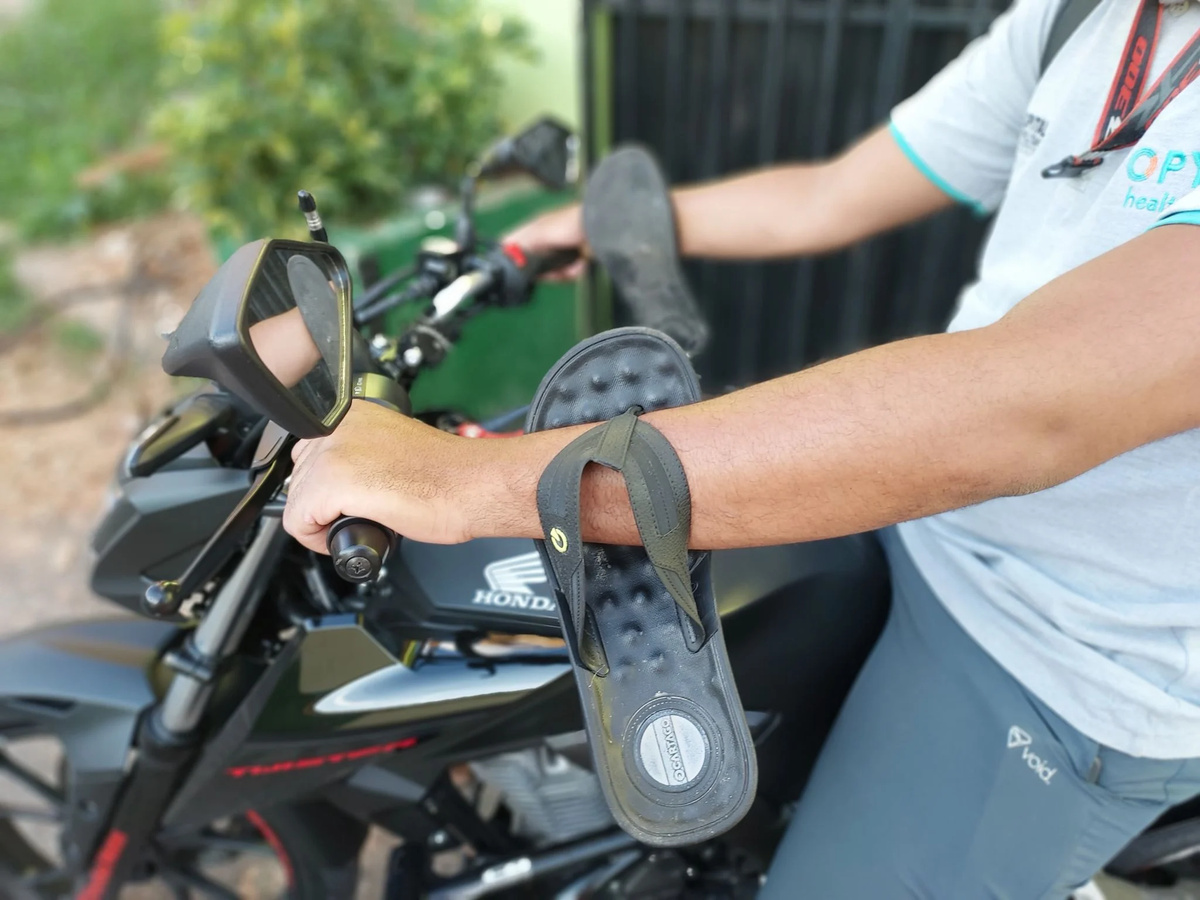


Items carried on the forearm can be evaluated as interference in steering and generate fines based on the Brazilian Traffic Code, depending on the agent’s analysis and the impact on driving safety.
Riding a motorcycle with flip-flops on the forearm has become a common practice in various regions of the country. In a tropical setting with a strong presence of motorcyclists, many riders choose to remove the flip-flop from their feet (which constitutes an infraction) and position it between their forearms to try to avoid fines provided for by the Brazilian Traffic Code (CTB). However, this maneuver opens room for legal interpretations and can result in administrative penalties.
What the CTB Says About Objects Transported During Driving
The discussion about carrying flip-flops on the forearm is related to Article 252 of the CTB, which considers it a medium infraction to drive with “persons, animals, or cargo to the left or between the arms or legs.” The provision establishes a fine of R$ 130.16 and records five points on the driver’s license, if the agent understands that the flip-flop represents a volume that interferes with driving. Although the flip-flop does not constitute a significant volume, the application of the regulation depends on the inspector’s evaluation. When carrying the object compromises stability, balance, or the movements of the motorcyclist, the interpretation may lead to the classification provided for by law.
Supplementary Applications of Article 169 for Distraction Situations
In addition to Article 252, inspection agents may also consider Article 169, which classifies as a minor infraction driving “without attention or without the necessary care for safety.” This provision provides for a fine of R$ 88.38 and three points on the license. The application usually occurs when the flip-flop, even secured on the forearm, represents some type of distraction or risk to the operation of the motorcycle. If the object falls, moves, or affects the rider’s mobility, the risk would justify the fine.
-
The noise law will no longer be in effect at 10 PM starting in June with a new rule valid during the 2026 World Cup.

-
The Chamber opens a debate on driver’s licenses at 16 years old as part of a reform that includes around 270 proposals to change the Brazilian Traffic Code and may redesign rules for licensing, enforcement, and circulation in the country.

-
The new Civil Code could revolutionize marriages in Brazil with “express divorce” and changes that could exclude spouses from inheritance.

-
Banco do Brasil sues famous influencer for million-dollar debt and intensifies debate on delinquency, risks of seizure, and direct impact on Gkay’s credibility.


Why Wearing Flip-Flops While Riding Poses a Real Risk
Traffic safety experts claim that riding with flip-flops increases exposure to serious injuries. The motorcyclist’s foot, being the first point of contact with the ground, becomes more susceptible to lacerations, fractures, and burns when unprotected. Dr. Filipe Xavier, in an interview with AutoPapo, reiterates that the lack of appropriate footwear amplifies the risk of trauma. Carrying flip-flops on the forearm, the motorcyclist may also face additional risks. The object can slip, divert attention, get caught in clothing, or hinder movement. In any of these situations, the intervention of the agent becomes more likely.
How to Transport Flip-Flops and Personal Items Safely
To avoid fines and ensure safety, basic guidelines recommend that flip-flops be stored in an appropriate place, such as a trunk, backpack, or closed compartment. Wearing closed footwear, preferably boots or sturdy shoes, is the most suitable way to ride motorcycles and avoid penalties. This conduct eliminates doubts about classification under the CTB, reduces the risk of falls, avoids distractions, and improves motorcycle control in emergency situations.
Legal Interpretation and Agent Autonomy in Applying Fines
Although the CTB does not literally address the transport of flip-flops on the forearm, legislation provides tools to classify the practice when it interferes with safety. The agent can apply Article 252 when they understand that the flip-flop is a volume that harms driving, or resort to Article 169 if they identify a lack of attention. The fine, therefore, depends on circumstantial evaluation, considering the driver’s behavior, the dynamics of traffic, and elements that may compromise vehicle control.
Necessary Changes in Behavior Among Motorcyclists
With the combination of risks, legal interpretations, and increased enforcement, motorcyclists need to adopt safer practices. Additionally, carrying objects correctly and using appropriate gear reinforces compliance with the CTB. Experts warn that small habits, such as the improper use of flip-flops, can lead to fines and, therefore, require changes in behavior.









Tem **** que transportam um capacete no braço! Hehehehe