





 Portuguese
  English
  Spanish
  5 min of reading
  3 comments


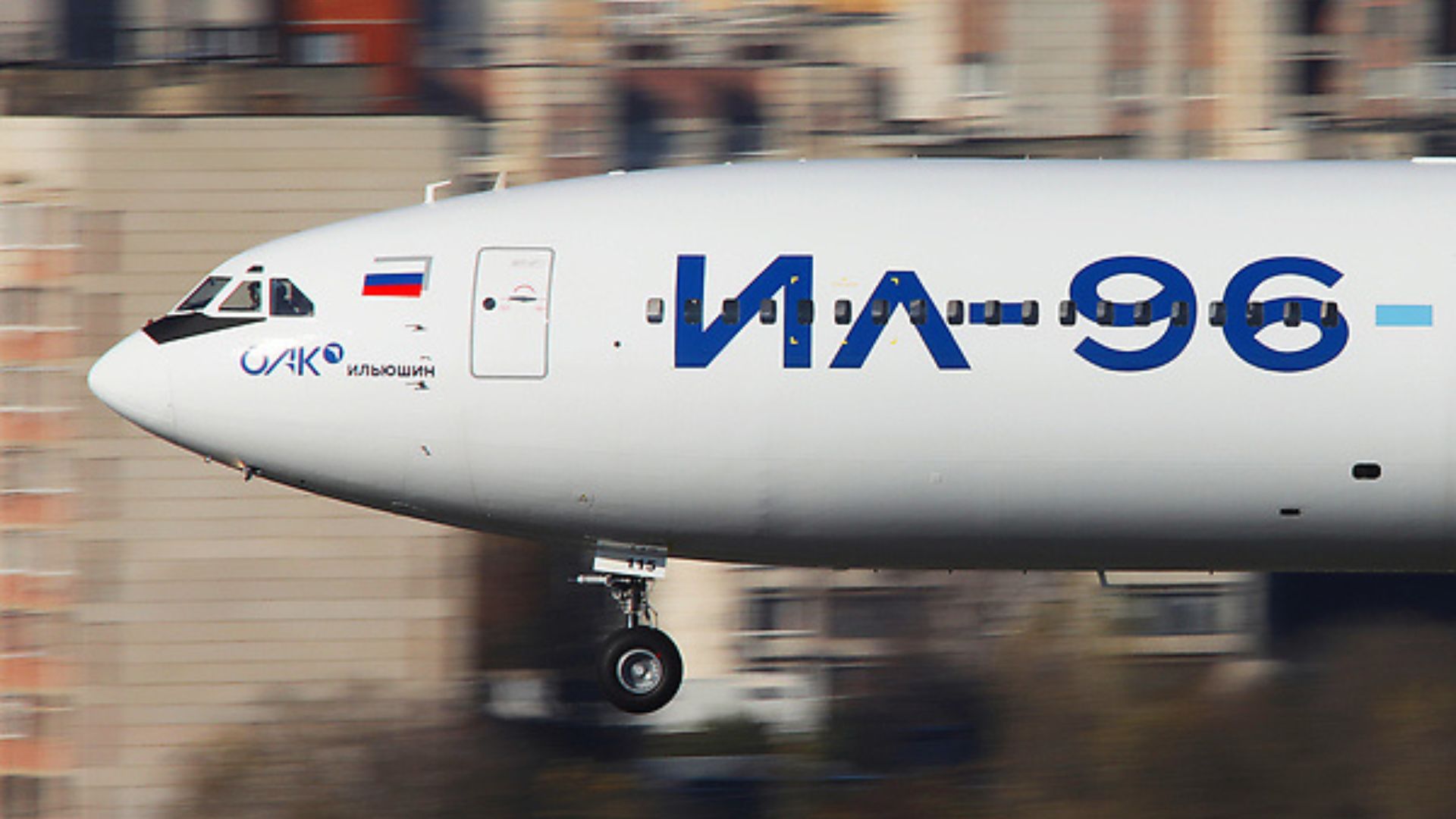


Inaugural Flight of the Il-96-400M Marks Symbolic Recovery of the Russian Widebody Industry and Reinforces Bet on Technological Autonomy, Domestic Production, and Preservation of Strategic Competencies in Large Civil Aircraft in a Highly Concentrated and Competitive Global Segment.
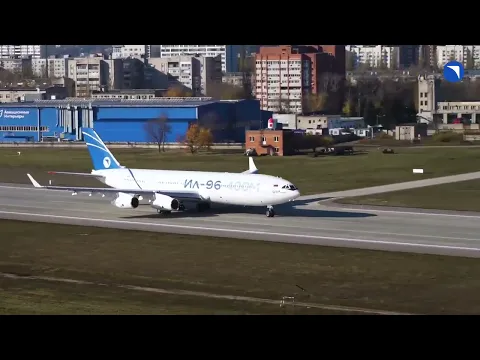
In a move closely monitored by the aerospace sector, the prototype of the Il-96-400M made its first flight on November 1, 2023, taking off from the Voronezh industrial facility linked to the assembly line of the program, in an initial test aimed at validating the aircraft’s basic parameters.
With a duration of 26 minutes, the test followed a typical conservative profile for this phase, during which the aircraft reached an altitude of 2,000 meters and attained a speed of 390 km/h, numbers used as a reference for initial checks of flight behavior and response of the main systems.
According to the United Aircraft Corporation, the central goal of the mission was to confirm stability, controllability, and functioning of the essential systems, in a step considered fundamental before the gradual expansion of the flight envelope in the subsequent stages of the testing program.
-
Friends have been building a small “town” for 30 years to grow old together, with compact houses, a common area, nature surrounding it, and a collective life project designed for friendship, coexistence, and simplicity.

-
This small town in Germany created its own currency 24 years ago, today it circulates millions per year, is accepted in over 300 stores, and the German government allowed all of this to happen under one condition.

-
Curitiba is shrinking and is expected to lose 97,000 residents by 2050, while inland cities in Paraná such as Sarandi, Araucária, and Toledo are experiencing accelerated growth that is changing the entire state’s map.

-
Tourists were poisoned on Everest in a million-dollar fraud scheme involving helicopters that diverted over $19 million and shocked international authorities.


The flight was presented by authorities and sector representatives as an industrial milestone, symbolizing the Russian effort to maintain, in domestic operations, the capability to design, integrate, and test large widebody civilian aircraft in a market historically dominated by Western manufacturers.
Stability, Controllability, and Systems at the Center of the Initial Test
In large aircraft programs, the first outing typically has a limited scope and a strictly technical focus, with maneuvers planned to reduce risks and observe how the aircraft behaves under controlled conditions before advancing to more demanding regimes.

In the case of the Il-96-400M, the UAC reported that the inaugural flight allowed for the evaluation of longitudinal and lateral stability, as well as response to commands, while systems related to the propulsion set and approach and landing procedures were also monitored.
According to the company, “the testing program was successful”, with all systems operating within the expected parameters, and the manufacturer also highlighted that a significant portion of the equipment used in the jet is supplied by Russian companies.
Extended Fuselage Repositions the Il-96-400M in the Family
Derived from the Il-96 family, the -400M emerges as an attempt to reposition a known platform through structural changes and subsystem updates, maintaining the aerodynamic base of the original design while expanding its operational capabilities.
The most visible element of this evolution is the lengthening of the fuselage, which brings the total length of the aircraft to 63.9 meters, a figure often rounded to about 64 meters, placing the model in a new category within Russian widebody production.
The aircraft is configured as a quadjet, equipped with Aviadvigatel PS-90A1, a version with incremental improvements from the PS-90 family, while the manufacturer also mentions the adoption of updated avionics and modernized onboard equipment.

The cabin, according to public descriptions of the program, can take on different layouts depending on the mission, including multiple class arrangements and the incorporation of entertainment and connectivity systems, a common practice in widebody aircraft.
Voronezh Concentrates Production, Integration, and Testing of the Program
The location chosen for the inaugural flight reinforces the industrial weight of the project, as the departure occurred from the Voronezh plant associated with VASO, a traditional unit in the manufacture and integration of Il-96 family aircraft.
Previous industry reports have recorded that this same facility produced Il-96-300 specimens intended for the Russian government, maintaining over the years a production chain aimed at large aircraft.
The continuation of the program ensures assembly, integration, and acceptance routines in a segment that requires extensive structures, complex integration of systems, and high logistical capacity, factors that make the maintenance of this industrial capability particularly sensitive.
Substitution of Imports and Preservation of Strategic Competencies

In commenting on the first flight, Russian authorities framed the Il-96-400M as part of a broader effort to preserve strategic competencies linked to long-range widebodies, emphasizing that the model maintains the performance of the Il-96-300 while expanding its capabilities.
The UAC, in turn, described the project as part of a strategy for substitution of imports, aimed at reducing dependence on foreign suppliers and increasing the availability of locally produced aircraft for domestic operations.
This positioning appears associated with the recent sanctions environment and the need to reorganize supply chains, a context that has elevated the visibility of existing national projects within the company’s civil portfolio.
A Symbolic Milestone That Does Not Yet Define Operational Future
Despite the symbolism of the inaugural flight, UAC itself made it clear that the 26-minute outing represents only the beginning of a long process, involving the gradual expansion of the flight envelope and deeper assessments of structure, engines, and avionics.
At this stage, the focus remains on data collection and verification of system integration across different operational regimes, without any public indications yet of a timetable for entry into service or scale production targets.
With flight parameters now recorded, the Il-96-400M is being observed as a thermometer for the level of investment needed to sustain, on domestic bases, the capability to design, manufacture, and certify a large civilian jet.
Maintaining a domestic widebody requires resources, suppliers, and ongoing demand, which tends to weigh more on future decisions in the Russian industry: the economic efficiency of the global market or the preservation of the ability to build a giant jet within the country?









Svaka čast.Bravo za Rusiju.Pozdrav iz CG
Russia extraordinária ! Um país admirável ! Problemas todos têm, mas poucos têm a resiliência, o brio e a capacidade de vencer as adversidades como a Rússia !
Não há a menor dúvida sobre as capacidades industriais da Rússia!
Também é certo que essas sanções, ao fim e ao cabo, são muitíssimo benéficas para o país.
Em 2014, quando houve a reintegração da Criméia à Federação Russa, a França devolveu um bilhão de Euros e rescindiu um contrato de fabricação de dois porta helicópteros/navios de desembarque.
O resultado foi desemprego nos estaleiros franceses, com os russos partindo para construir os navios em seu país.