





 Portuguese
  English
  Spanish
  6 min of reading
  0 comments


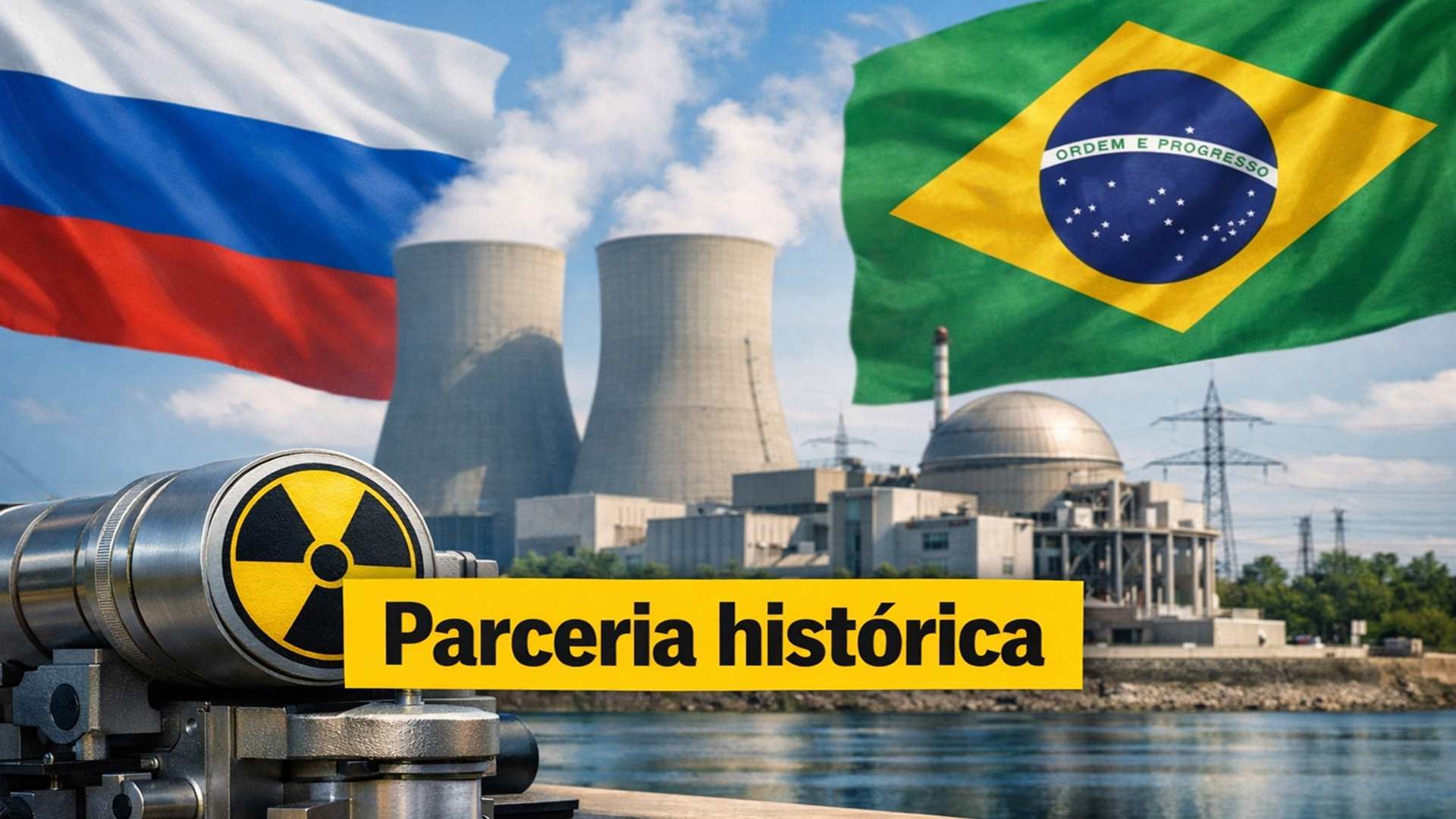
The Declaration Was Made During The Brazil-Russia Business Forum In Brasília, Where Authorities From Both Countries Defended The Peaceful Use Of Nuclear Energy, Discussed Cooperation In The Fuel Cycle, Medical Radioisotopes, Technology Transfer And Joint Projects In Energy And Health
The declaration was made this Thursday, 6, during the Brazil-Russia Business Forum, in Brasília, where authorities from both countries defended the peaceful use of nuclear energy, discussed cooperation in the fuel cycle, medical radioisotopes, technology transfer and joint projects in energy and health.
Brazil and Russia defended the use of nuclear energy for peaceful purposes in a joint document signed by Vice President Geraldo Alckmin and Prime Minister Mikhail Mishustin, during the Brazil-Russia Business Forum held this Thursday, 5, at Itamaraty, in Brasília.
Defense Of Nuclear Energy And Expansion Of Bilateral Cooperation
The positioning of both countries was disclosed in an official document that reaffirms the commitment to nuclear energy for peaceful purposes. Brazil and Russia, partners in Brics, indicated interest in expanding the agenda of medical radioisotopes aimed at meeting health needs.
-
Brazilian city bets on the business environment to generate jobs and attract investments in the energy sector — secretary reveals strategy at Macaé Energy 2026.

-
50 viaducts, 4 tunnels, 28 bridges, and 40 kilometers of bike paths: BR-262 in Espírito Santo will receive 8.6 billion reais for the largest engineering project in the state’s history, inspired by the Immigrant Highway in São Paulo.

-
Brazil produces too much clean energy and doesn’t know what to do with it: over 20% of solar and wind capacity was wasted in 2025 while investors flee and 509 renewable generation projects were abandoned in the last year.

-
Piauí will produce a new fuel that replaces diesel without needing to change anything in the truck’s engine and reduces pollutant gas emissions by half: truck drivers from all over the Northeast are already celebrating the news that will arrive later this decade.


The text also highlights the intention to promote joint projects related to the generation of nuclear energy, the nuclear fuel cycle, and the updating of the bilateral legal framework governing cooperation between the two countries. The defense of the peaceful use of nuclear energy was presented as the central focus of the agenda discussed at the meeting.
On the same date of the forum, the New Start treaty, which limited nuclear weapons between the United States and Russia, expired. The joint document did not make direct mention of the agreement but reinforced the commitment of both countries to civilian and peaceful applications of nuclear technology.

Multilateralism And Criticism Of Coercive Measures
The document signed by Brazil and Russia emphasized the defense of multilateralism and presented criticisms of the use of unilateral coercive measures, especially against developing countries. The text classified these actions as unlawful, illegitimate, and incompatible with international law and the United Nations Charter.
Although there is no direct reference to specific countries, the joint note states that such measures violate the human rights of affected populations, hinder sustainable development, and affront the independence and sovereignty of states. The position was reiterated by authorities present at the event in Brasília.
In a statement released by the Palácio do Planalto, it was informed that President Luiz Inacio Lula da Silva emphasized to the Russian Prime Minister the urgency of adopting actions to strengthen multilateralism. According to the statement, Lula also stressed the importance of monitoring mechanisms to accelerate results and generate concrete benefits for both countries.
The document also mentions that, in the view of the Brazilian president, the current figures of bilateral trade do not yet reflect the size of the economies of Brazil and Russia, indicating room for the expansion of economic relations.
Commercial Partnership Beyond Agriculture
During the afternoon, Geraldo Alckmin and Mikhail Mishustin highlighted the strength of the commercial partnership between Brazil and Russia, initially emphasizing the agricultural sector.
Both indicated possibilities for expanding imports, exports, and research cooperation, emphasizing the role of both countries in global food security.
Alckmin stated that Brazil is among the largest producers and exporters of food in the world, while Russia holds a relevant position in supplying strategic inputs for agriculture.
According to him, this complementarity strengthens bilateral cooperation and contributes to the stability of the international food system.
In addition to agribusiness, the countries expressed interest in developing cooperation in areas such as the pharmaceutical industry, medical-hospital sector, shipbuilding, digital industrial technologies, and cybersecurity. These segments were pointed out as strategic for diversifying the commercial relationship.
Trade Flow And Diversification Challenges
The trade flow between Brazil and Russia in 2025 amounted to approximately US$ 11 billion, with a predominance of Brazilian imports. Alckmin, who also holds the position of Minister of Development, Industry, Trade and Services, evaluated that bilateral cooperation contributes to making the international food system more resilient.
Despite the significant volume, the Vice President highlighted that the commercial relationship is still characterized by low diversification and concentration on primary products. According to him, dialogue between entrepreneurs and authorities can favor the expansion of exports of industrialized goods and stimulate partnerships in technology, energy, and health.
Alckmin stated that the Brazilian government is committed to providing predictability, legal security, and a favorable business environment, conditions considered essential for advancing economic cooperation between the two countries.
Long-Term Strategies And Value-Added
Mikhail Mishustin emphasized the need to strengthen direct contacts in a context where Russia ranks among the top five economic import partners of Brazil.
According to him, the Brazilian market accounts for more than half of Russian products destined for Latin America.
The Russian Prime Minister agreed with Alckmin on the importance of diversifying bilateral trade, focusing on increasing the participation of higher value-added products.
He advocated launching long-term projects in areas considered of mutual interest.
Among the sectors mentioned by Mishustin are the chemical industry, energy, oil and gas, nuclear energy, pharmaceutical production, space exploration, and other strategic segments. For him, there are concrete opportunities to achieve practical results in these fronts.
Pharmaceutical Cooperation And Technology Transfer
Mishustin evaluated that Brazil and Russia have good prospects for cooperation in the pharmaceutical area. According to him, favorable conditions are already being created for the entry of innovative Russian products into the Brazilian market, including medications aimed at treating oncological diseases and diabetes.
The Prime Minister stated that Brazil can benefit from the transfer of technologies in this sector while counting on the cooperation of the Brazilian regulatory system for the analysis of Russian medications. The initiative was presented as part of a strategy to strengthen industrial and sanitary abilities.
Another area highlighted by Mishustin was the exchange of technological experiences. He stated that Russia has invested in modern cybersecurity and artificial intelligence tools and advocated for the importance of the debate on digital sovereignty for Brazil as well.
Trade Below Potential And Expanded Agenda
Geraldo Alckmin reiterated that bilateral trade is still below the potential of both economies. The statement was made at the opening of a high-level meeting with Russian authorities at Itamaraty, without mentioning sensitive topics such as the conflict between Russia and Ukraine.
According to the Vice President, Brazil and Russia are large-scale economies with a broad productive base, strategic natural resources, technological capabilities, and relevant internal markets. This combination, he stated, creates room to expand and diversify economic and commercial cooperation.
The Russian delegation was headed by Mikhail Mishustin, envoy of President Vladimir Putin, who does not make international trips due to an arrest warrant issued by the International Criminal Court.
Trade Data And Sectoral Priorities
In 2025, trade between Brazil and Russia totaled about US$ 10.9 billion. Brazilian exports reached US$ 1.5 billion, with emphasis on beef, unroasted coffee, and soybeans. Imports from Russia totaled US$ 9.4 billion, concentrated on fuel oils and chemical fertilizers.
Alckmin emphasized that the Brazilian government bets on a neo-industrialization strategy based on innovation, sustainability, and inclusion. He expressed great interest in the increase of Russian investments in Brazil, especially in the chemical sector, fertilizers, energy, industrial equipment, and infrastructure.
According to the Vice President, there is also room to expand the presence of Brazilian companies in the Russian market in areas such as processed foods, machinery, equipment, agricultural technology, and industrial solutions. To achieve this, he advocated strengthening institutional channels, reducing logistical barriers, and deepening bilateral technical dialogue.









-

-

-

14 pessoas reagiram a isso.