





 Portuguese
  English
  Spanish
  4 min of reading
  0 comments


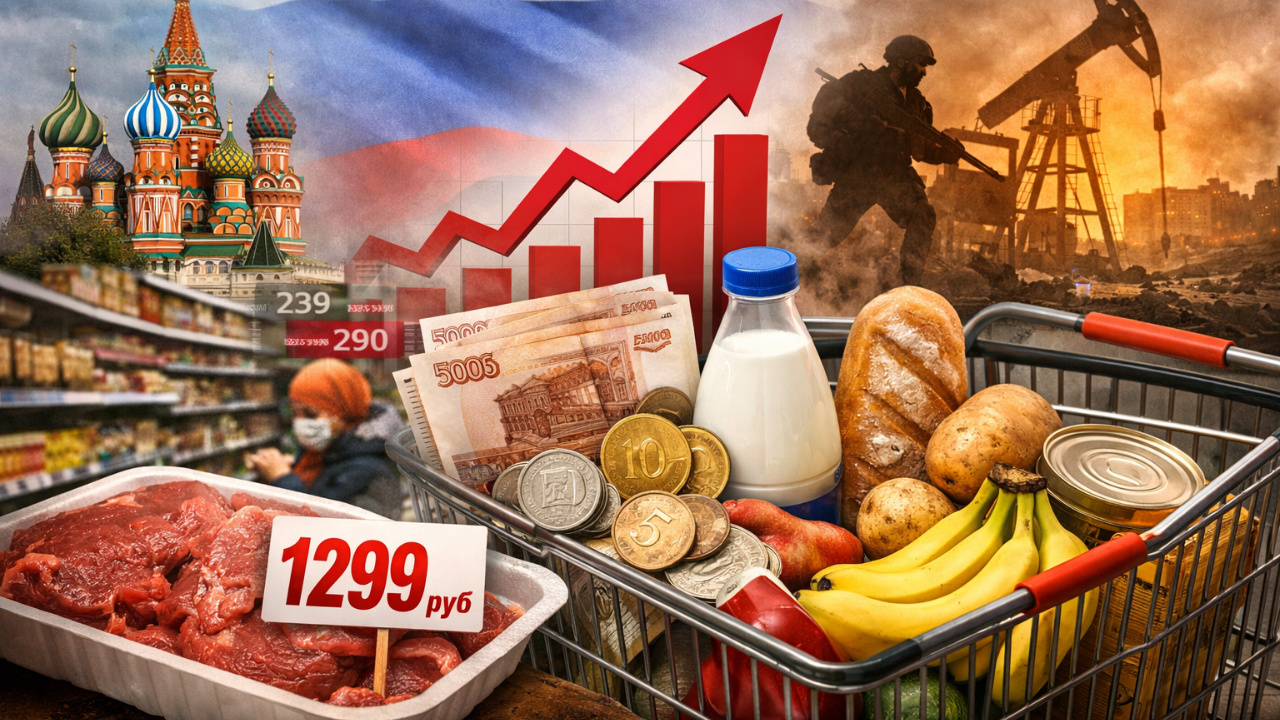
Ukraine War, Sanctions and Higher Taxes Expand Russian Inflation, Raise Food Prices and Pressure Cost of Living Across the Country.
The escalation of Russian inflation is already directly impacting the population’s finances.
The increase in food prices has been sharply recorded in recent months, hitting ordinary consumers in cities like Moscow.
The phenomenon occurs amid the prolonged effects of the Ukraine war, the slowdown of the Russian economy and the rising cost of living.
-
The government requests the Federal Revenue Service for a new system to automate the income tax declaration, reducing errors, time, and bureaucracy for millions of Brazilians.

-
Pix in installments, international Pix, and contactless payment without internet: the Central Bank revealed the new features coming to the tool that is already used by almost every adult in Brazil.

-
Mercado Livre has just started selling medications with delivery in up to three hours to your door, and this move could completely change the way Brazilians buy medicines on a daily basis.

-
In Dubai, rising tensions from the war in the Middle East are causing super-rich individuals to leave the Gulf and direct their fortunes to a new financial refuge in Asia.


In supermarkets, basic items have become more expensive in just a few weeks. Official data indicates that prices rose by 2.3% in less than a month at the beginning of the year.
Thus, inflationary pressure has ceased to be a distant macroeconomic indicator and has begun to affect families’ food routines.
Reports Show Direct Impact on Cost of Living
“Life is getting more expensive,” complains Alexander, an advertising professional living in Moscow who works for a large company.
In just one month, his food budget increased by more than 22%.
His spending rose from 35,000 rubles to 43,000 rubles. In addition, he reports increases in practically all products—from eggs to vegetables.
Even his daily coffee has become more expensive.
The drink rose by 26%, from 230 to 290 rubles, highlighting how Russian inflation spreads beyond basic grocery staples.
Ukraine War Drives Russian Inflation
Since the beginning of the invasion, public spending has been redirected towards defense and the military industry. This movement temporarily boosted the Russian economy. However, the collateral effect was a consistent rise in inflation.
For a time, rising incomes masked the price increases.
Major centers like Moscow and St. Petersburg felt less of the initial impact.
However, with the economic slowdown in 2025, wages stopped keeping up with inflation.
As a result, the cost of living began to weigh more heavily.
Food Prices Rise Above Average
Research on 59 basic products shows the extent of the inflationary advance.
The basket cost 7,358 rubles in 2024. Last month, it jumped to 8,724 rubles—an increase of 18.6%.
This result aligns with the official food inflation index of 18.1% during the same period.
Among the highlights, fruits and vegetables rose by nearly 15%.
Thus, the dependence on imports explains part of the pressure.
Fluctuations in the ruble and logistical disruptions, exacerbated by the Ukraine war, drove up costs.
Local Production Also Faces Pressure
Even domestic products have not escaped.
Dairy products recorded a 41% increase in two years.
The sector faces higher agricultural costs, expensive credit, and a labor shortage.
Thus, supply decreases while prices rise—a typical combination of structural inflationary pressure in the Russian economy.
Higher Taxes Expand Russian Inflation
Another recent factor was the increase in VAT.
The tax rose from 20% to 22% on January 1.
The government justified the measure as necessary to fund “defense and security.”
In practice, the tax pass-through raised food prices and other essential items.
Therefore, the fiscal policy linked to war efforts also pressures the cost of living.
Change in Habits Is Already a Reality
The impact is visible in food choices.
Nadezhda, a 68-year-old retiree, says she has stopped buying beef.
Now, she consumes cheaper fish. According to her, all her monthly pension is spent on food.
Expenses have been postponed.
Thus, the car repair and the purchase of a jacket have been put on hold.
More Rational Spending in Supermarkets
Kristina, a marketing specialist, also had to use savings to eat.
“Now, I take a more pragmatic approach: I don’t worry about what I want or don’t want to eat, but rather about the amount of protein in 100 grams of products,” says Kristina.
She then states that dining out has become unfeasible.
Even cooking has doubled in cost to over 2,000 rubles.
Russian Economy Slows and Risks Increase
In the summer of 2025, the president of the Central Bank, Elvira Nabiullina, assessed that the country was close to balanced growth.
However, economists began to see greater risks following the slowdown.
The oil market emerges as the main threat.
The budget depends on high commodity prices.
However, prices have fallen and there is no forecast for a rapid recovery.
Sanctions and Oil Increase Pressure
U.S. sanctions have reduced sales to India, an important buyer.
With less revenue, the public deficit may increase.
In addition, high interest rates make new international loans difficult.
This limits the government’s ability to support economic activity.
Risk of Stagnation and Recession
Future measures may include higher taxes or spending cuts.
Both will reduce income and consumption.
“Overall, there is a trend of stagnation and a possible decline in GDP,” said Tatiana Mikhailova.
“Every time oil prices drop, a recession becomes possible in Russia,” she adds.
Consumer Remains at the Center of the Crisis
Even without a confirmed recession, the effects are already being felt.
Thus, the combination of Russian inflation, high food prices, the impacts of the Ukraine war, and the fragility of the Russian economy keeps the cost of living under pressure.
For millions of Russians, the crisis has ceased to be geopolitical—it has become domestic, daily, and increasingly expensive.
Read more at: What Lies Behind the Wave of Price Increases in Russia: ‘I Can No Longer Afford to Buy Meat’ – BBC News Brazil









Seja o primeiro a reagir!