





 Portuguese
  English
  Spanish
  5 min of reading
  0 comments


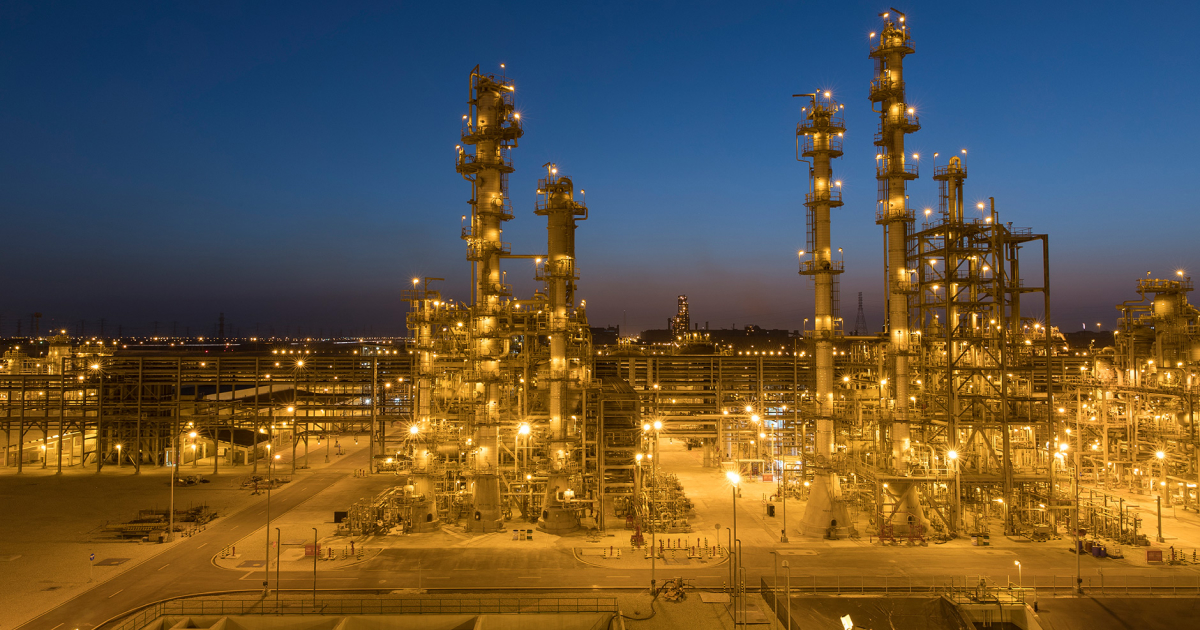
With More Than 2.3 Million Tons of Ammonia Per Year, SABIC Transforms Natural Gas From Saudi Arabia Into Strategic Fertilizer for Global Agriculture.
SABIC Agri-Nutrients Company, a subsidiary of the Saudi Basic Industries Corporation (SABIC), is among the largest producers of nitrogen fertilizers in the Middle East. According to corporate data released by the company and recent industry reports, its annual ammonia production capacity exceeds 2.3 million tons, while its total nitrogen fertilizer production surpasses 4.9 million tons per year. Operations are primarily concentrated in the industrial city of Al Jubail, Saudi Arabia, one of the world’s largest petrochemical hubs.
Production occurs using the abundant natural gas in the country, transformed through high-pressure and high-temperature chemical processes into ammonia, and subsequently into urea and other nitrogen fertilizers. This conversion of fossil energy into agricultural input is one of the invisible pillars of modern agriculture, supporting food chains across various continents.
The Role of SABIC in the Global Fertilizer Market
Saudi Arabia has established itself as a petrochemical powerhouse over the past few decades, supported by significant natural gas reserves. Founded in 1976, SABIC has become one of the country’s main industrial instruments, expanding its operations into fertilizers through SABIC Agri-Nutrients, formerly known as SAFCO.
-
With 74% of companies facing difficulties in hiring, technicians and engineers in renewable energy are becoming scarce in Brazil and are essential to support the expansion of solar, wind, and green hydrogen projects.

-
Historic bankruptcy of Centauro shocks the market, and the century-old company puts more than 500,000 products, machines, and complete infrastructure up for online auction.

-
New shoe factory in Ceará is expected to create 400 jobs and strengthen the local economy.
-
No one imagined it, but a mixture of sawdust with a mineral that fights fires surprises scientists with a result that changes the course of fire-resistant construction.




With a capacity exceeding 2.3 million tons of ammonia per year, the company ranks among the leading regional producers. This production refers to the industrial capacity installed in existing operational units, excluding future projects under development. The ammonia produced serves as the basis for the manufacture of granular urea and other nitrogenous derivatives.
The Middle East, alongside regions like Russia and North America, has become a strategic supplier of fertilizers to global agricultural markets. The dependence on nitrogen inputs is high in countries with intensive agriculture, making industrial complexes such as those in Al Jubail key components of international food security.
Chemical Process: From Natural Gas to Ammonia by the Haber-Bosch Method
The production of ammonia on an industrial scale mainly occurs through the Haber-Bosch process, developed in the early 20th century. The method combines nitrogen extracted from the air with hydrogen obtained from natural gas, forming ammonia (NH₃).
First, natural gas undergoes a process called steam reforming, in which methane reacts with steam at high temperatures to produce hydrogen and carbon monoxide. Subsequently, conversion occurs to carbon dioxide and additional hydrogen. Meanwhile, nitrogen is separated from the atmospheric air using cryogenic separation systems.
The central step involves the reaction between nitrogen and hydrogen in reactors that operate under pressures that can exceed 150 to 250 atmospheres and temperatures between 400 °C and 500 °C. Metallic catalysts, usually based on iron, accelerate the chemical reaction.
The ammonia formed is cooled and condensed, while unreacted gases return to the system for a new cycle. This continuous process allows for uninterrupted large-scale production.
Heavy Engineering and Infrastructure in the Saudi Desert
Operating an ammonia plant in the desert involves significant structural and energy challenges. SABIC’s units in Al Jubail are part of an integrated industrial complex connected to refineries, gas networks, and port terminals.
Synthesis reactors are built with special metallic alloys capable of withstanding high pressures and constant temperatures. Automated control systems monitor pressure, gas composition, and catalytic efficiency in real time.

The infrastructure includes cooling towers, large-scale gas compression systems, and liquid ammonia storage units under controlled conditions. Handling the product requires strict safety protocols due to the toxic and corrosive nature of the substance.
Furthermore, the plant relies on a continuous supply of electrical and thermal energy. Part of the energy used comes from the combustion of natural gas itself, integrating the energy cycle with the production process.
Productive Scale and Economic Impact
The capacity exceeding 2.3 million tons of ammonia per year corresponds to the consolidated annual production of SABIC Agri-Nutrients’ operational units. When converted into urea and other fertilizers, this production base supports agricultural chains in different regions of the world.
The economic impact extends beyond the Saudi domestic market. A large part of the production is directed toward exports, reinforcing Saudi Arabia’s position as a strategic supplier of nitrogen fertilizers.
The global agricultural sector heavily relies on nitrogen fertilizers to increase productivity and ensure stability in food supply. Ammonia production is considered one of the pillars of modern agriculture since the 20th century.
In the geopolitical context, fertilizers have become a strategic input, especially after fluctuations in the global market due to conflicts and trade restrictions. SABIC’s production stability helps reduce volatility in certain importing markets.
Fossil Energy Converted Into Agricultural Input
The ammonia produced from natural gas represents a form of indirect conversion of fossil energy into food. The hydrogen obtained from methane chemically bonds with atmospheric nitrogen, forming a compound essential for fertilizer synthesis.
This chain illustrates how energy resources are transformed into agricultural inputs capable of enhancing the productivity of crops such as wheat, rice, and corn.
However, the process is carbon-intensive. Conventional ammonia production emits carbon dioxide both from natural gas reforming and from high energy consumption.
In light of this scenario, SABIC has announced low-carbon ammonia projects, including “blue ammonia” initiatives that employ carbon capture and storage to reduce emissions associated with the Haber-Bosch process.
Environmental Challenges and Energy Transition
The fertilizer industry faces increasing pressure to reduce emissions. Global ammonia production accounts for a significant share of industrial CO₂ emissions.
Carbon capture and storage projects are being incorporated into new plants in the Middle East. The industrial city of Jubail is identified as one of the potential centers for integrating carbon mitigation technologies.
The challenge lies in balancing global food security with international climate commitments. Ammonia-producing countries need to adapt industrial processes to reduce carbon intensity without compromising productive scale.
The transition to low-carbon hydrogen, whether through carbon capture or renewable energy-powered electrolysis, represents a possible technological evolution in the coming decades.
Strategic Position of SABIC in the International Scenario
By operating one of the largest petrochemical fertilizer complexes in the Middle East, SABIC consolidates Saudi Arabia as a relevant supplier of agricultural inputs.
The geographical location favors exports to Asia, Africa, and Europe, reducing logistical costs compared to more distant suppliers.
The installed production capacity gives the company a strategic role in the global nitrogen fertilizer trade. In a scenario of rising food demand and instability in energy markets, ammonia has become a central component of agricultural geopolitics.
With production exceeding 2.3 million tons of ammonia per year, SABIC maintains in the Saudi desert a highly complex chemical infrastructure, supported by high-pressure reactors, petrochemical integration, and high energy consumption. The transformation of natural gas into fertilizer synthesizes the interdependence between energy and agriculture in the contemporary economy.
This industrial complex not only supplies international markets but also symbolizes the direct conversion of fossil resources into food production bases. In a world seeking to expand agricultural production while reducing industrial emissions, heavy chemical engineering applied to ammonia remains at the center of the debate on food security and energy transition.








-

-

4 pessoas reagiram a isso.