





 Portuguese
  English
  Spanish
  3 min of reading
  0 comments


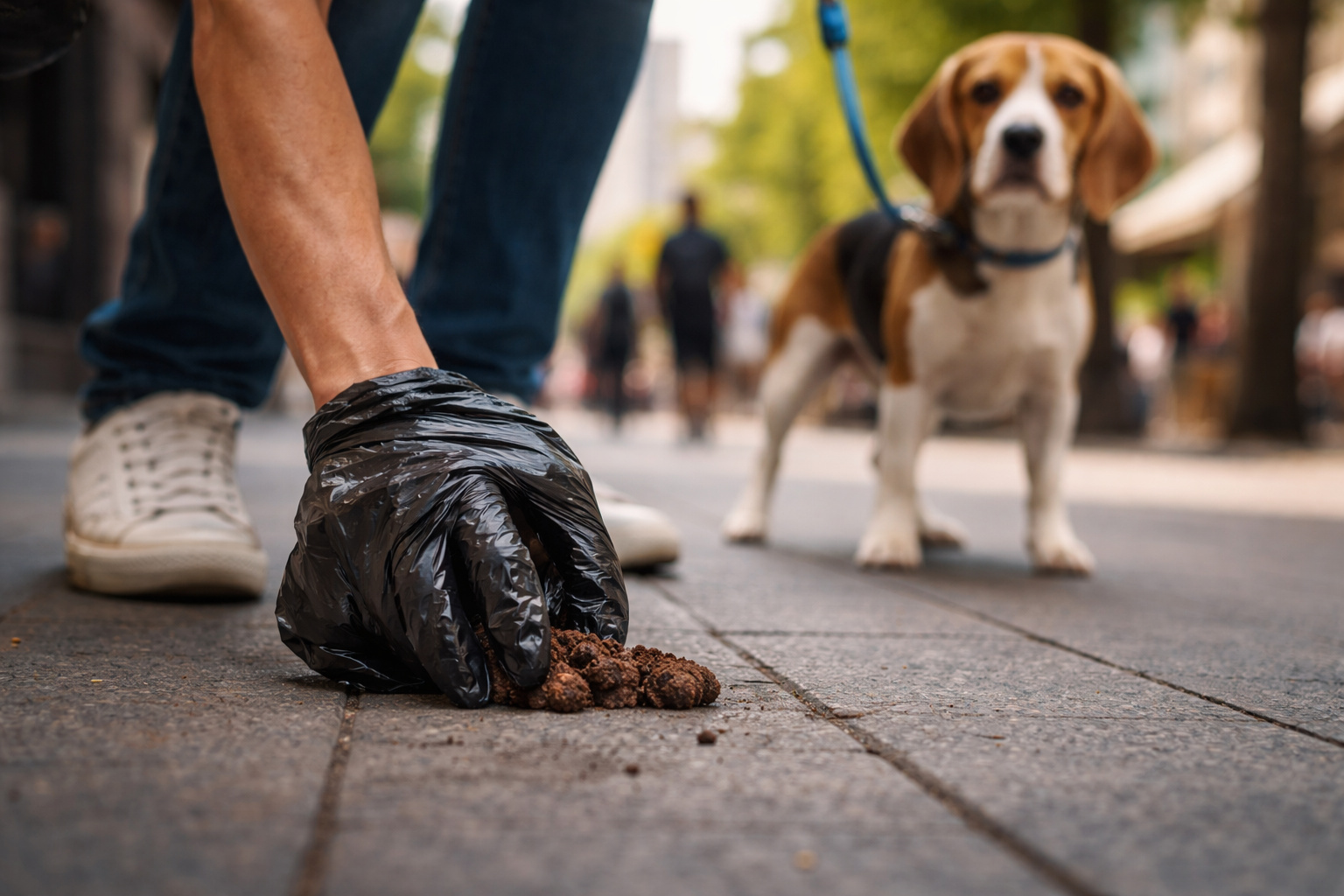
Municipal Regulations In Force Since 2007 Provide Financial Penalties for Pet Owners Who Do Not Pick Up Animal Waste During Walks, With Values Linked to the Minimum Wage of 2025
An urban rule with a direct impact on the daily lives of those who live with pets remains in force in various Brazilian cities.
The municipal legislation establishes that failing to pick up dog or cat waste in public areas constitutes an infraction, subject to a financial fine.
This measure aims to preserve urban cleanliness, ensure proper use of sidewalks, and reinforce basic principles of collective coexistence.
In Ribeirão Preto, in the interior of São Paulo, the rule has been in force since 2007.
According to local legislation, the owner who does not clean up the waste left by the animal can be fined one third of the current minimum wage.
Considering the national minimum wage set at R$ 1,518 for 2025, the fine reaches R$ 506.
Municipal Regulations Link Penalty to the Minimum Wage
The method for calculating fines follows objective criteria defined by law.
As the amount is linked to the minimum wage, the penalty is automatically updated with each annual adjustment.
Additionally, in the event of recidivism, the legislation allows for the aggravation of the penalty.
In this situation, the amount can double, reaching R$ 1,012 in 2025, which increases the financial impact for the offender.
-
The new Civil Code could revolutionize marriages in Brazil with “express divorce” and changes that could exclude spouses from inheritance.
-
Banco do Brasil sues famous influencer for million-dollar debt and intensifies debate on delinquency, risks of seizure, and direct impact on Gkay’s credibility.

-
The Senate approves a bill that criminalizes misogyny, hatred, or aversion towards women, and includes the crime in the Racism Law with a penalty of up to 5 years.

-
Chamber Approves Bill That Allows Pepper Spray for Women Over 16 and Imposes Strict Rules for Purchase, Possession, and Use as Self-Defense


This progressive mechanism was adopted to encourage continuous compliance with the rule.
Thus, the public authority seeks to reduce recidivism and reinforce the individual responsibility of pet owners during walks in public areas.
Other Cities Adopt Similar Regulations
Ribeirão Preto is not the only city to adopt this type of legislation.
Similarly, Belo Horizonte, the capital of Minas Gerais, maintains rules that hold the owner responsible for the collection of their pet’s waste.
In addition, other municipalities in Minas, such as Uberlândia and Ipatinga, also enforce municipal laws with the same objective.
Although the principle is common, the rules vary by city.
In some municipalities, waste can be disposed of in public trash cans.
In other cases, however, the legislation requires disposal only in residential trash bins or in the toilet, according to local sanitation regulations.
Urban Hygiene and Citizenship Guide the Laws
According to an institutional explanation released by the PT Network, picking up and properly disposing of animal waste is considered an act of citizenship.
The guidance highlights that using a plastic bag, preventing waste from spreading, and keeping the walk clean protects pedestrians and improves urban coexistence.
Additionally, this practice helps to preserve the hygiene of public spaces and reduce everyday disturbances for the population.
Owner Responsibility and Daily Impact
Municipal laws make it clear that responsibility always lies with the pet owner, regardless of size or species.
Simply failing to comply with the rule can result in significant financial penalties.
Therefore, knowing local legislation has become essential for those walking pets in public areas.
Considering this scenario, do you believe that the imposition of fines is sufficient to change behaviors or should educational campaigns carry more weight in raising awareness among pet owners?










-

-

2 pessoas reagiram a isso.