





 Portuguese
  English
  Spanish
  7 min of reading
  0 comments


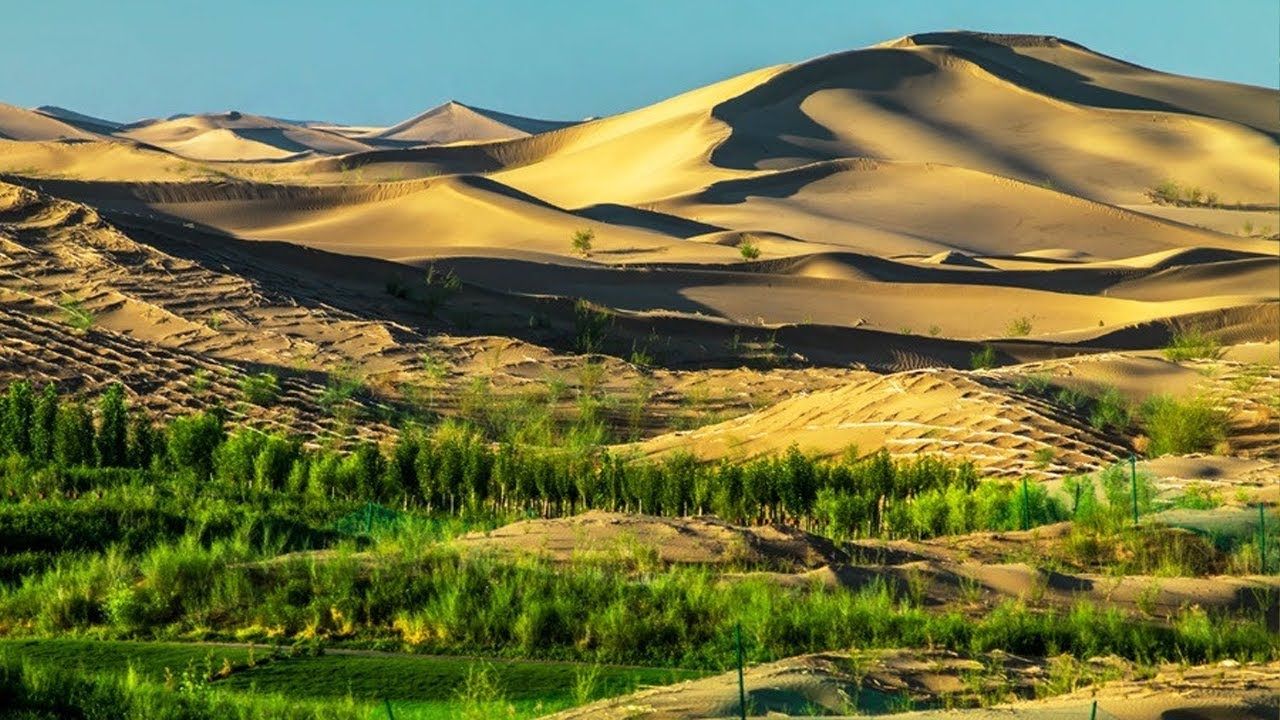
Saudi Arabia Invests Billions in Fossil Water, Irrigation Pivots, and Land Purchases Abroad to Ensure Food Even Without Rivers and With Minimal Rain
Saudi Arabia is a country rich in oil but dramatically poor in water, a place where there are no perennial rivers, almost all of the territory is desert, temperatures reach 56 °C, and annual rainfall barely exceeds 100 millimeters per square meter. Yet, Saudi Arabia has been transforming the desert into giant farms, with circular fields irrigated by colossal pivots, fed by deep reserves of groundwater.
This movement did not arise from nothing. Over the past few decades, the Saudi monarchy has created aggressive subsidies, invested in fossil water extracted from more than a kilometer deep, expanded the use of advanced technology, and started buying large tracts of land in other countries to produce food abroad. While gaining self-sufficiency in several products, Saudi Arabia also faces criticism for how it uses and effectively exports the water from other regions of the world.
A Kingdom Rich in Oil, Poor in Water
Saudi Arabia has one of the largest oil reserves on the planet, and about 90% of everything it exports is linked to this resource.
-
The Argentine government celebrates the lowest poverty rate in 7 years, but experts warn that the methodology has changed, real wages have fallen, unemployment has risen, and the number of people on the streets of Buenos Aires has increased by 57% since Milei took office.

-
7.8 magnitude earthquake in Indonesia frightens the population, triggers tsunami alert, and hits an island with over 200,000 inhabitants this Thursday.
-
Google will finally let you change that embarrassing Gmail address you created in your teenage years without losing any accounts, logins, or old emails: the feature is already available in the United States.

-
Heading to Brazil in a Bonanza F33 single-engine aircraft: a couple departs from Florida on a visual flight, makes technical stops in the Caribbean to refuel and organize paperwork, and begins the staged crossing until they reach the country.


In contrast, the country faces an extreme water scarcity situation. There are no rivers that flow year-round, only ephemeral watercourses that appear for a short period after rare rains.
While in drier regions of Brazil the annual average rainfall is around 500 millimeters per square meter, in Saudi Arabia this volume drops to about 100 millimeters, reinforcing a striking aridity scenario.
Add to that temperatures of up to 56 °C and frequent sandstorms, and you have a territory that, at first glance, seems completely incompatible with large-scale agriculture.
Historically, the Saudi agricultural sector was limited to date production and the raising of goats, camels, and sheep. With the forced change in the lifestyle of Bedouin tribes, who transitioned from nomads to settled in specific areas, the livestock ceased to move and began to pressure the pasture in limited regions.
To survive, many Bedouins cut down trees to produce charcoal and buy food for their animals, which accelerated desertification and further deteriorated the soil.
Saudi Arabia’s Strategy to Produce Food in the Desert

Faced with the dependence on food imports and the need to generate jobs, the Saudi government decided to completely change the agricultural logic of the country. The objective was clear: reduce dependence on foreign food and employ part of the population in rural-related activities.
To achieve this, the monarchy put significant money on the table and imposed barriers to imported products. The state began subsidizing seeds and inputs, taxing wheat bought abroad, and even purchasing domestically produced wheat at a price about three times higher than the international market price. The result was rapid expansion: between 1980 and 1995, the cultivated area in the country tripled.
However, growth met its most obvious limit: the lack of water. Producing in the desert is costly and risky, and about 80% of all water consumed in Saudi Arabia is linked to agriculture.
At this point, the central question became how to ensure enough water to maintain the farms without collapsing urban supply.
Desalination and Groundwater: The Fuel for Giant Farms
The first challenge to be addressed was supplying the population. Saudi Arabia, which occupies most of the Arabian Peninsula, is bordered by the Red Sea on one side and the Persian Gulf on the other.
The solution was to heavily invest in desalination of seawater, a costly process but capable of guaranteeing potable water on a large scale.
The government took on the responsibility of extracting seawater, desalting it, and distributing it practically for free to the inhabitants.
However, the system is not perfect: Saudis can go several days without water when the system fails, showing the fragility of a model highly dependent on expensive and complex infrastructure.
For agriculture, using desalinated water would be economically unfeasible, even though the country is an oil giant.
The solution, then, was to explore what lies beneath the surface. With drillings about a kilometer deep, the country began accessing subterranean water reserves accumulated for over two million years, a non-renewable resource known as fossil water.
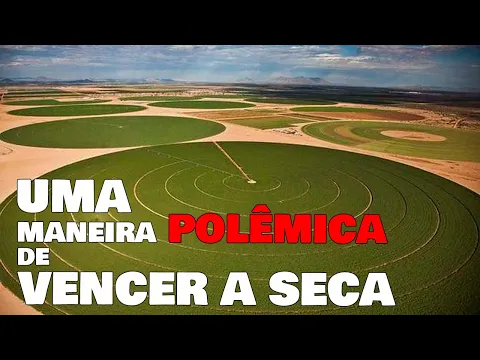
This water is used for irrigation through the center pivot system, a technology originally developed in Colorado, USA, and later spread worldwide.
Thanks to this system, vast areas of desert have transformed into green circles seen from space, giving the landscape of Saudi Arabia an almost futuristic appearance.
To an unsuspecting observer, it looks like a science fiction creation, but it is the result of engineering, oil, and a lot of ancient water being brought to the surface.
Technology, Vision 2030, and the Shift from Wheat to More Strategic Crops

In 2016, Saudi Arabia launched the Vision 2030 plan, with the central goal of reducing dependence on oil and diversifying its economy.
Agriculture was included in this package and began receiving special attention, now focusing on technology and water efficiency.
Modern satellite data collection systems were implemented, allowing the monitoring of crops across the country, cross-referencing information on water consumption, productivity, and the climatic profile of each region.
As a result, researchers can more precisely decide which crops to plant in each area and how much water to apply in each cycle, reducing waste.
A drastic measure was the ban on wheat cultivation. Previously encouraged by the government, cereal production had placed Saudi Arabia among the top ten global producers but consumed too much water. The solution was to abandon wheat and invest in crops more aligned with the climate and long-term strategy.
Among these crops, olives have become a symbol of the new Saudi agriculture. The first major olive plantation in the country was recorded in 2007. Within a few years, with intensive investments, Saudi Arabia began producing half of all the olive oil it consumes domestically and hosts the world’s largest modern olive farm, recognized by the Guinness Book.
It is a clear example of how technology, capital, and groundwater have managed, at least for now, to rewrite the agricultural map of the desert.
Criticism of the Saudi Water Model

All this transformation, however, has come with criticism. Experts point out that the country could adopt drip irrigation systems, like those used in Israel, which consume less water than center pivots.
In the view of these critics, insisting on giant pivots accelerates the depletion of fossil water reserves, which already have a limited horizon: even in the most optimistic forecasts, Saudi Arabia’s underground aquifers would have water for just a few more decades.
Another strong criticism relates to the side effects of the wheat ban. Many farmers who previously planted the cereal have begun investing in livestock and pasture formation, an use that can consume up to four times more water than wheat itself.
Instead of relieving pressure on water resources, the change in productive profile may, in some cases, have exacerbated the issue.
Also weighing in is the fact that water is delivered practically for free to the population. The very low cost reduces the incentive for conservation and contributes to a per capita consumption estimated at 950 cubic meters per person per year, nearly double the amount recorded in other countries, where this figure usually falls below 500 cubic meters.
In countries that have faced severe water crises, such as Israel, the increase in tariffs has been key to reducing waste, something many experts advocate as an inevitable path for Saudi Arabia.
When the Saudi Desert Advances Over Foreign Lands
Perhaps the most controversial measure of Saudi Arabia’s food strategy is the massive acquisition of agricultural land in other countries.
To ensure food security while preserving part of its underground water, the country has begun investing millions of dollars in the acquisition of large properties in nations such as Ethiopia, Indonesia, Malaysia, and Sudan.
In these areas, Saudis establish large-scale crops and send almost all the production directly to the ports of Saudi Arabia.
Meanwhile, much of the local population continues to face food insecurity, raising ethical questions about the use of fertile land in poor countries to supply a rich, desert nation.
The strategy is not limited to the developing world. Saudi Arabia has also purchased extensive agricultural areas in the US states of California and Arizona, focused on producing alfalfa to feed the dairy cattle of the largest dairy company in the Gulf.
As soon as the harvest is over, all the alfalfa is sent to Saudi Arabia, which has led American dairy producers to protest.
In their view, exporting alfalfa on a large scale is akin to exporting water from the United States without charging for it, intensifying tensions over water resource use in regions that also face droughts and water restrictions.
By combining fossil water, colossal pivots, high technology, and land purchases abroad, Saudi Arabia has been ensuring food even without rivers or rain.
However, the ecological and geopolitical cost of this model remains uncertain, especially for future generations and for the countries that currently provide land and embedded water in their exports.
In your view, is Saudi Arabia’s strategy of using fossil water and buying land in other countries to produce food a necessary solution for surviving in the desert or a dangerous path that transfers the water problem to the rest of the world?








-

-

2 pessoas reagiram a isso.