





 Portuguese
  English
  Spanish
  5 min of reading
  17 comments


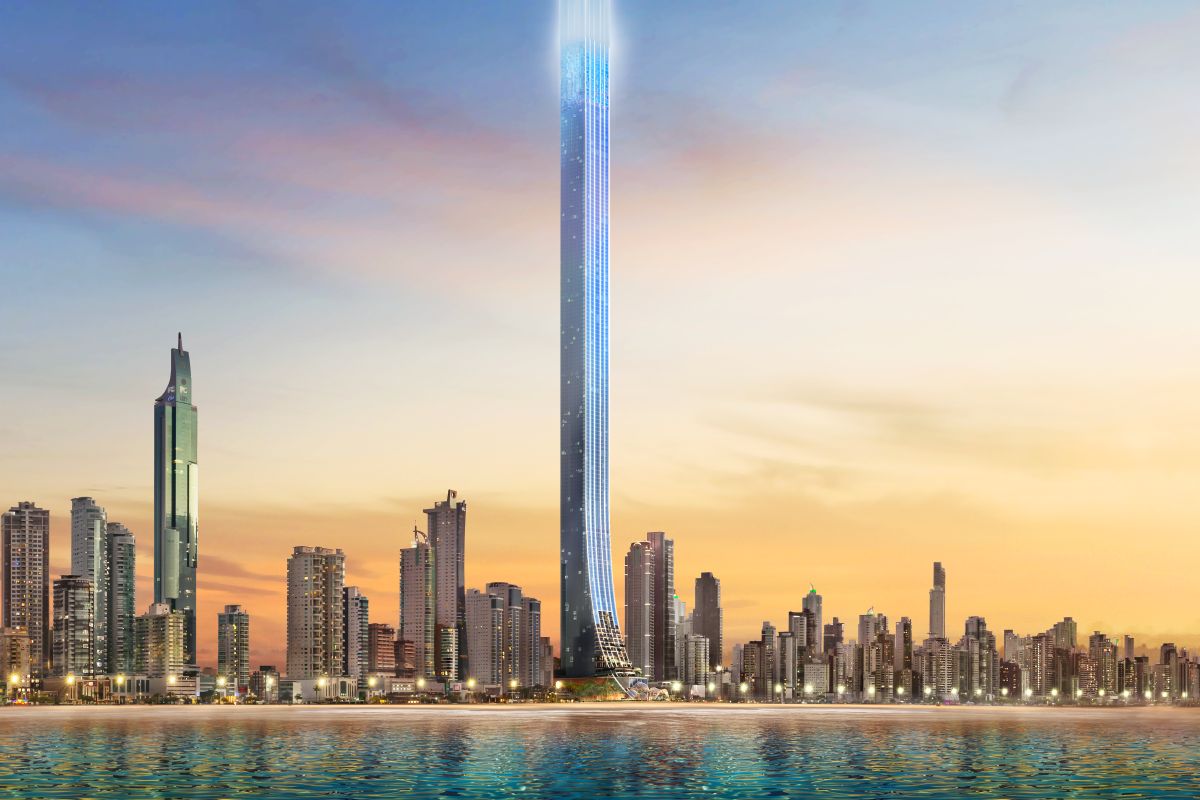


Diaphragm Wall With 40 Meters Depth, Concrete Fck 90 MPa, and Perimetral Containment Prepare the Ground to Erect the Tallest Residential Building in the World With Technical Control and Large-Scale Construction Logistics
The construction site of Senna Tower, in Balneário Camboriú, is executing the foundation stage that will allow the rise of the tallest residential building in the world. The main front is the diaphragm wall, excavated by equipment weighing over 100 tons, using polymer for soil stabilization, reinforcements sized for large efforts, and controlled concreting.
The project organizes the perimeter into contiguous panels to enable general excavation without deforming neighboring lands. The package includes depths ranging from 38 to 40 meters, sections of 1 meter in width and about 2 meters in length per panel, large reinforcements, and concrete fck 90 MPa, adopted both for the need for containment and for points of support for columns that will arise on the wall.
Diaphragm Wall: Construction Method and Stabilization
The diaphragm wall is the structural containment that enables the subsoil of the project. The excavation is performed in modules, with material removal and polymer injection within the same time frame to keep the stem walls stable.
-
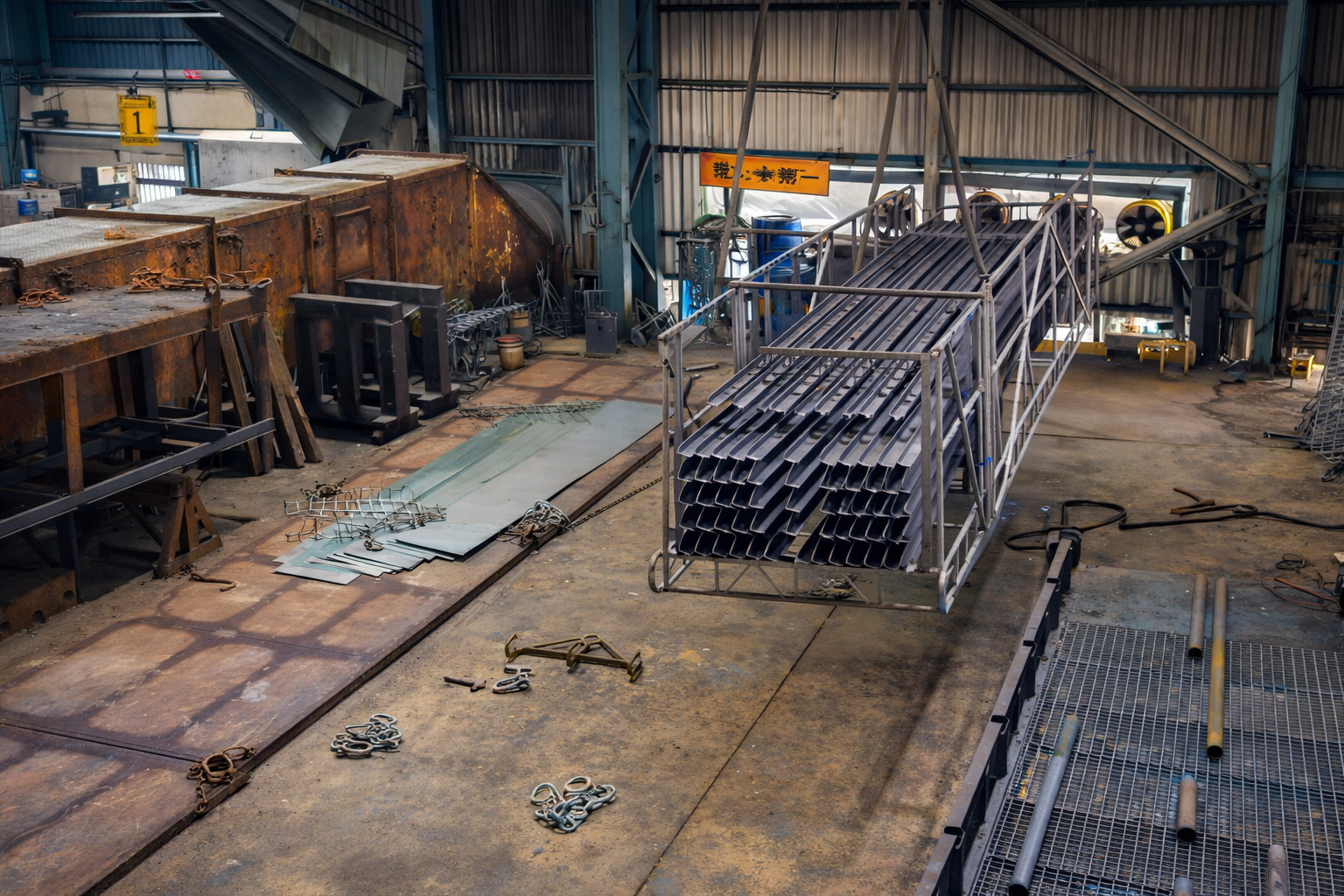
Galvanized steel in Japan impresses with its extreme resistance to corrosion through a detailed industrial process that involves chemical cleaning, a zinc bath at 450 degrees, and rigorous inspection.
-
The presenter who marked generations on Brazilian TV passed away at the age of 60, but left a legacy of R$ 1.4 billion, a mansion in Orlando, and a wealth that crosses borders and businesses.

-
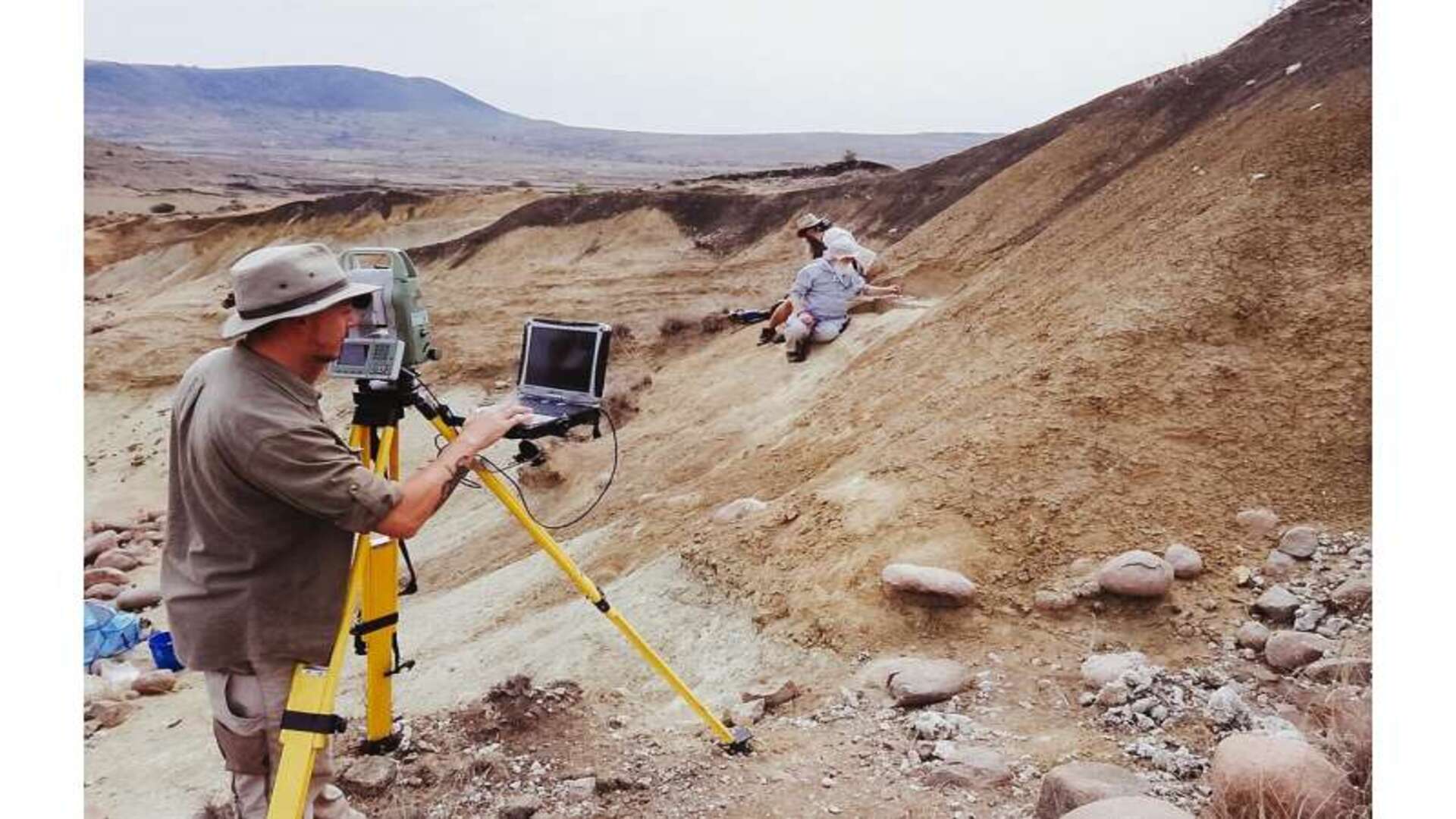
Long before we imagined: the first humans were already doing heavy mining in South Africa over 200,000 years ago!
-
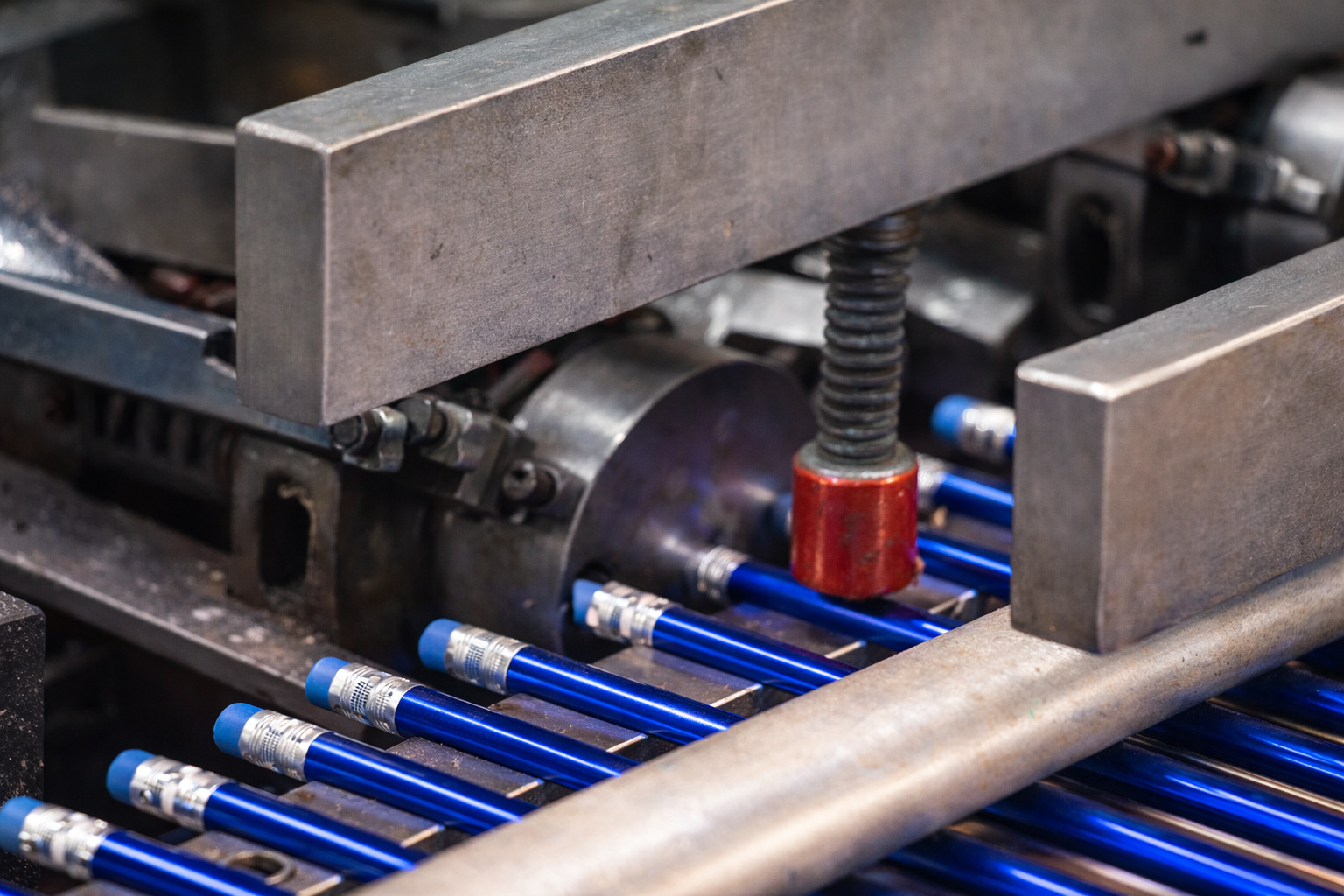
Few people know, but the most used pencil in the world is manufactured using extreme heat, the extraction of graphite from deposits millions of years old, a mixture of clay and water, followed by extrusion under nearly 10 tons of pressure and drying in an oven at 120 degrees.
The polymer functions as a technical “gel,” increasing soil stability during excavation and even until concreting.
After the panel is opened, the reinforcement approximately 1 meter thick is positioned, and concreting proceeds under fluid, filling the excavated volume.
The process is repeated thousands of times around the perimeter, forming a continuous barrier that will allow internal excavation of the land without compromising adjacent buildings.
Depth, Sections, and Concrete Fck 90 MPa
The panels of the diaphragm wall reach approximately 38 to 40 meters in depth, with 1 meter in width and about 2 meters in length per panel, parameters compatible with large containment.
The specified concrete is fck 90 MPa, adopted to enhance the load-bearing capacity and durability of the buried structure.
At Senna Tower, the diaphragm wall acts as containment and, in specific points, as a support element for columns, which is why the specification of material and reinforcements is more demanding.
The quality of the mix, the control of slump, and the continuity of the concreting are crucial to avoid cold joints and ensure overall performance.
Reinforcements and Assembly Logistics
High reinforcements are assembled and lifted into the excavated panel with the aid of a crane. The geometry follows the guide wall template, which defines alignment, 1 meter in width and approximately 2 meters in length per panel. This standardization speeds up execution and improves dimensional control.
Along the perimeter, the sequence of contiguous panels creates a rigid curtain. The careful positioning of the cages, cleaning the bottom before concreting, and checking the elevations are routine steps to ensure verticality and integrity of the joints.
Containment Task and Next Step With Piles
The perimetral containment allows for excavating the internal mass safely and assembling the subsoil of the project.
Once the diaphragm wall is completed, the construction site advances to the monitored perforated driving of continuous helix piles (Auger Cast), responsible for transferring the loads from the tower to the ground.
The function is complementary: the diaphragm wall stabilizes the perimeter and receives, at points, the loads from columns, while the structural piles consolidate the foundation block that will support the weight of the superstructure.
This combination is common in very tall buildings, where control of deformations and structural redundancy are essential.
Soil Control and Impact on the Neighborhood
The use of polymer in the excavation mitigates the risk of local collapses and reduces the loss of fine material, an important effect for those working in a consolidated urban area.
The contained perimeter allows for internal excavation without affecting the foundations of neighbors, keeping settlements within limits compatible with the neighborhood.
The logistics of the construction site includes continuous removal of excavated soil, reuse of polymer according to construction procedures, and monitoring of plumb and alignment at each panel.
In large-scale projects, the repetition of the method with constant parameters is what guarantees productivity and reliability.
Land Dimensions and Field Reading
The land of Senna Tower presents large area for implementation, allowing simultaneous advancement of excavation, reinforcement, and concreting fronts.
The guide walls highlight the template of the wall, helping to visualize the mesh that, once completed, will be buried and visible only after the internal excavation.
The team displays, along the perimeter, reinforcements already assembled and panels at different stages, which makes it easier to understand the cadence: excavate, stabilize with polymer, insert reinforcement, concrete, and move on to the next panel. This cadence sustains the foundation schedule.
Why This Is Crucial for the Tallest Residential Building in the World


To erect the tallest residential building in the world, the foundation needs to combine load-bearing capacity, effective containment, and strict control of displacements.
The deep diaphragm wall with concrete fck 90 MPa delivers the expected performance to handle high loads and serve as a rigid barrier to the soil.
The sequence with monitored continuous helix piles completes the system, distributing loads and preparing the launch platform for the superstructure. Without this set of foundation engineering, the tower would lack a base to reach the proposed height.
The advancement of the diaphragm wall, with depths close to 40 meters, sections of 1 meter by 2 meters, robust reinforcements, and concrete fck 90 MPa, creates the technical conditions for Senna Tower to rise safely.
The combination of method, control, and construction site logistics is the real foundation of the tallest residential building in the world.
In your assessment, which foundation stage most impacts the performance and timeline of a skyscraper of this size: the deep diaphragm wall or the structural piles that will follow?








Soy Argentino, realmente una obra majestuosa, me gustaría ver el seguimiento de la misma
O que me importa nisso tudo é, vai ter unidades de 11-12 mil reais o metro quadrado, se tiver vou encomendar dois, pide ser no andar medio do edifício!!!😅😅😅
Boa noite! Respeito os comentários mas meu foco é na engenharia por trás dessa obra. Tenho uma dúvida, como é feita a amarração estrutural de um painel no outro, se a caçamba da máquina tem as dimensões exatas dos segmentos da parede?