





 Portuguese
  English
  Spanish
  3 min of reading
  0 comments


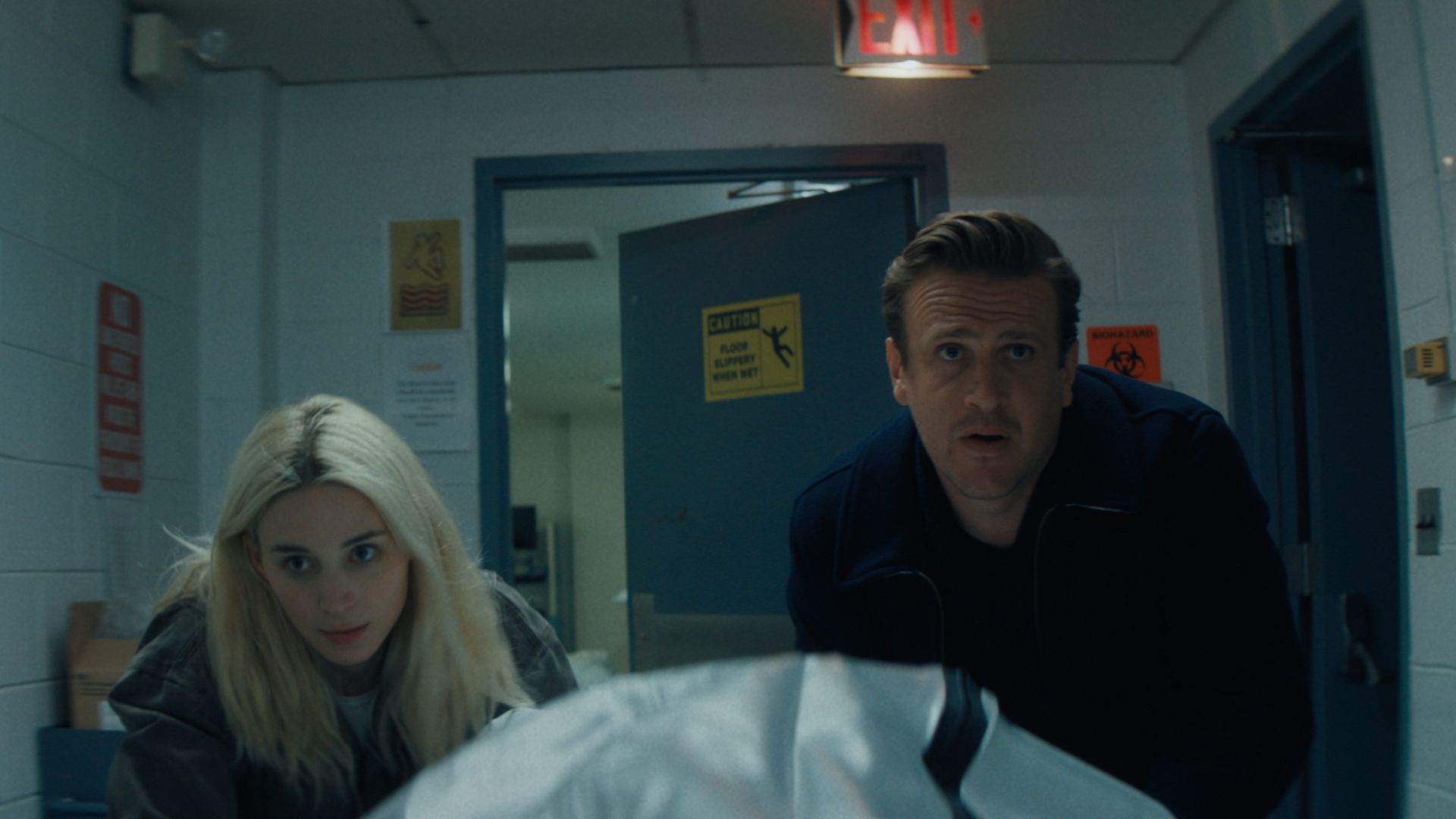
A Groundbreaking Scientific Discovery Changes Humanity’s Destiny, Sparks Global Waves of Despair, and Raises Profound Debates about Faith, Morality, Science, and the Consequences of Knowing What Exists After Death
What if scientists actually proved the existence of life after death? This question, which for centuries belonged to the realm of philosophy and religion, takes on disturbing contours in a production available on Netflix that has been attracting attention on social media and provoking intense debates around the world.
Despite suggestive headlines and misleading interpretations circulating online, the content is not a real scientific documentary. In fact, the narrative is part of the film The Discovery, a science fiction feature released in 2017 that imagines an extreme scenario: scientists claim to have irrefutable proof that something exists after death — and the impact of this is devastating.
The information was originally disseminated on entertainment and pop culture portals, with analyses published by specialized outlets and echoed by users on social media, highlighting how the work available on Netflix prompts deep reflections by simulating a scientific discovery capable of completely altering human behavior.
-
Friends have been building a small “town” for 30 years to grow old together, with compact houses, a common area, nature surrounding it, and a collective life project designed for friendship, coexistence, and simplicity.

-
This small town in Germany created its own currency 24 years ago, today it circulates millions per year, is accepted in over 300 stores, and the German government allowed all of this to happen under one condition.

-
Curitiba is shrinking and is expected to lose 97,000 residents by 2050, while inland cities in Paraná such as Sarandi, Araucária, and Toledo are experiencing accelerated growth that is changing the entire state’s map.

-
Tourists were poisoned on Everest in a million-dollar fraud scheme involving helicopters that diverted over $19 million and shocked international authorities.


The Scientific Discovery That Changes Everything and Triggers a Global Crisis
In the plot, the world is presented one year after the official announcement of the scientific discovery. Contrary to what many might imagine, the proof of life after death does not bring peace, spiritual comfort, or collective hope. On the contrary, it triggers a global wave of psychological and moral collapse.
Millions of people around the globe begin to take their own lives believing that death is merely a passage to a better existence. The phenomenon causes an alarming increase in suicides, disrupts families, destabilizes governments, and puts all known ethical systems into question.
The individual behind the discovery is a renowned scientist, portrayed by Robert Redford, who becomes a controversial figure. While he is seen as a revolutionary genius, he is also viewed as someone who opened a Pandora’s box that cannot be closed.
Meanwhile, society falls into a silent collapse, marked by fear, guilt, and an obsession with understanding what truly exists “on the other side.”
Human Drama, Ethical Dilemmas, and the Weight of Individual Choices
Alongside the global chaos, the film follows the journey of Will, the scientist’s son, portrayed by Jason Segel. Marked by family conflicts and internal questions, he meets a woman profoundly affected by past traumas, played by Rooney Mara.
The relationship between the two develops in a world emotionally devastated, where faith, science, guilt, and love constantly collide. The narrative abandons any attempt to glorify the discovery and begins to question whether humanity is truly prepared to handle such a definitive truth.
The supporting cast also includes Jesse Plemons, Riley Keough, and Ron Canada, reinforcing the dramatic weight of the production.
Thought-Provoking Science Fiction Available on Netflix

Directed by Charlie McDowell, the film was acquired by Netflix in 2016 and premiered at the Sundance Film Festival before officially arriving on the platform in 2017. The strategy followed the model adopted by streaming at the time: limited theatrical release and simultaneous launch on the digital catalog.
Unlike productions focused on action or special effects, The Discovery focuses on intimate science fiction, aimed at existential reflections and deep ethical dilemmas. The script invites the viewer to reflect not only on death but primarily on the value of life when all certainties are removed.
In this sense, the work stands out as a narrative experiment that questions to what extent absolute knowledge can be more destructive than liberating.









-

-

2 pessoas reagiram a isso.