





 Portuguese
  English
  Spanish
  2 min of reading
  0 comments


Formation of 335.5 Thousand Tons of Trifluoroacetic Acid Between 2000 and 2022 Reignites Environmental Debate on Global Impacts, European Regulation, and Cumulative Risks of This Persistent Chemical
Between 2000 and 2022, approximately 335.5 thousand tons of trifluoroacetic acid were generated in the atmosphere from the breakdown of substances created to replace the old CFCs, reigniting the environmental debate over the unexpected impacts of these chemical alternatives.
Researchers from Lancaster University associate the formation of trifluoroacetic acid with the degradation of compounds such as HCFCs and HFOs, widely used in refrigeration systems and aerosols.
These substances were adopted after the ban on CFCs due to damage to the ozone layer.
-
Motorola launched the Signature with a gold seal from DxOMark, tying with the iPhone 17 Pro in camera performance, Snapdragon 8 Gen 5 that surpassed 3 million in benchmarks, and a zoom that impresses even at night.

-
Satellites reveal beneath the Sahara a giant river buried for thousands of kilometers: study shows that the largest hot desert on the planet was once traversed by a river system comparable to the largest on Earth.

-
Scientists have captured something never seen in space: newly born stars are creating gigantic rings of light a thousand times larger than the distance between the Earth and the Sun, and this changes everything we knew about stellar birth.

-
Geologists find traces of a continent that disappeared 155 million years ago after separating from Australia and reveal that it did not sink, but broke into fragments scattered across Southeast Asia.

Classified as an “eternal chemical,” trifluoroacetic acid exhibits high resistance to natural degradation.
Its persistence means that the compound remains active in the environment for long periods, making its elimination by natural processes difficult.
Growing Presence of Trifluoroacetic Acid in the Environment
Highly stable and soluble in water, trifluoroacetic acid easily disperses through the atmosphere and can reach remote areas.
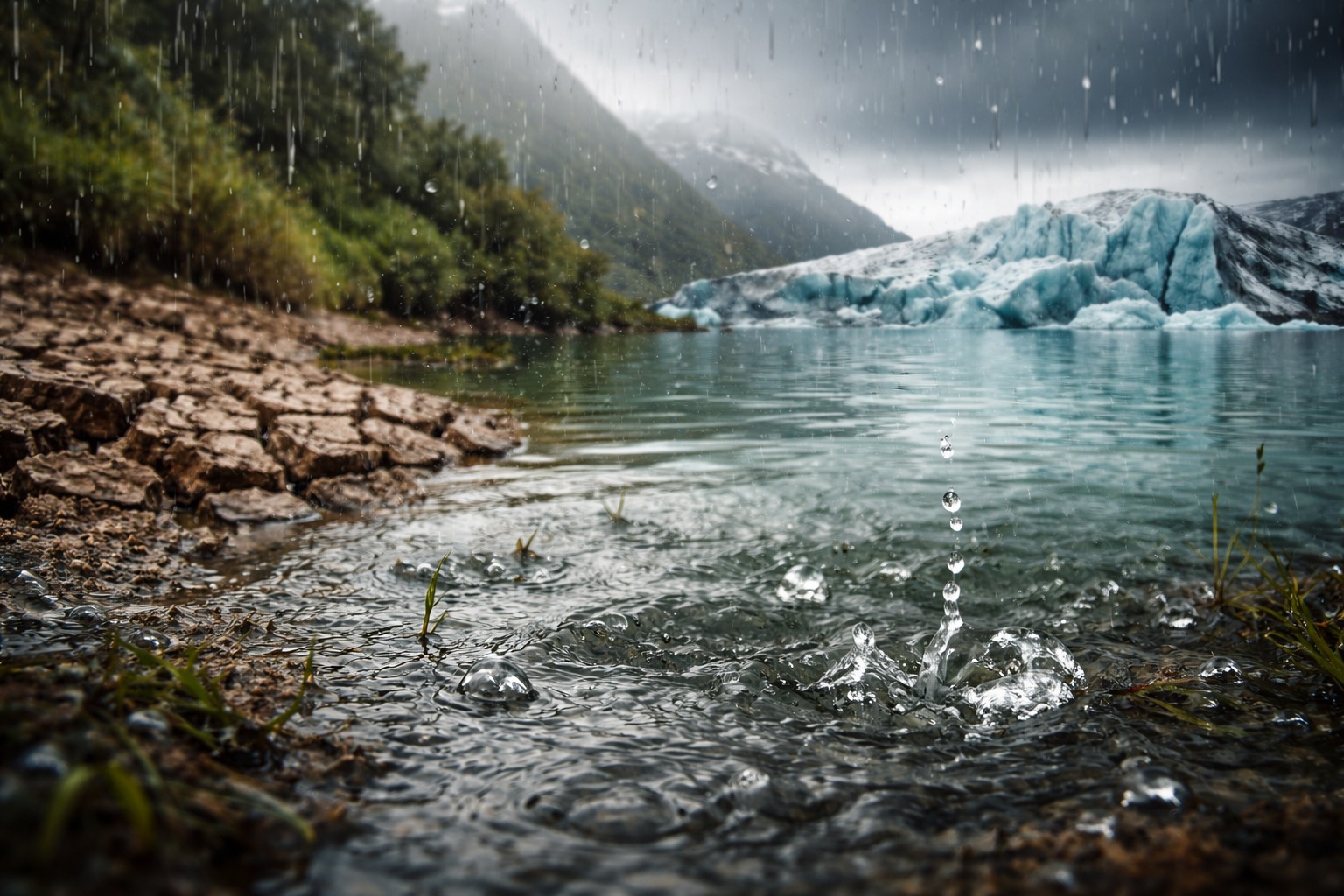
Records confirm its detection in rainwater in various parts of the world.
The circulation of the compound has already been identified in ice samples in the Arctic, in groundwater, and also in soils.
This widespread distribution demonstrates how the chemical byproduct accompanies the water cycle.
Although the concentrations found in food, drinking water, and the human body are not yet considered serious, the continuous accumulation raises concerns among specialists.
The worry lies in the potential long-term environmental and health impacts.
Regulatory Debate and Environmental Monitoring
The rise of trifluoroacetic acid mobilizes European environmental authorities. Germany and Denmark have proposed restrictions on the use of substances that, when they degrade, form the compound.
The European Chemicals Agency is evaluating including TFA on lists of substances subject to stricter control.
The debate involves balancing the replacement of CFCs with the prevention of new environmental liabilities.
Chemical transport models already indicate how the compound can circulate globally through the hydrological cycle.
Experts advocate for increased monitoring and deeper studies on cumulative effects.
The case exposes a recurring dilemma in environmental science: solutions created to solve one problem may generate another in the future.
Researchers argue for more cautious approaches in the adoption of new chemical technologies.
While there is no consensus on immediate risks, the scientific community considers it essential to closely monitor the evolution of this environmental scenario to prevent trifluoroacetic acid from becoming a new global problem on a large scale.
With information from Crusoe.







-

-

-

-

10 pessoas reagiram a isso.