





 Portuguese
  English
  Spanish
  4 min of reading
  0 comments


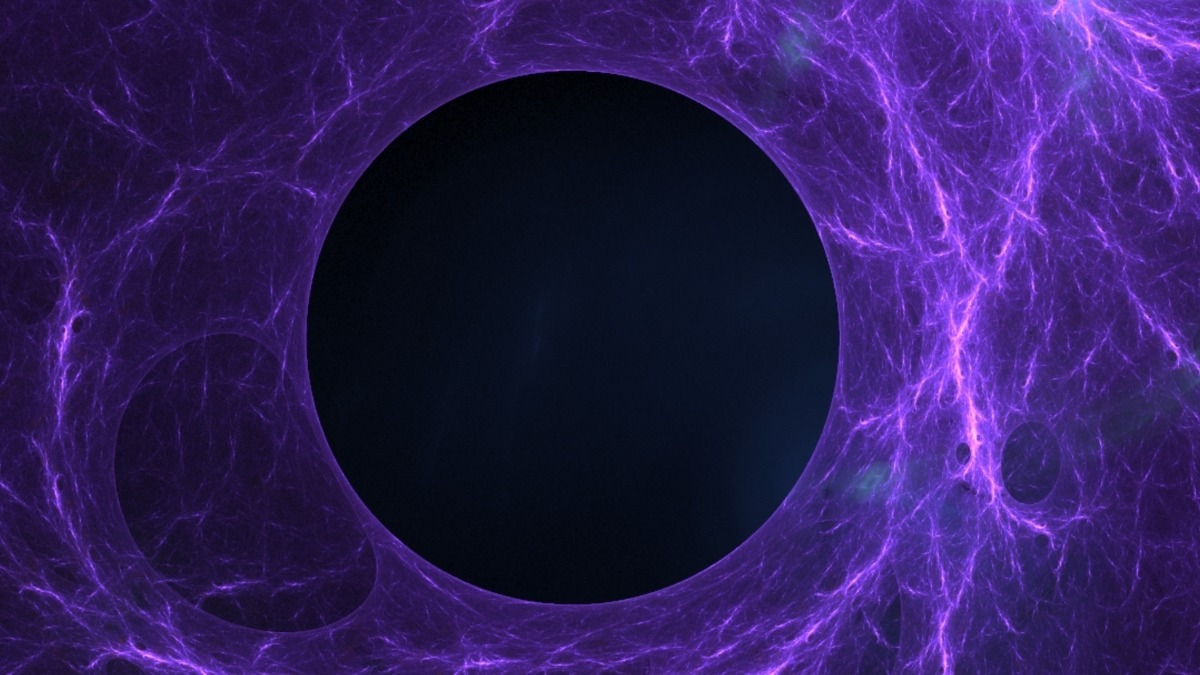
Detection of 100 PeV Neutrino by KM3NeT at the Bottom of the Mediterranean Sea Reignites Debate on the Possible Explosion of an Almost Extreme Primordial Black Hole, After Event Surpassing One Billion Times the Energy of Solar Neutrinos and Challenging Known Astrophysical Explanations
A study states that humanity may have witnessed the explosion of a special type of black hole after the detection, in 2023, of an extremely high-energy neutrino of 100 PeV by KM3NeT, an event that greatly surpasses solar neutrinos and remains without any known astrophysical explanation.
Humanity has reached the ability to detect a single high-energy particle from space and question its origin.
In 2023, an extremely high-energy neutrino drew the attention of the scientific community and may become a historical landmark.
-
Motorola launched the Signature with a gold seal from DxOMark, tying with the iPhone 17 Pro in camera performance, Snapdragon 8 Gen 5 that surpassed 3 million in benchmarks, and a zoom that impresses even at night.

-
Satellites reveal beneath the Sahara a giant river buried for thousands of kilometers: study shows that the largest hot desert on the planet was once traversed by a river system comparable to the largest on Earth.

-
Scientists have captured something never seen in space: newly born stars are creating gigantic rings of light a thousand times larger than the distance between the Earth and the Sun, and this changes everything we knew about stellar birth.

-
Geologists find traces of a continent that disappeared 155 million years ago after separating from Australia and reveal that it did not sink, but broke into fragments scattered across Southeast Asia.

The Cubic Kilometer Neutrino Telescope, known as KM3NeT, detected the particle from the bottom of the Mediterranean Sea. With 220 PeV, it exhibited energy greater than any particle produced in the Large Hadron Collider.
The event was named KM3-230213A and associated with a 100 PeV neutrino. It surpassed the production of solar neutrinos by a billion times, being one billion times more energetic than a common solar neutrino.
Event KM3-230213A and Limits of Known Explanations About Black Holes
There is not an extensive list of astrophysical phenomena capable of generating a neutrino with such characteristics. No object or process currently well understood can fully explain the observed event.
Among the hypotheses considered are optical transients powered by pulsars, gamma-ray explosions, dark matter decay, active galactic nuclei, black hole mergers, and explanations based on different types of primordial black holes.
A new study published in Physical Review Letters proposes another explanation, also based on primordial black holes. The study titled “Explaining PeV Neutrino Fluxes in KM3NeT and IceCube with Almost Extreme Primordial Black Holes” is led by principal author Michael Baker from the University of Massachusetts Amherst.
The authors note that KM3NeT recently observed a neutrino with energy around 100 PeV, while IceCube detected five neutrinos with energies above 1 PeV. According to the study, the explosion of primordial black holes could have produced these high-energy neutrinos.
Primordial Black Hole and Formation at the Beginning of the Universe
Primordial black holes are hypothetical. Unlike stellar black holes, they would not depend on the explosion and collapse of a massive star to form. They would have emerged immediately after the Big Bang, from dense clusters of subatomic matter.
There are several open questions about these objects. If they exist, they could have contributed to the formation of the first stars. They are smaller than stellar black holes but maintain extremely high density.
The principle that nothing, not even light, escapes from a black hole also applies to them. Additionally, they share Hawking radiation with other black holes.
Hawking Radiation, Evaporation, and Final Explosion
Hawking radiation was developed by Stephen Hawking. According to this idea, over time, this radiation reduces the mass of a black hole until it evaporates unless it accumulates more matter.
In stellar black holes, this radiation is typically weak and falls below the detection threshold. In the case of a very light primordial black hole, the situation may be different.
The lighter the black hole, the hotter it becomes and the more particles it emits. As they evaporate, they become progressively hotter, emitting radiation in an uncontrolled process until a final explosion.
In the last second, they reach extreme temperatures and undergo explosive evaporation. This final act may produce high-energy neutrinos like KM3-230213A, detected in 2023.
Researchers estimate that events of this kind may occur approximately every decade. The explosions could generate a variety of subatomic particles, including electrons, quarks, and other still-hypothetical particles.
IceCube, Dark Charge, and Almost Extreme Black Hole
The team considers that KM3-230213A may represent evidence of the evaporation of a primordial black hole. However, the IceCube Neutrino Observatory did not detect this event or any neutrino with energy close to it.
If an evaporation explosion occurs every decade, the question arises as to why IceCube, operating for 20 years, hasn’t recorded at least one similar event. The proposed answer involves an unusual type of primordial black hole.
The authors suggest the existence of primordial black holes with dark charge, called almost extreme. This dark charge would correspond to a very heavy hypothetical version of the electron, described as a dark electron.
These objects would spend most of their time in a nearly extreme state, close to the maximum possible relationship between charge and mass. In this state, the emission dynamics may differ from what is expected in simpler models.
IceCube and KM3NeT operate with different sensitivities. IceCube is limited to 10 PeV, while KM3NeT recorded the 100 PeV event. This difference may explain IceCube’s lack of detection.
According to Baker, the dark charge model adds complexity but may provide a more accurate description of reality. For him, the most relevant aspect is that the model can explain a phenomenon that otherwise would remain inexplicable.
The study reinforces that, although there are no known astrophysical sources capable of fully justifying the event, the explosion of an almost extreme primordial black hole represents a consistent explanation within the proposed model.








-

2 pessoas reagiram a isso.