





 Portuguese
  English
  Spanish
  4 min of reading
  1 comment


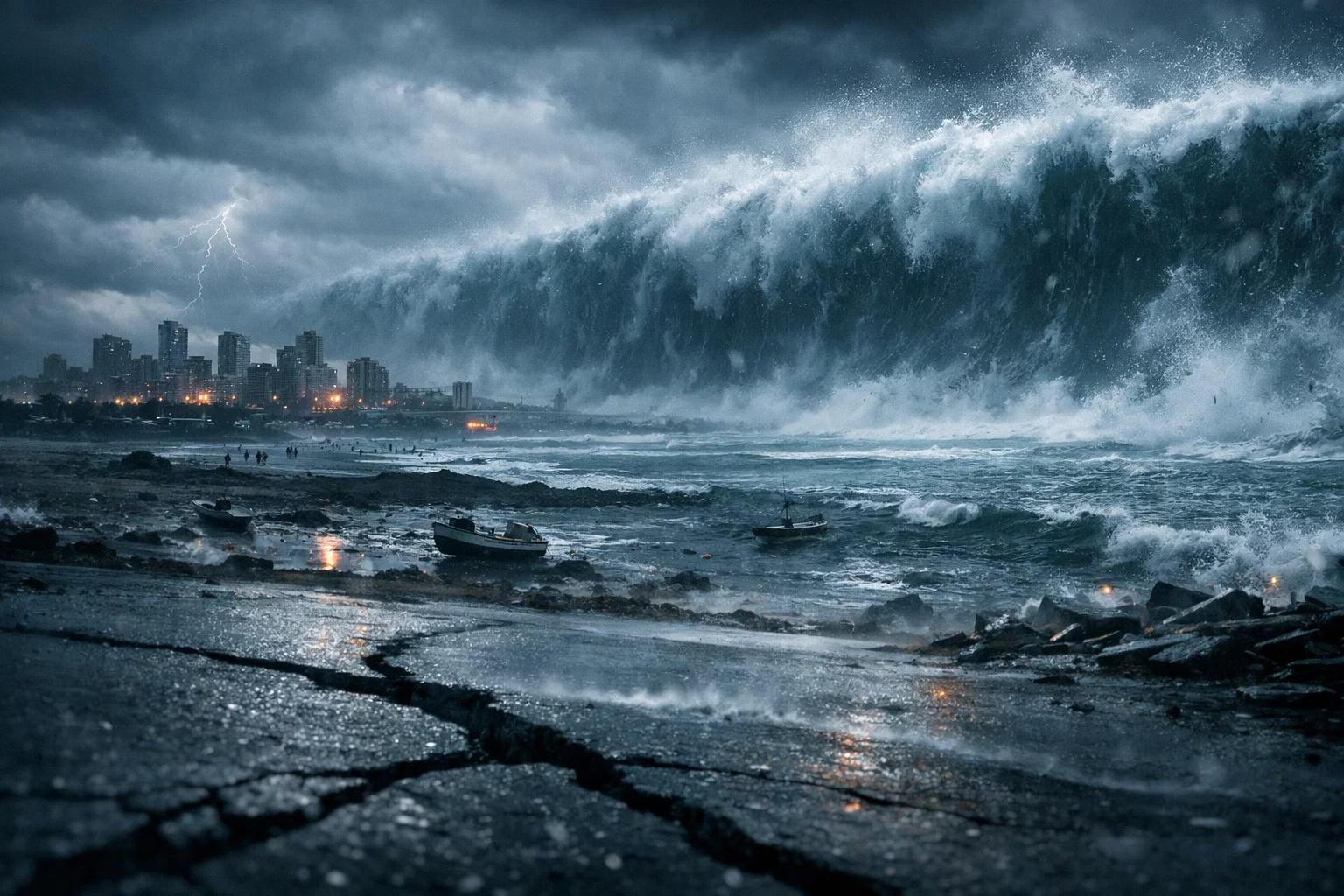


A Megathrust Earthquake Registered In 1960 Has Reopened Concerns For Scientists And The Warning Is That The Cascadia Fault Could Shake For Up To Five Minutes And Trigger An Almost Immediate Tsunami Putting Energy, Water, Bridges And Hospitals Under Extreme Pressure And The Reaction Time May Be Too Short
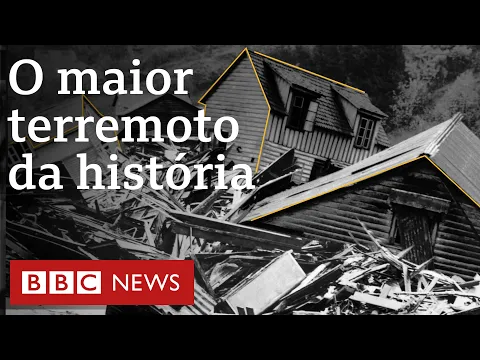
On May 22, 1960, southern Chile experienced an event that seems like a movie, but it was real. An earthquake with a magnitude of 9.5, the largest ever recorded by modern instruments, brought down entire cities and pushed a tsunami across the Pacific.
The waves reached Japan, Hawaii, and even the west coast of the United States. Over 1,600 people died.
This episode has returned to the radar for a reason that troubles engineers and authorities. Scientists warn that the next major rupture could happen in a place where modern infrastructure has no cushion for failure.
-
Motorola launched the Signature with a gold seal from DxOMark, tying with the iPhone 17 Pro in camera performance, Snapdragon 8 Gen 5 that surpassed 3 million in benchmarks, and a zoom that impresses even at night.

-
Satellites reveal beneath the Sahara a giant river buried for thousands of kilometers: study shows that the largest hot desert on the planet was once traversed by a river system comparable to the largest on Earth.

-
Scientists have captured something never seen in space: newly born stars are creating gigantic rings of light a thousand times larger than the distance between the Earth and the Sun, and this changes everything we knew about stellar birth.

-
Geologists find traces of a continent that disappeared 155 million years ago after separating from Australia and reveal that it did not sink, but broke into fragments scattered across Southeast Asia.


The Silence Of 300 Years That Turned Into A Technical Alarm On The Pacific Coast
The focus is on the so-called Cascadia Fault, a subduction zone about 1,100 kilometers long, stretching from northern California to British Columbia, Canada.
In this belt, the Juan de Fuca plate slowly dips beneath the North American plate. It is a continuous process that accumulates stress for centuries.
According to experts, the region has been without releasing this energy for more than 300 years. And in geology, prolonged silence is not always tranquility.
The History That Few Know About The Tsunami Of 1700 That Appeared In Japan
The last time Cascadia ruptured completely was in 1700. The earthquake was so strong it generated a tsunami that crossed the ocean and was recorded in historical accounts in Japan.
Since then, the fault has continued to accumulate stress.
Geological studies indicate that major ruptures in the region occur at average intervals of 300 to 500 years. Estimates suggest that this timeframe places the area within the statistical window for a new event.
Five Minutes Of Shaking That Put Old Buildings And Critical Networks Against The Wall
Experts estimate that a megathrust earthquake in Cascadia could reach a magnitude of 9, or even higher. But the threat is not just the number.
The greater fear is the duration of ground shaking. Millions of people may feel the ground shake for up to five minutes.
This type of duration stresses structures, breaks connections, overloads networks, and destroys what is already aging. And what is at risk is not an isolated village.
The area includes major urban centers like Seattle, Portland, and Vancouver, with integrated systems that depend on constant energy, treated water, telecommunications, roads, and bridges working together.
When one piece falls, the others often fall behind. It is this domino effect that turns an earthquake into a large-scale industrial and humanitarian problem.
The Almost Immediate Tsunami, When 15 To 30 Minutes Become A Brutal Bottleneck
Another factor that makes Cascadia especially dangerous is the possibility of a rapid tsunami.
In distant earthquakes, many regions receive hours of warning before the waves arrive. In Cascadia, according to experts, coastal communities would have only 15 to 30 minutes to evacuate.
In low-lying coastal areas like parts of Washington and Oregon, researchers point out that the ground could sink by up to two meters instantly. This increases the reach of the waves and further reduces the useful response time.
The rule of thumb cited by experts is straightforward: if the shaking is strong and prolonged near the shore, the advice is to seek higher ground immediately, without waiting for an official alert.
The Hopeful Part Is That Seconds Of Warning And Reinforced Works Can Help To Survive
There is a reason not to treat the subject with fatalism. The world has changed since 1960.
Early warning systems can detect primary seismic waves and send alerts seconds before the stronger tremors arrive. It may seem little, but a few seconds can stop trains, reduce accidents, protect hospital procedures, and decrease risks in gas facilities.
Moreover, more modern building codes require greater resilience in new buildings. Many cities have invested billions in structural reinforcement of schools, hospitals, and bridges, according to experts.
There is also monitoring. Underwater sensors track the movement of tectonic plates, and coastal communities conduct annual evacuation drills, as researchers involved in the subject report.
But Why Should We Stay Alert?
Cascadia is frightening because it combines three things at the same point: an extreme seismic risk, major cities, and a total dependence on continuous infrastructure.
The earthquake of 1960 became a historical reference, but the current alert is about another pain, that of a long blackout, with water, transportation, and communication failing simultaneously.
If you lived in a region at risk of shaking and tsunami, what would be your first action upon feeling the ground shake for a long time? Share in the comments.








Moro no Brasil, não temos históricos de grandes catástrofes mas as mudanças climáticas nos faz ver que as coisas podem mudar rapidamente, vou fazer o que alguns moradores no Chile já fazem por décadas cada membro da família mantém uma mochila de emergência perto da porta, a experiência mostra que estar preparado e agir rapidamente faz toda a diferença.