





 Portuguese
  English
  Spanish
  4 min of reading
  0 comments


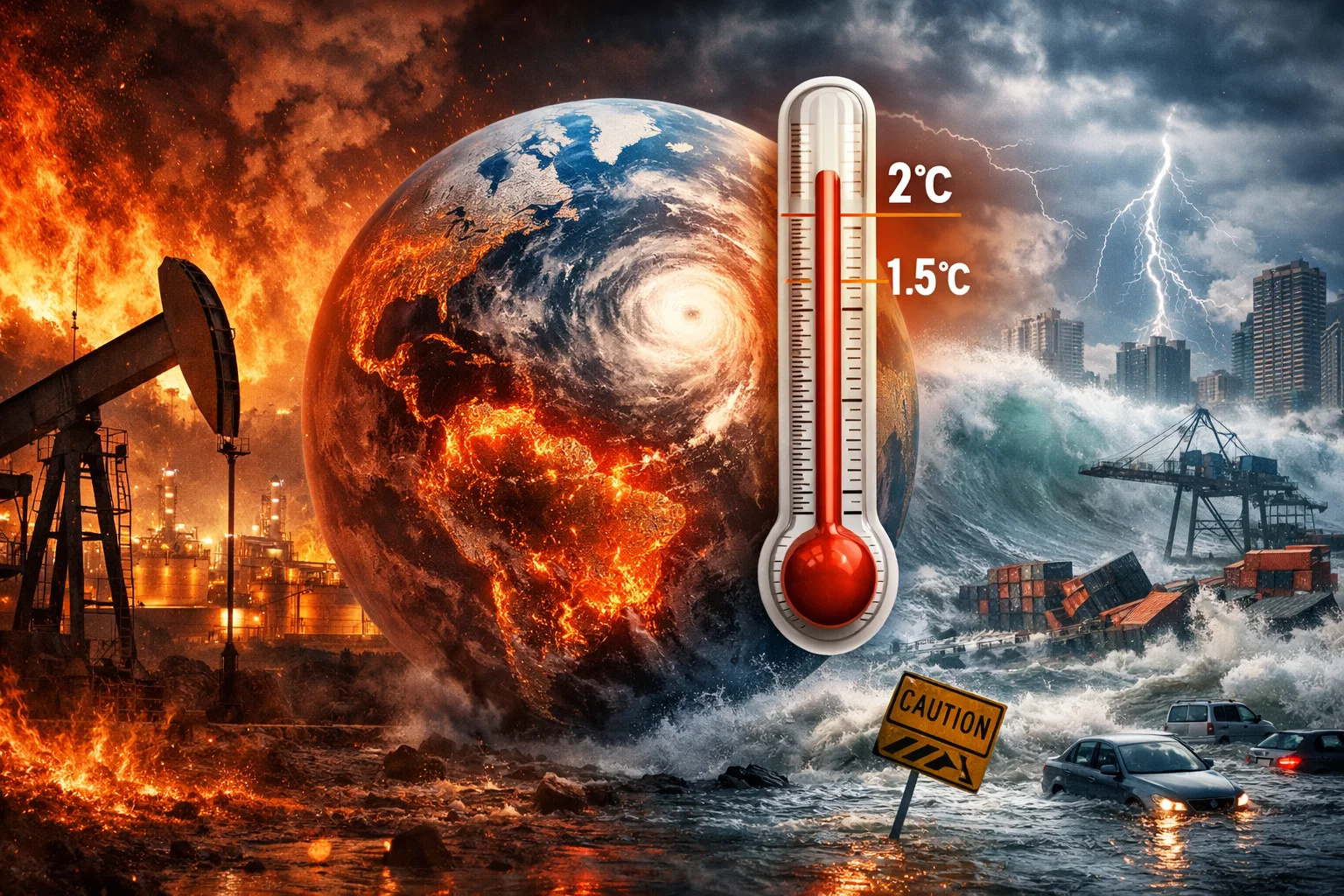
Recent Measurements Show That The Planet Is Already Reaching The Temperature Ceiling Defined In International Agreement, As Polar Ice Melts, Oceans Heat Up And Experts Warn Of Risks To Infrastructure And Global Market
The planet is warming more than agreed among countries. And this is already visible in official measurements. In the last three years, the average warming of the Earth has reached the maximum temperature ceiling set in the 2015 climate agreement. This ceiling was seen as the barrier to prevent even greater damage.
Now, scientists claim that this limit may be permanently exceeded. And when this happens, it’s not just the climate that changes. The economy and industry feel the effects first.
The Agreement That Promised To Hold The Maximum Temperature Lost Strength While Emissions Remain High
In 2015, governments reached a pact to prevent the planet from warming beyond a level considered safer.
-
What the Public House of Julius Caesar was like inside in the Roman Forum: layout, atrium with compluvium and impluvium, tablinium and peristyle, and the scandal of the Bona Dea, revealed in an AI recreation.

-
While digging a trench next to a pool in Germany, workers found more than 1,500 silver coins from 1320 in the rubble, revealing a treasure buried for over 700 years.

-
Flight Helios 522, the “ghost” flight with 121 people: the commercial aircraft flew for more than 2 hours on autopilot after a pressurization failure left pilots and passengers unconscious and only stopped when it ran out of fuel.

-
Researchers have located a nearly intact vessel that disappeared 125 years ago on the bottom of icy waters, with masts still preserved and rare details that impress archaeologists.


Ten years later, gas emissions remain high. The consumption of oil, gas, and coal still sustains a large part of the world’s energy.
Experts point out that, without rapid changes, the world could reach 2 degrees of warming by 2045. It may seem small. But every fraction increases the risk of extreme heat, wildfires, and floods.
And this pressures power plants, refineries, offshore platforms, and electric grids.
Nature That Helped Contain The Problem Is Starting To Lose Strength
For decades, forests and oceans absorbed almost half of the pollutant gases released into the air.
This balance is weakening.
The oceans are warmer and capture less carbon. Forests face prolonged droughts and increasingly larger wildfires. Recent research shows that this natural capacity has diminished in recent years.
The jump in carbon dioxide concentration in 2024 was the largest ever recorded.
When the planet itself loses the ability to offset human impact, warming accelerates.
Greenland Ice, Amazon, And Ocean Currents Enter The Risk Zone
The biggest fear for researchers involves irreversible changes.
Greenland loses about 30 million tons of ice per hour. If this process becomes irreversible, sea levels could rise by about 7 meters over time.
The Amazon is also at risk. If the forest loses its capacity to sustain itself, billions of tons of carbon could return to the atmosphere.
There is also concern about a major Atlantic current that helps maintain stable weather in Europe and North America. Some studies suggest it could weaken in the coming decades.
If any of these systems fail, it could affect the others. Ports, coastal cities, and oil platforms would be directly impacted.
Warmer Oceans Are Already Showing Immediate Impact On The Economy
The heat in the sea has reached record levels.
In parts of Europe, the water has risen up to 4 degrees above normal. Coral reefs could disappear by the middle of the century, according to recent studies.
This impacts fishing, tourism, and entire production chains.
In the Arctic, the frozen soil is starting to release methane, a gas even stronger than carbon dioxide. This process could accelerate warming even further.
The impact is not distant. It is already affecting insurance, coastal infrastructure, and energy planning.
Technology Solutions Still Face Cost And Scale Issues
There are proposals to remove carbon from the air by planting more trees. Experts state that a much larger volume than is currently available would be necessary.
There are also machines that capture carbon directly from the atmosphere. The problem is the cost, which still reaches hundreds of dollars per ton.
Some governments are studying the option of reducing sunlight reaching the planet with particles released into the atmosphere. This technique could quickly lower the maximum temperature.
But this does not eliminate accumulated gases. It only temporarily reduces the effect.
The Energy Sector Is At The Center Of This Silent Dispute
On one hand, the world remains heavily dependent on oil and gas. On the other, pressure for cleaner sources is increasing.
If warming permanently exceeds the agreed limit, risks for refineries, ports, coastal cities, and electric grids increase.
Companies that adapt sooner may reduce losses. Those that ignore the situation could face billion-dollar losses.
The debate has shifted from just environmental. Today, it involves energy security, investments, and global economic stability.
The issue has gained traction because it affects finances, infrastructure, and the future of the industry that sustains the planet.
Do you believe there is still room to reverse this scenario, or will the energy sector have to accelerate changes? Leave your opinion in the comments.







Seja o primeiro a reagir!