





 Portuguese
  English
  Spanish
  5 min of reading
  0 comments



Security Risk: Be Careful When Typing Certain Words – Your Computer Could Be Invaded
Have you ever imagined that a simple search on Google could expose your computer to hacker attacks, putting your PC at great security risk? It may seem like an exaggeration, but that is precisely what cybersecurity experts recently discovered as a new strategy from criminals.
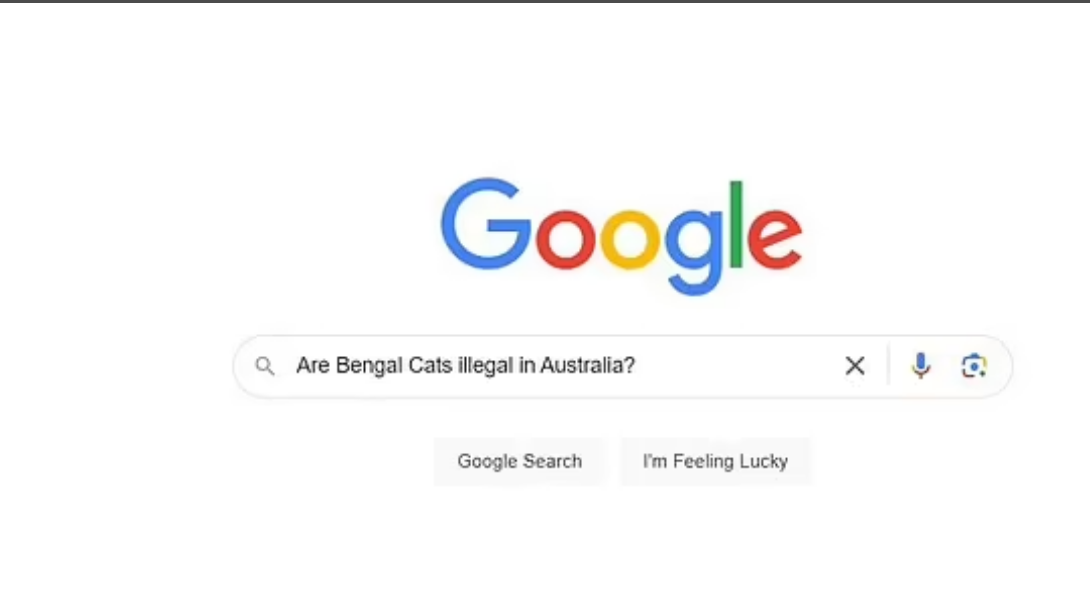
An extremely specific attack targeting exotic cat lovers in Australia focuses on people who search for an apparently innocuous phrase: “Are Bengal Cats Legal in Australia?“.
This type of attack draws attention not just for its specificity but also for how it was planned. Engineers at the security company SOPHOS revealed that hackers used a technique called SEO poisoning to manipulate Google search results, directing users to malicious sites laden with malware.
-
China has created a mass-produced hypersonic missile that costs the same as a Tesla, and this is changing everything in modern warfare because the United States cannot defend itself without spending millions.

-
100% Brazilian technology transforms agricultural waste into a meat-scented ingredient using fungi from the Amazon rainforest. The process does not use excessive water or chemicals, and it also increases the nutritional value of the final product.

-
Psychology reveals that adults who avoid conflicts at all costs are not balanced individuals, but rather children who learned in the worst way that expressing emotions brought punishment and now live paralyzed by the fear of expressing themselves.

-
Goodbye pet hair on clothes: a washer with an internal filter promises to remove up to 5 times more hair than regular machines and uses an XL trap dryer system to capture what remains.


The Target: Bengal Cat Lovers in Australia
When it comes to cyber attacks, hackers typically choose broad targets to maximize impact or aim for critical sectors like banks or hospitals, where there is a large amount of specific data to steal.
However, what makes this attack so peculiar is the focus on a very specific niche: lovers of Bengal cats who live in Australia and are interested in knowing if these animals are allowed there.
Imagine yourself, an exotic cat lover, searching for the legality of Bengal cats in Australia. When you click on one of the top results, you are taken to a page on a cat forum, where a link invites you to download a file to learn more about the subject.
It looks legitimate, right? Unfortunately, by clicking it, you end up downloading a disguised JavaScript file designed to infect your device with a malware called Gootloader.
What is Gootloader and How Does It Work?
Gootloader is a malware already known in the cybersecurity world. It has existed for over a decade and has been linked to the REvil ransomware group, which is responsible for massive attacks in various parts of the world.
This malware is stealthy and powerful, allowing attackers to have remote control over the infected device. With this, they can access your data, steal banking information, or even block access to your system, demanding a ransom to release it.
In the case of Bengal cat lovers, Gootloader was deployed using an SEO poisoning technique. In simple terms, hackers manipulated search results so that the link to the malicious forum appeared at the top of searches.
This way, anyone searching for “Are Bengal Cats Legal in Australia?” would end up clicking on a link crafted to infect their device.
SEO Poisoning: The Technique Behind the Attack
For a hacker, providing a search term is an effective way to lure victims to seemingly confidential pages that are set up to deploy malware. Generally, this technique is used for popular searches or attacks targeting specific institutions. However, in this case, cybercriminals chose a rather unusual search term.
This choice led to some theories. Perhaps the attack was a test to check the effectiveness of SEO poisoning on a smaller scale, without drawing too much attention. By directing such a specific search, hackers were able to assess the success of the technique without alerting most users or raising suspicions.
Another possibility is that the attack was a way to target a specific individual. Perhaps someone with access to valuable information or a privileged network had an interest in Bengal cats.
How to Protect Yourself from Similar Attacks
In light of this highly targeted attack, you may be wondering: how can you avoid falling into traps like this? Here are some practical tips to keep your security while browsing the internet:
1. Avoid Searching Strange or Specific Terms Without Confirming the Source
It may seem obvious, but we often forget to be cautious about what we search for. In this case, searching for “Are Bengal Cats Legal in Australia?” is risky, and you might want to avoid this and similar phrases to stay safe.
2. Beware of Unknown Links
If you really need to search for a specific topic, be careful with the links that appear in the results. Prefer well-known sites and if a link leads to an unknown forum or requires a download, think twice before clicking.
3. Avoid Downloads from Unreliable Sources
In the case of the attack uncovered by SOPHOS, the malware was installed from a disguised download in a forum. As a general rule, never download files from unknown sites and check the reliability of the sources. Cybercriminals often disguise malware as documents, images, or legitimate files to deceive users.
4. Check the Legitimacy of the Site
Many hackers create fake sites or seemingly ordinary pages to deceive victims. If the link leads to an unknown forum or the site seems suspicious, it’s best to avoid it. Additionally, some browsers have security features that alert you to potentially dangerous sites. Pay attention to these warnings.
5. Monitor Your Accounts and Passwords
If you suspect that your computer may be compromised, immediately check your accounts for suspicious activity. Change your passwords and consider using a password manager to create strong and unique codes.
Reflecting on Online Security
This case serves as a warning about how vulnerable our security can be in an increasingly connected world. Sometimes, an innocent search or a click on an apparently harmless link can open doors for cybercriminals.
SOPHOS revealed this campaign to raise awareness among users about the risk of targeted attacks, showing that even the most specific interests can be exploited by hackers. So, stay informed, browse cautiously, and always be skeptical of unknown links and downloads.
And if you are an exotic cat lover, be a little more careful before searching for information about the legality of your feline friends on the internet. After all, with the evolution of attack techniques, our best defense continues to be prevention and common sense.








Seja o primeiro a reagir!