





 Portuguese
  English
  Spanish
  4 min of reading
  0 comments


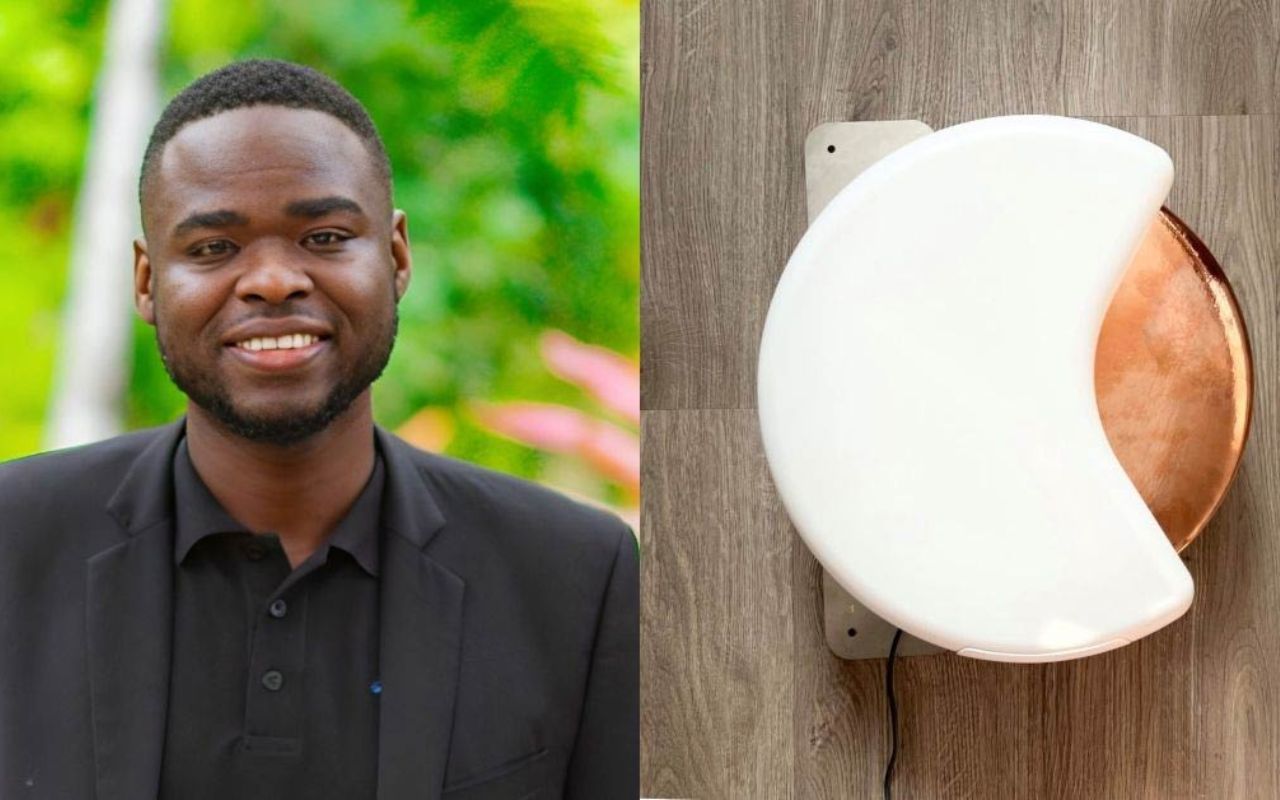
A Jamaican Student Developed the Self-Disinfecting Door Handle Xermosol, Which Uses Ultraviolet Light to Eliminate Up to 99.9% of Germs and Promises to Help Hospitals and Public Spaces.
The routine of opening and closing doors, something automatic for anyone, was the starting point for an innovation that could impact public health. A student from Jamaica created a self-disinfecting door handle capable of eliminating up to 99.9% of germs after each touch.
The technology, called Xermosol, was developed in Jamaica, recently presented, and gained attention for offering a practical, sustainable solution adapted to the tropical climate.
The goal, according to the young inventor, is to reduce contamination risks in hospitals and environments with a high circulation of people.
-
Motorola launched the Signature with a gold seal from DxOMark, tying with the iPhone 17 Pro in camera performance, Snapdragon 8 Gen 5 that surpassed 3 million in benchmarks, and a zoom that impresses even at night.

-
Satellites reveal beneath the Sahara a giant river buried for thousands of kilometers: study shows that the largest hot desert on the planet was once traversed by a river system comparable to the largest on Earth.

-
Scientists have captured something never seen in space: newly born stars are creating gigantic rings of light a thousand times larger than the distance between the Earth and the Sun, and this changes everything we knew about stellar birth.

-
Geologists find traces of a continent that disappeared 155 million years ago after separating from Australia and reveal that it did not sink, but broke into fragments scattered across Southeast Asia.

The invention draws attention for addressing a silent problem. Surfaces touched repeatedly throughout the day — like door handles — can accumulate microorganisms. Therefore, they become potential points for the transmission of diseases.
What Is the Xermosol?
The Xermosol is a self-disinfecting door handle equipped with smart sensors. These devices detect when someone touches the surface.
Then, the system activates ultraviolet light. This technology is known for destroying germs, bacteria, and other microorganisms invisible to the naked eye.
The process occurs automatically. Thus, it does not require manual action or the use of chemical products.
How the Self-Disinfecting Door Handle Works
Upon detecting the touch, the Xermosol begins the disinfection cycle. The ultraviolet light is activated right after use.
This type of radiation acts directly on the genetic material of microorganisms. Consequently, it prevents their reproduction and drastically reduces contamination.
Furthermore, the absence of chemical products represents an important differential. This lowers operating costs and, at the same time, enhances the sustainability of the solution.
How the Idea of the Self-Disinfecting Door Handle Came to Be?
Rayvon Stewart conceived the project while still a university student. The inspiration arose from experiences related to the hospital environment, where he observed how shared surfaces contribute to the contamination chain.
Moreover, interaction with the medical routine sparked a more attentive perspective. Small details, often overlooked, revealed opportunities for innovation.
Before Xermosol, Stewart had already explored other technological solutions. Among them was software aimed at virtual garment fitting. Still, it was in the healthcare field that he ultimately focused his attention.
Why the Self-Disinfecting Door Handle Is Relevant for Hospitals?
One of the major challenges of the project was to adapt the Xermosol to Jamaica’s hot and humid climate, which favors the proliferation of microorganisms.
Many conventional solutions do not consider these conditions, limiting their effectiveness. Therefore, the self-disinfecting door handle was developed to operate effectively in this context, ensuring continuous protection.

Stewart’s work did not go unnoticed. The student received national and international recognition, including the National Youth Award, presented by the Prime Minister of Jamaica, and recognition at the Commonwealth Health Innovations Awards.
These awards increased the visibility of Xermosol and sparked interest from investors and health institutions.
In addition to the awards, Stewart initiated the patent registration process. This measure aims to legally protect the invention and open doors for future partnerships, ensuring that the technology can reach hospitals and public spaces on a larger scale.
International Recognition of the Student
The innovation earned the student several awards and honors. Among them, the National Youth Award, granted by the Prime Minister of Jamaica.
The project was also highlighted at the Commonwealth Health Innovations Awards. The visibility increased interest in the technology.
In addition to the awards, Stewart initiated the patent registration process. This measure is strategic to protect the invention and enable future partnerships.
From Rural Area to Technological Innovation
Rayvon Stewart grew up in Mount Prospect, a rural community in Jamaica, characterized by agriculture. He and a cousin were the pioneers in the family to attend university, opening new opportunities.
Even facing typical limitations of regions far from major centers, Stewart kept alive his passion for science and innovation. His story shows that creativity and talent can flourish in any context.
Today, the Xermosol transcends its technological function. The project has become an example of the power of education to transform lives and generate solutions with a real impact on society.
Concern for hygiene has gained even more relevance in recent years. Shared environments have begun to demand new approaches to prevention.
In this context, technologies like the self-disinfecting door handle indicate a growing trend. Automated solutions reduce dependence on constant human intervention.
Schools, offices, and public transport can therefore also benefit. The application extends beyond hospitals.
As innovation advances towards larger-scale production, the expectation is for global expansion. Thus, an idea created by a student can contribute to safer environments.
With information from Só Notícia Boa.







Seja o primeiro a reagir!