





 Portuguese
  English
  Spanish
  5 min of reading
  1 comment





Amendment to the Constitution Approved in the CCJ Reduces Workweek to 36 Hours, Ends the 6×1 Shift, Guarantees Two Consecutive Days of Paid Rest Without Salary Cuts, Provides for a Gradual Transition Starting from 40 Hours, and Now Moves to a Vote in the Senate Plenary Before Analysis in the Chamber.
On the afternoon of this Wednesday, December 10, 2025, the Senate’s Constitution and Justice Commission approved the PEC that reduces the maximum workweek to 36 hours and determines the end of the 6×1 shift for formal workers across the country, maintaining current salaries.
With a symbolic vote, the text advanced after about ten years of deadlock in the Senate and under pressure from a popular mobilization that has gathered more than 1.5 million signatures, paving the way for the proposal to be evaluated by the House plenary and then by the Chamber of Deputies.
What Changes with the New Workweek and Weekly Rest
According to the approved text, the workweek will have a limit of 8 hours per day and 36 hours per week, distributed over up to five days a week. The proposal also establishes the right to at least two consecutive days of paid rest, preferably on Saturdays and Sundays, without any salary reduction.
-
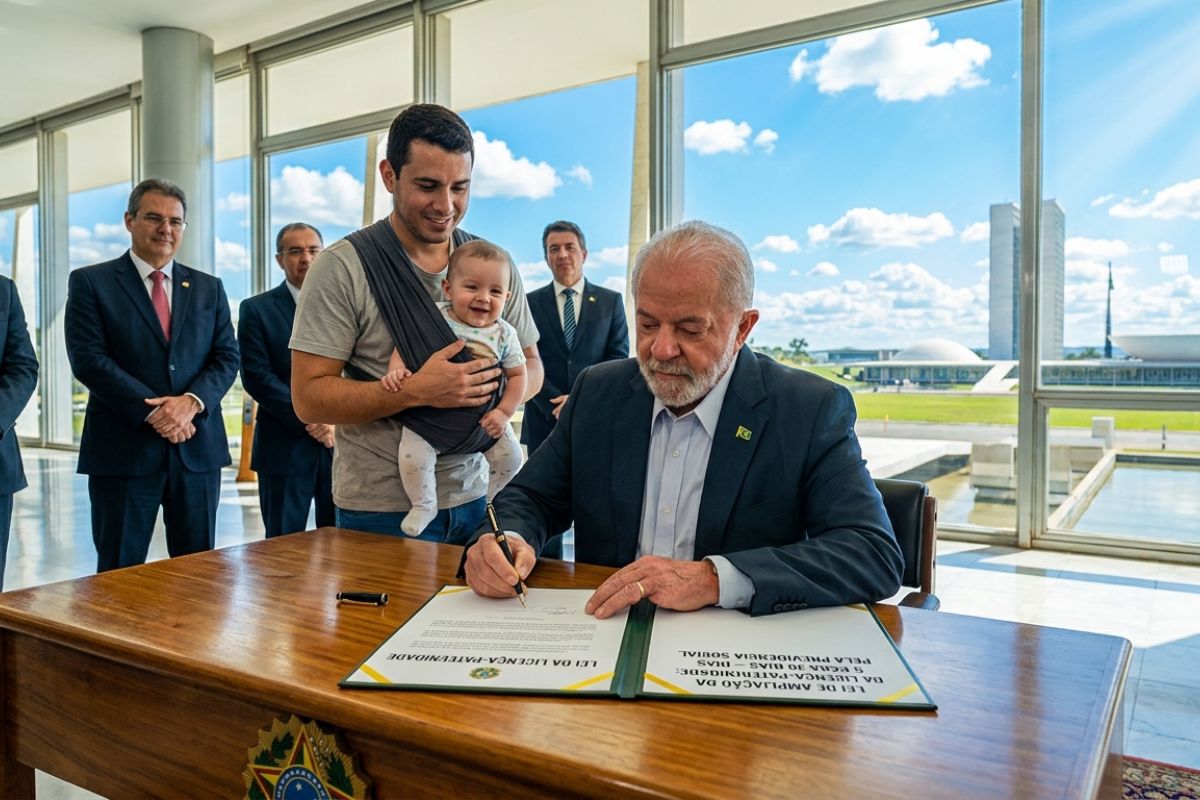
Government enacts new law: paternity leave increases from 5 to 20 days with gradual increases until 2029, and Social Security pays the paternity salary; companies no longer bear the absence cost, estimated at R$ 5.4 billion.
-
End of the 1-hour lunch break in the CLT? Current labor law maintains the break, allows for negotiated reductions, and defines rules for working hours and home office in Brazil.

-
Employee Fired After Accumulating 114 Days of Medical Leave in One Year, Labor Court Upholds Company’s Decision

-
Employee Fired While Treating Depression Wins in Court and Vale Is Required to Rehire Him Following Decision Based on the CLT and INSS Benefits

In practice, the end of the 6×1 shift means that the model in which the worker works six consecutive days and rests only one will no longer be allowed as it currently exists. According to the report approved in the CCJ, the combination of fewer hours per week and more continuous rest aims to increase free time for family interaction, study, and leisure, without directly affecting remuneration.
The rapporteur of the proposal, Senator Rogério Carvalho (PT SE), argued that the change seeks to ensure more quality of life for employees and bring Brazil closer to international workweek standards.
He also emphasized that the text was designed to preserve jobs and avoid an immediate increase in unbearable costs for companies.
Phased Transition to Reach 36 Hours
The PEC provides for a staggered transition to the new rule. In the first year after its enactment, the maximum workweek will decrease from 44 to 40 hours per week.
From then on, there will be a reduction of one hour per year until reaching the final limit of 36 hours per week, always without salary cuts.
According to the approved report, this gradual schedule will give companies time to adjust internal schedules, reorganize shifts, and, when necessary, evaluate the hiring of new employees to cover the reduction in working hours.
For the rapporteur, the gradual implementation of the end of the 6×1 shift helps avoid economic shocks, allows monitoring the impacts on the labor market, and provides room for employers and employees to negotiate the best way to adapt the routine of productive activities.
Sectors Most Affected by the End of the 6×1 Shift
The 6×1 shift model is common in areas such as restaurants, supermarkets, hospitals, clinics, and general services, where operations typically run every day of the week and often extend into long hours. In these sectors, the change is likely to be most felt in the organization of teams.
With the requirement for two consecutive days off and the reduction of the weekly work hours, companies in these sectors may have to reconsider schedules, rotate more employees on weekends, or expand the workforce to ensure coverage of shifts.
Experts following the debate point out that, even with potential additional costs, improving rest conditions may reduce absenteeism and physical wear and tear on workers.
For employees, proponents of the PEC argue that the end of the 6×1 shift represents the chance to have more free weekends, greater predictability in routine, and less exhausting working hours, which can also reflect in productivity.
Lula Government Embraces the Reduction of Workweek Agenda
The reduction of the weekly work limit and the end of the 6×1 shift have been treated as one of the main banners of sectors of the PT and of members of President Luiz Inácio Lula da Silva’s government. The political bet is that the agenda of workweek and rest will directly resonate with the labor and union base that supported the government in the elections.
Within this context, the approval in the CCJ is seen by allies as an important symbolic step, both for unlocking a discussion that had been stalled for a decade and for demonstrating a response to the demands of workers who pressured Congress with petitions and public mobilizations.
At the same time, government members acknowledge that it will be necessary to negotiate with different parties to ensure a majority in the Senate plenary and then in the Chamber.
The expectation is that the theme will be closely monitored by labor unions and business entities.
Resistance in Congress and Previous Attempts Filed
Despite the progress in the CCJ, the end of the 6×1 shift faces resistance among deputies and senators, including within some sectors of the governing base.
Critical legislators argue that reducing the workweek may increase hiring costs, especially in sectors that operate every day and rely on a large workforce.
The issue is not new in Congress. In 2009, after about 14 years of debate, a special commission in the Chamber unanimously approved a proposed amendment that reduced the maximum workweek to 40 hours.
The matter was ready for a plenary vote but never effectively made it to the agenda and ended up filed in 2023, despite repeated requests to be voted on.
In 2019, another PEC regarding workweek reduction was presented to the Chamber by Deputy Reginaldo Lopes (PT MG), with the support of over 190 legislators.
The text provided for a gradual decrease in working hours to 36 hours per week, over a ten-year transition period.
The proposal reached the CCJ of the Chamber and was included in the committee’s agenda in November 2023, but an opposition request to remove the item from the agenda was approved by 30 votes to 25, and the issue did not return to the voting calendar.
Now, with the approval in the Senate CCJ and the reinforcement of popular mobilization, the new PEC resumes the debate on work hours at the center of legislative discussions and increases pressure for Congress to finally decide whether Brazil will adopt or not the end of the 6×1 shift with a limit of 36 hours per week.
And you, what do you think: is the end of the 6×1 shift with a 36-hour week and two consecutive days off a necessary advancement for workers or a risk for jobs and businesses?










Vai ser uma benção o fim da escala 6×1 nesse país de escravidão.