





 Portuguese
  English
  Spanish
  4 min of reading
  9 comments


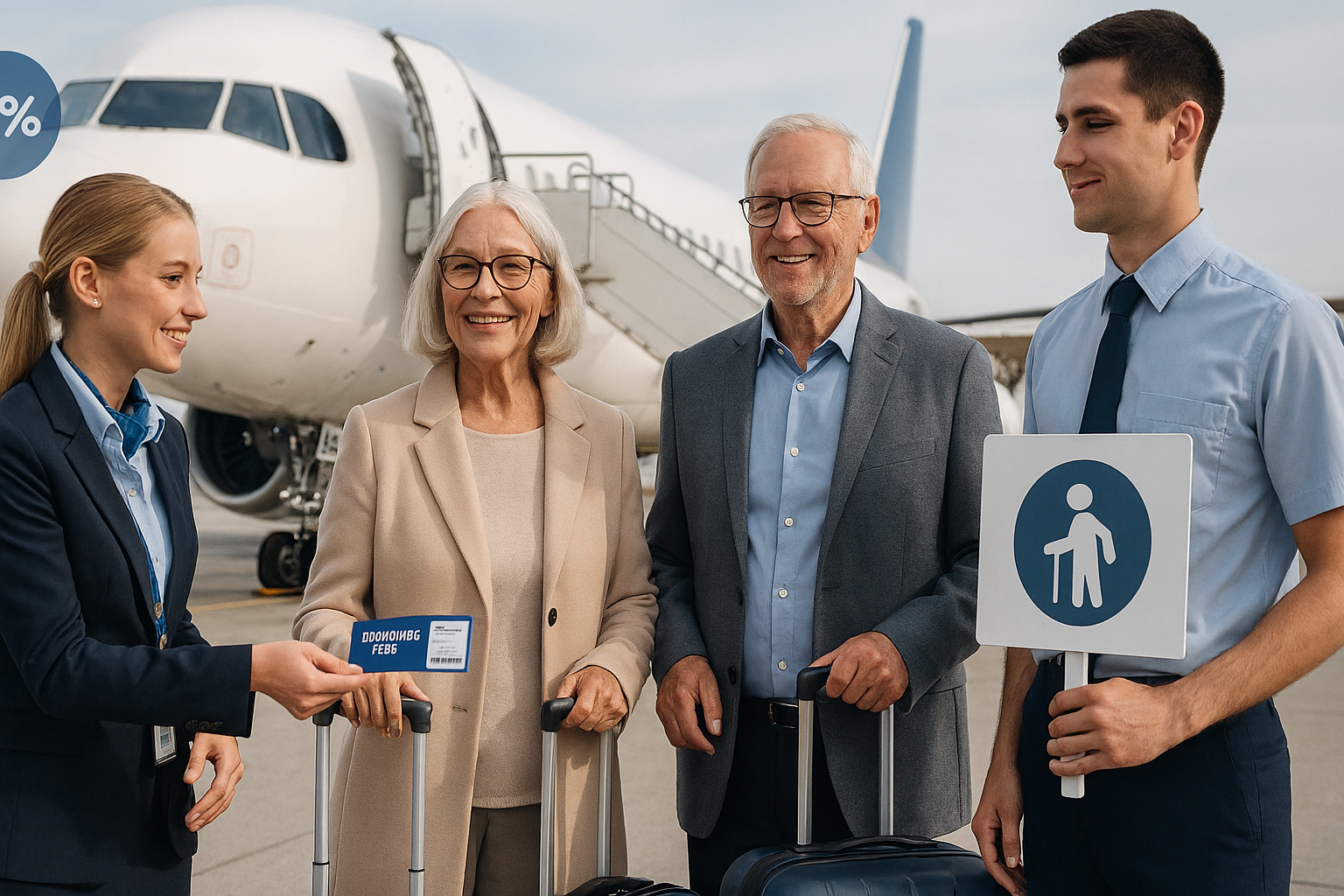


Elderly People Have Little-Known Rights in Air Travel, Such as Priority, Indirect Discounts, and Protection Against Abuses; Learn How to Use Them.
Traveling by plane in Brazil can be expensive, confusing, and often hostile for those who are not well acquainted with the industry rules. What few people know is that individuals aged 60 or over have a set of rights guaranteed by law and civil aviation regulations that can, in practice, reduce costs, prevent losses, and facilitate the entire boarding process. Be aware now that elderly passengers can pay less to fly!
Unlike road transportation, where free rides are explicit, in air transport the benefits for the elderly do not appear as a “free ticket”, but emerge in the form of mandatory priority, protection against abusive practices, operational facilities, and, in some cases, significant indirect savings.
Legal Priority in Service, Boarding, and Disembarkation
The first point, and the most overlooked, is that elderly people have legal priority at all service stages. This includes:
-
The noise law will no longer be in effect at 10 PM starting in June with a new rule valid during the 2026 World Cup.

-
The Chamber opens a debate on driver’s licenses at 16 years old as part of a reform that includes around 270 proposals to change the Brazilian Traffic Code and may redesign rules for licensing, enforcement, and circulation in the country.

-
The new Civil Code could revolutionize marriages in Brazil with “express divorce” and changes that could exclude spouses from inheritance.
-
Banco do Brasil sues famous influencer for million-dollar debt and intensifies debate on delinquency, risks of seizure, and direct impact on Gkay’s credibility.


- in-person check-in,
- baggage drop-off queue,
- security control,
- boarding,
- disembarkation and baggage restitution.
This priority is not a “kindness from the airline.” It is guaranteed by the Statute of the Elderly and reinforced by regulations from ANAC. If priority service is not offered spontaneously, the passenger can demand it, and the company is obliged to comply.
In practice, this prevents long lines, delays, and even missed flights due to delays in basic procedures.
Special Assistance at No Additional Cost
Another little-known right is free access to special assistance, even when the elderly person does not have a formal disability.
If there is difficulty in moving, balance issues, excessive fatigue, or the need for assistance to move within the airport, the elderly passenger can request operational assistance, such as:
- wheelchair,
- internal transport to the gate,
- support during boarding and disembarkation.
This service cannot be charged when requested within the established criteria. Many airlines try to push this cost onto the passenger due to their lack of knowledge.
Protection Against Abusive Practices and Irregular Charges
One of the biggest “indirect financial gains” for elderly individuals lies in the enhanced protection of the Consumer Protection Code applied to air travel.
Elderly passengers have greater legal backing in cases of:
- flight cancellation,
- overbooking,
- unilateral time changes,
- missed connections,
- lost baggage.
In such situations, the airline cannot simply offer a symbolic voucher or push the problem to later. Priority in service requires a faster solution, such as immediate re-accommodation, meals, lodging, and ground transportation when necessary.
Avoiding these losses can represent savings of hundreds or even thousands of reais.
Indirect Discounts and Real Advantages in Travel Costs
Although there is no federal law requiring direct discounts on airfares for elderly individuals, there are situations where they pay less in practice.
Some airlines offer:
- promotional fares with priority for rescheduling,
- more flexible cancellation conditions,
- lower penalties for changes,
- waving or reducing fees in specific cases.
Additionally, loyalty programs and discount clubs often have more advantageous conditions for people over 60, especially in packages that include baggage and additional services.
Baggage, Rescheduling, and Refunds: Where Many Lose Money
A common mistake is for elderly passengers to accept the first response from the airline in cases of issues with their ticket.
Legislation guarantees that, in various situations, elderly passengers have priority for refunds, flexibility in rescheduling rules, and human assistance, not just through apps or chatbots.
This is particularly relevant in cases of:
- sudden illness,
- hospitalization,
- medical inability to travel,
- death of a close family member.
In such cases, the airline’s automatic refusal can be challenged — and is often reversed when the passenger knows their rights.
The Detail That Prevents Damage at Boarding
Here is the key point that avoids headaches: the elderly person should always identify themselves as a priority passenger at check-in, whether in person or online.
Failing to inform their status at the outset may result in:
- priority not being recorded in the system,
- assistance not being available in time,
- service being treated as standard.
This simple detail is often decisive in ensuring all rights in practice, not just “on paper.”
Difference Between Airplane and Bus: Why It Causes Confusion
Many elderly people believe that, just as in inter-state road transportation, airplanes should also offer free rides. This confusion is common and understandable.
The difference is that, in air travel, the benefit is not direct gratuity, but rather a set of guarantees that reduce risks, extra costs, and losses — something that makes a huge difference for frequent travelers.
Traveling by plane after 60 years does not have to mean stress, endless lines, or financial loss. Brazilian legislation guarantees priority, assistance, and enhanced protection, but these rights only work for those who know and demand them.
And you, reader: how many times have you paid a high price or accepted a problem at the airport without knowing that the law was on your side?










Eu a 2 meses atraz comprei uma passagem aérea pra São Paulo e uns 7 dias antes da viagem nao deu pra eu viajar quiz trocar pra outra data era passagem de Ida e volta mais a companhia se negou a trocar conclusão estou pagando a passagem porque tirei no cartão parcelado e simplesmente perdir a passagem e o dinheiro estes direitos que as autoridades falam não funciona e não resolvem nada também é bonito a lei mais só no papel
Se realmente funcionasse deveria já no ato da compra a identificação como idoso, quando compramos as passagens temos que colocar data de nascimento, com.isso.ja deveria constar a prioridade, mas isso não funciona.
Acho que aqui no Brasil estes direitos só funcionam se na lei a pessoa idosa tivesse um cartão garantindo este direito.
Se isso não for legalizado com um cartão, vai ficar só no sonho dos idosos.
Porque sempre vão arrumar uma desculpa.