





 Portuguese
  English
  Spanish
  3 min of reading
  1 comment


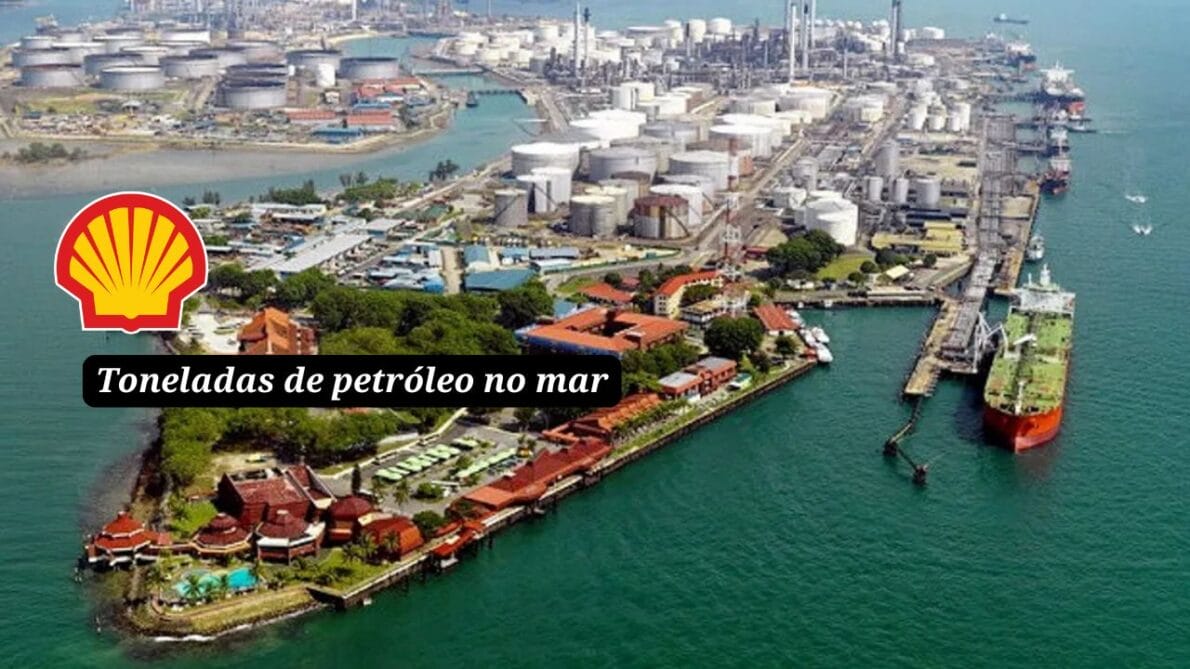

If Someone Thought Sunday Would Be Quiet in Singapore, a “Little” Incident Involving Oil Changed All Plans! A Massive Spill by Shell in the Waters of the City-State Triggered an Epic Cleanup Operation. Approximately 30 to 40 Metric Tons of Slop, a Nasty Mix of Oil and Water, Were Dumped into the Sea, Prompting an Immediate Effort by Authorities to Contain the Damage.
The incident, which occurred early Sunday morning between the islands of Bukom and Bukom Kecil, south of Singapore, was quickly confirmed by oil giant Shell, which issued a statement acknowledging the pipeline leak. The British company revealed that an internal investigation is already underway to determine the causes of the accident and minimize environmental and economic impacts.
“The containment operation began immediately, using containment barriers, anti-pollution vessels, and the application of dispersants to control the spread of oil“, Shell stated in its official note. The effort is ongoing, with several teams working on land and at sea to prevent the oil from spreading and reaching more sensitive areas.
The Maritime and Port Authority of Singapore (MPA), which is also coordinating the response, wasted no time activating its own mitigation resources. Two chain boom systems were installed as a precaution: one in Changi, at the entrance to the Johor Strait, and another in western Singapore. These devices are designed to capture any potential oil spills that may escape initial control.
-
The rise in oil prices could ensure an extra revenue of R$ 100 billion for the Federal Government, indicates a recent economic study.

-
Naturgy begins an investment of R$ 1.6 million to expand the gas network in Niterói and benefit thousands of new residences and businesses.

-
A major turn in the Justice system suspends tax increases and directly impacts oil and gas companies in Brazil by affecting costs, contracts, and financial planning, leaving uncertain what could happen to the sector if these costs had increased.

-
Brava Energia begins drilling in Papa-Terra and Atlanta and could change the game by reducing costs in oil while increasing production and strengthening competitiveness in the offshore market.

Immediate Impact of the Oil Spill
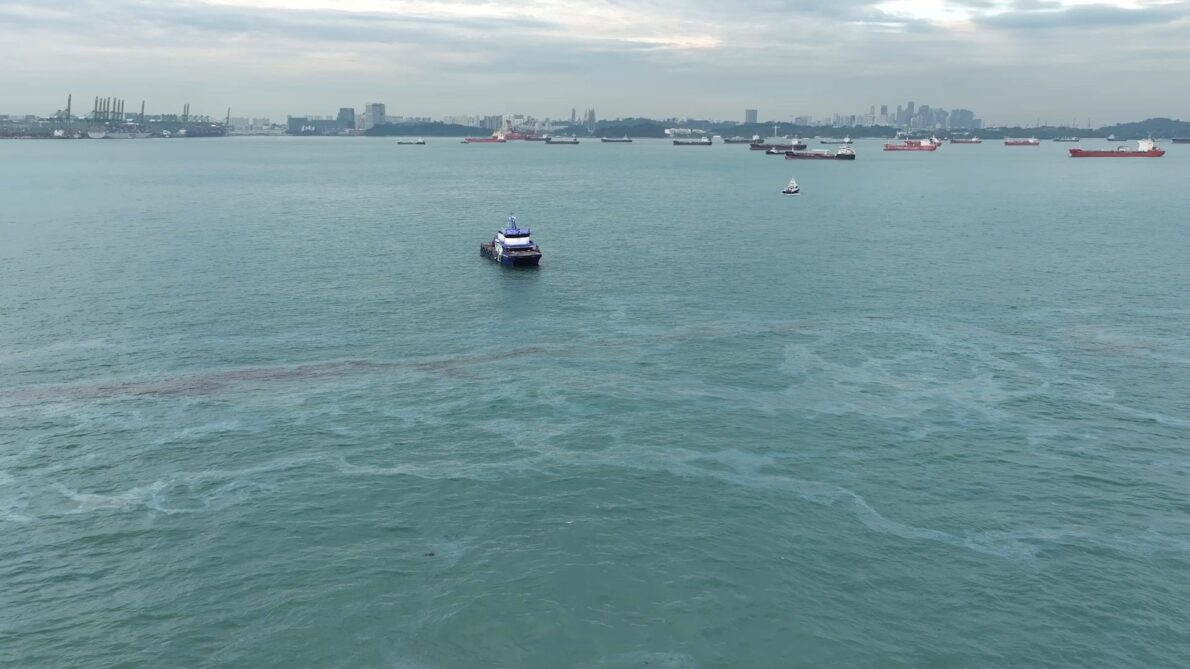
The immediate impact of the oil spill led authorities to advise the public to avoid swimming and other recreational activities at various beaches in the region. Singapore’s National Environment Agency has stepped in, constantly monitoring water quality and providing regular updates through its official channels.
So far, fishery operations, an important part of the local economy, have not been affected, but the Singapore Food Agency has already recommended that operators of these farms maintain heightened vigilance.
Shell has created a hotline for complaints to assist companies that may suffer financial impacts due to the oil spill. The oil company assured that it is in contact with local and international authorities to provide support and minimize any environmental damage.
International Cooperation and Lessons from the Past
Singapore has not only intensified its cleanup efforts but has also notified the governments of Malaysia and Indonesia about the accident. Both nations have been alerted to monitor their coasts for any signs of oil contamination.
This spill serves as a strong and recent reminder of the environmental challenges that the oil industry can bring. In June, Singapore faced a similar incident that forced the closure of popular Sentosa Island beaches for several months. At that time, the cleanup operation was completed only in September, after long weeks of work to remove the oil residue.
With a recent history of spills and the current incident involving Shell, Singapore’s environmental and port authorities remain on high alert to prevent any repetition of environmental tragedies in the future.
Shell’s Oil Spill Triggered an Urgent Response
The Shell oil spill triggered an urgent and coordinated response between the company and the authorities in Singapore. Sea cleanup, beach protection, and marine life monitoring are immediate priorities to avoid a larger environmental catastrophe.
However, this incident also reinforces the importance of investing in prevention and crisis management so that future accidents can be avoided — or at least mitigated more effectively.







Quero trabalhar na área de petroleo