





 Portuguese
  English
  Spanish
  5 min of reading
  0 comments


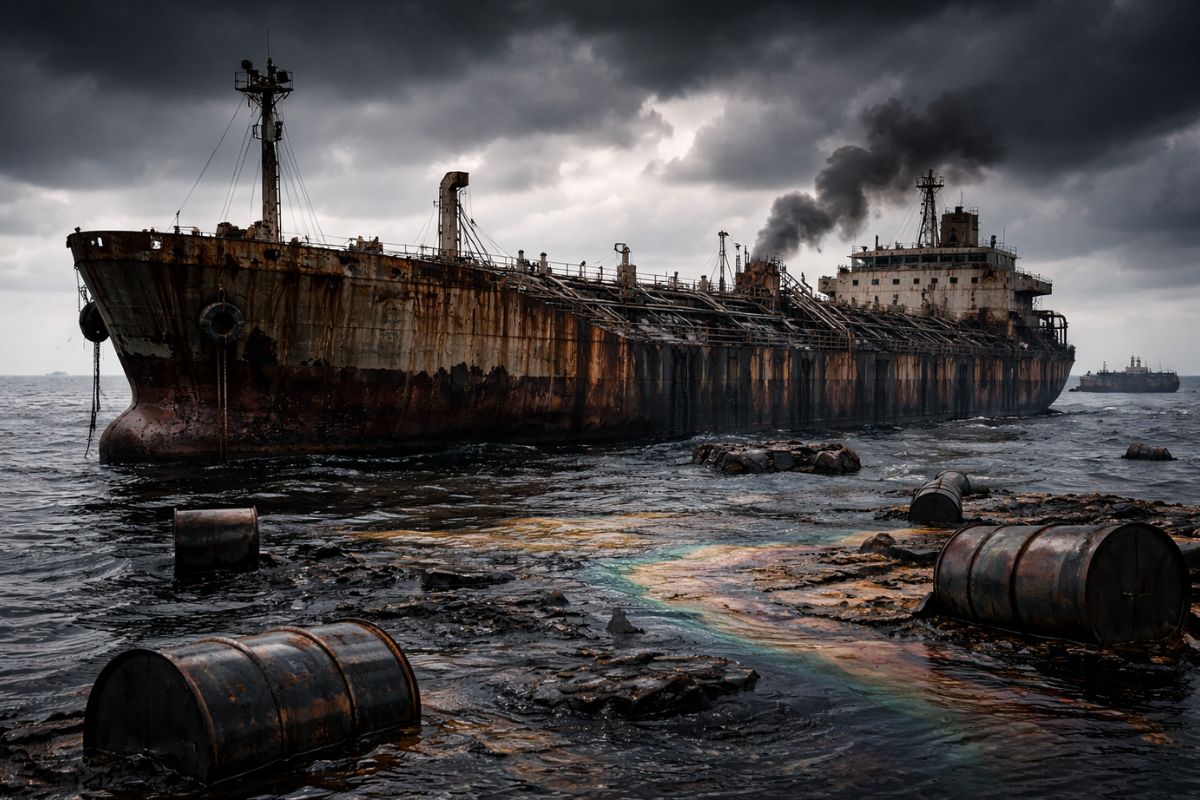
The Advance Of Abandoned Tankers Grows With Parallel Fleets Linked To Sanctions Against Russia And Iran. In 2025, 410 Ships Were Declared Abandoned, With 6,223 Seafarers Affected. Without Port, Without Clear Insurance And With Delayed Salaries, Crews Are Trapped In International Waters, Awaiting Rescue And Effective Protection
In the most discreet corridors of maritime trade, abandoned tankers have multiplied as a symptom of a crisis that mixes geopolitics, financial risk, and oversight failures. The jump is significant: in 2016, there were 20 cases; in 2025, 410 vessels, with 6,223 seafarers affected, according to the International Transport Workers’ Federation.
The human impact appears when the ship continues to exist, but the employer disappears. Without salary for months, with limited provisions and no clear route to a port, crews report shortages of basic items, onboard tension, and uncertainty about when the situation will end.
What Defines Abandonment And Why The Problem Grows In Maritime Trade

According to the International Maritime Organization, a seafarer is considered abandoned when the shipowner does not cover repatriation, leaves the crew without necessary maintenance and support, or unilaterally breaks the employment bond.
-
Friends have been building a small “town” for 30 years to grow old together, with compact houses, a common area, nature surrounding it, and a collective life project designed for friendship, coexistence, and simplicity.

-
This small town in Germany created its own currency 24 years ago, today it circulates millions per year, is accepted in over 300 stores, and the German government allowed all of this to happen under one condition.

-
Curitiba is shrinking and is expected to lose 97,000 residents by 2050, while inland cities in Paraná such as Sarandi, Araucária, and Toledo are experiencing accelerated growth that is changing the entire state’s map.

-
Tourists were poisoned on Everest in a million-dollar fraud scheme involving helicopters that diverted over $19 million and shocked international authorities.


The definition includes non-payment of contractual salaries for at least two months, a criterion that turns recurring delays into objective violations.
The recent increase has multiple layers. Conflicts, the pandemic, and instability in the supply chain raised costs and generated freight fluctuations, pressuring fragile companies.
But the ITF points to an additional vector: the expansion of parallel fleets, with old ships, opaque ownership, low oversight, and often dangerous operational conditions.
Parallel Fleets, Sanctions And The Birth Of Ships Without Visible Owners

The logic of parallel fleets is directly connected to sanctions. Ships try to “fly under the radar” to support oil exports in violation of Western restrictions, especially flows associated with Russia, Iran, and Venezuela.
These vessels operate under flags of convenience, registered in countries that offer limited regulatory oversight.
In the case of Russia, after the invasion of Ukraine in February 2022, the country faced sanctions that limited the price of crude oil. Still, it found buyers willing to pay more, such as China and India, which kept the demand for transport in grey circuits.
When a ship is marked by scrutiny, ports may avoid docking, and the crew becomes hostage to a dispute they cannot control.
Flags Of Convenience And The Structural Failure Of Oversight
Flags of convenience have existed for over a century as a way to circumvent rules of the country of origin.
The historical basis shows that, as early as the 1920s, registrations in Panama were used to circumvent domestic laws, including restrictions on the sale of alcoholic beverages on board.
Today, Panama, Liberia, and the Marshall Islands account for a large part of merchant registration by weight, but new actors have gained ground.
A recent example cited is Gambia. In 2023, there were no tankers registered in the country; by March of the following year, there were already 35. The incentive is financial, with fees paid to the host state.
The problem arises when the connection between shipowner and flag is weak or nonexistent, creating a practical void of responsibility, even when international maritime law requires a “genuine link.”
The Case Of The Ship With 750 Thousand Barrels And The Crew Trapped Outside China
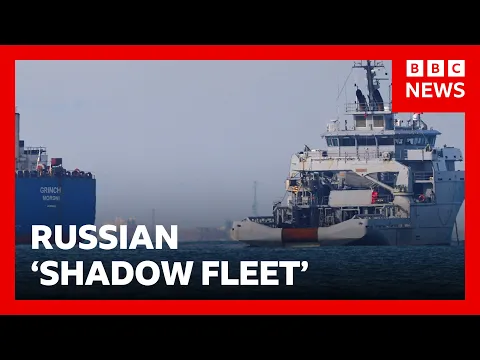

A concrete portrait of the crisis comes from the account of a senior Russian officer identified as Ivan, on an abandoned tanker outside China’s territorial waters.
The vessel, loaded with almost 750,000 barrels of Russian crude oil, valued at about US$ 50 million, left from the Russian Far East to China in early November and was considered abandoned in December, after reports of unpaid wages for months.
The ship remained in international waters, and the sensitivity of the case reportedly reduced China’s willingness to allow port entry. The ITF intervened to ensure payment until December and to send food, drinking water, and essential items.
Even with part of the crew repatriated, most remained on board, without a quick solution and with the outcome conditioned to complex operations like cargo transfer in open sea.
The Size Of The Financial Damage And Who Goes Without Salary
Abandonment is not just a logistical crisis. In 2025, crews of abandoned merchant ships were owed US$ 25.8 million, according to data from two UN agencies, the IMO and the International Labor Organization.
The ITF claims to have recovered and returned nearly two-thirds of the amount, US$ 16.5 million, but the number reveals a pattern: there is money owed, there are contracts, but the system allows delays to become routine.
In the case of the cited ship, the delayed wages totaled about US$ 175,000 at the time of the ITF’s initial intervention.
These amounts help to understand why remaining at sea becomes an impasse: without payment and repatriation, the worker loses autonomy, and psychological pressure rises with the duration of abandonment.
Who Are The Most Affected And Where Does The Problem Concentrate
The data indicates that the most affected nationality in 2025 was that of Indian seafarers, with 1,125 cases, around 18% of the total. Filipinos (539) and Syrians (309) follow.
The breakdown shows how the crisis strongly impacts countries that provide maritime labor for global routes, often in contracts where the worker has little margin for negotiation.
The institutional reaction cited includes the Indian government’s decision to blacklist 86 foreign vessels last September, after investigations identified unidentifiable owners or a lack of response to flag registrations.
This type of measure tries to reduce risk before embarkation but encounters the reality of the market: seafarers often accept the available contract, especially when parallel fleets remain as a piece of the oil supply chain.
The advance of abandoned tankers is not an isolated accident but a predictable consequence of an environment where sanctions reconfigure routes, fragile registrations reduce oversight, and owners can disappear without immediate cost.
The result is a system that transports billions in cargo, but treats the crew as a disposable variable, with delayed wages, uncertain provisions, and increasing operational risk.
If you had to choose a priority to reduce this scenario, what measure would make the most difference in practice: blocking vessels with flags of convenience and a history of abandonment, requiring verifiable insurance before embarkation, creating automatic penalties for shipowners who delay salaries, or conditioning docking to proof of guaranteed repatriation?










Seja o primeiro a reagir!