





 Portuguese
  English
  Spanish
  4 min of reading
  0 comments


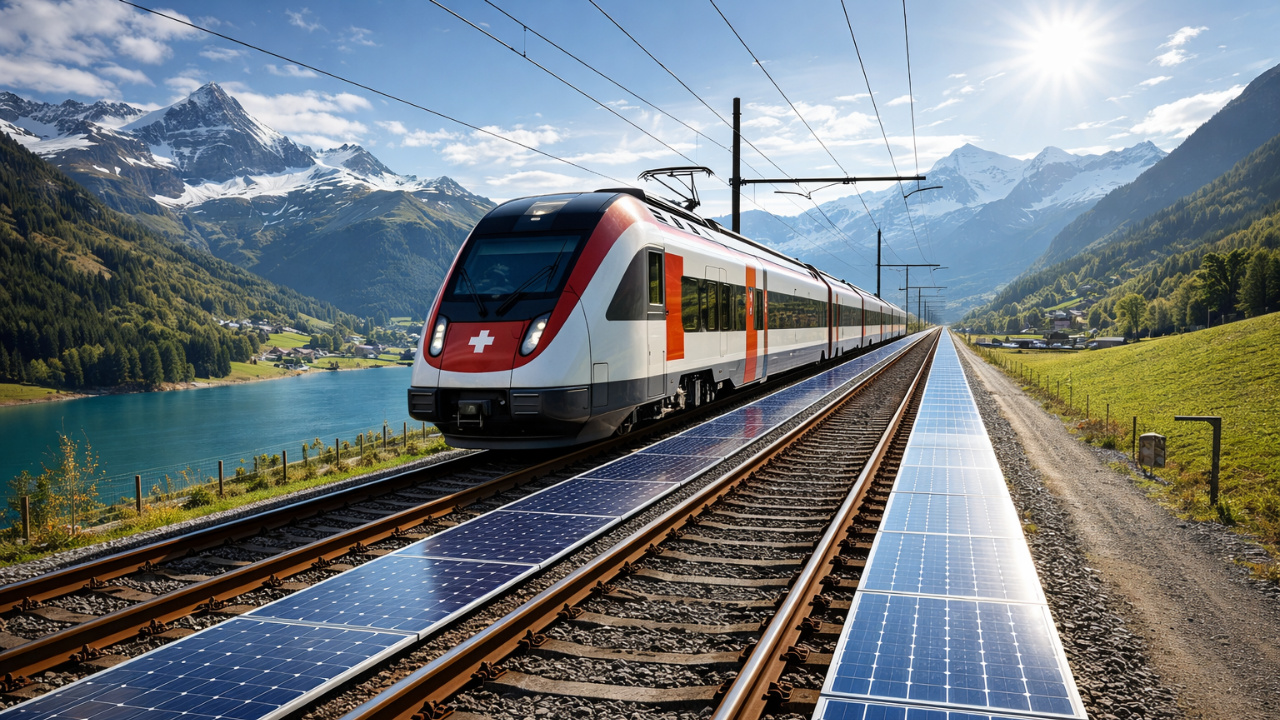
Innovative Project in Switzerland Tests Solar Energy Between Train Tracks, Combines Efficiency, Smart Maintenance and Could Redefine the Use of Rail Infrastructure in the World.
The search for new areas to expand solar energy has gained a new chapter in Switzerland. Instead of rooftops or large open areas, the focus is now on a historically underutilized space: the space between railway tracks. The proposal originated in 2020 when Joseph Scuderi, while waiting for a train in the Lausanne area, began to reflect on the hidden energy potential within railways.
Five years later, the idea came to fruition. The Swiss startup Sun-Ways inaugurated a pilot system in April 2025 with photovoltaic panels installed directly on the sleepers of an active railway line in the village of Buttes, in the canton of Neuchâtel. The project marks the world’s first initiative capable of installing and removing solar panels on operational tracks without interrupting rail traffic.
Removable Panels Expand Solar Energy Possibilities
The experimental section is 100 meters long and features 48 photovoltaic modules. They were positioned between the tracks in a similar manner to rooftop installations, according to Scuderi. The difference lies in the engineering applied. The panels are removable and can be taken out quickly whenever track maintenance is required.
-
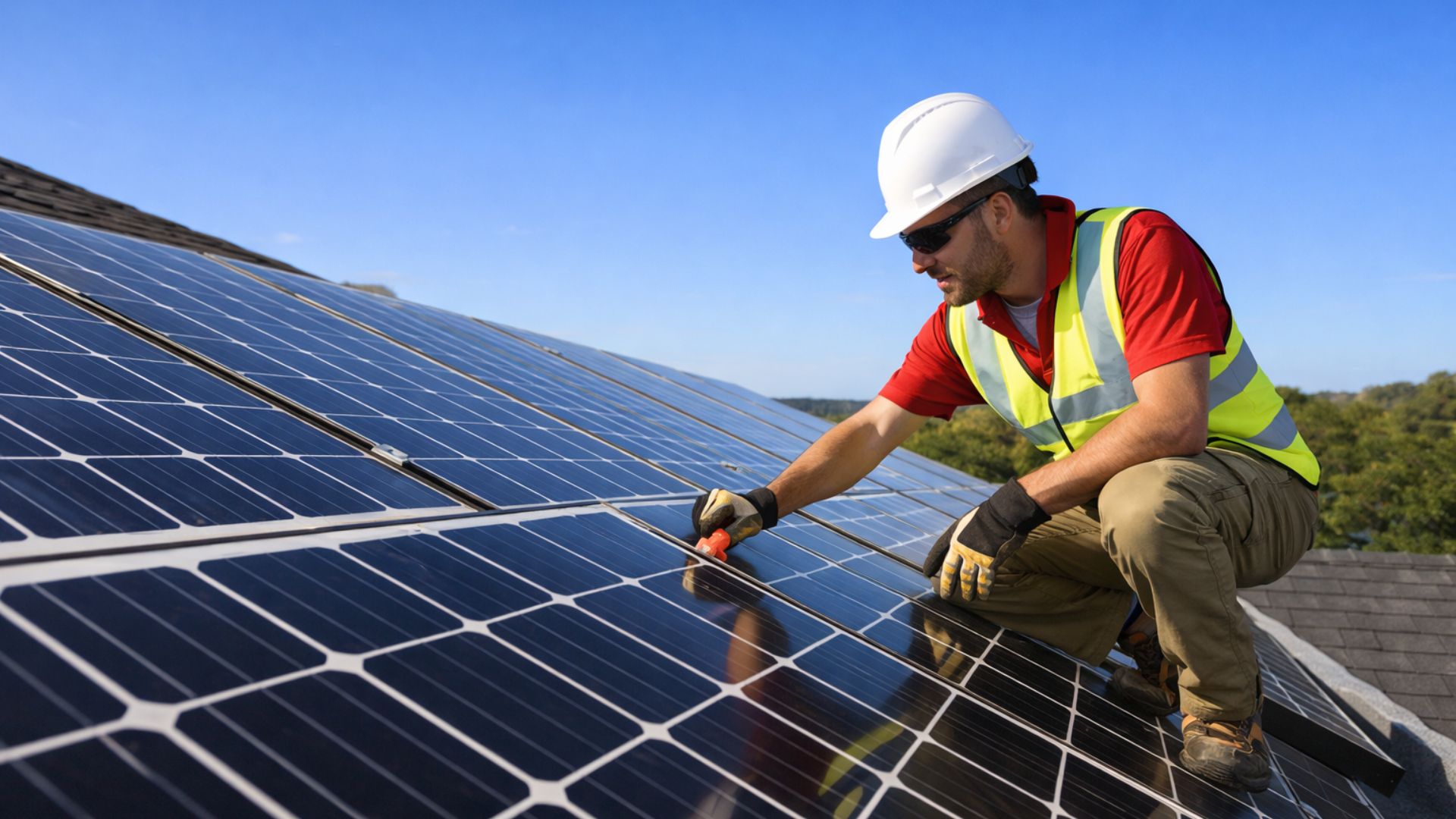
Seagri’s headquarters invests in solar energy with Neoenergia Coelba and promises to cut electricity costs, highlighting a strategic advance in sustainability and energy efficiency within state public administration.
-
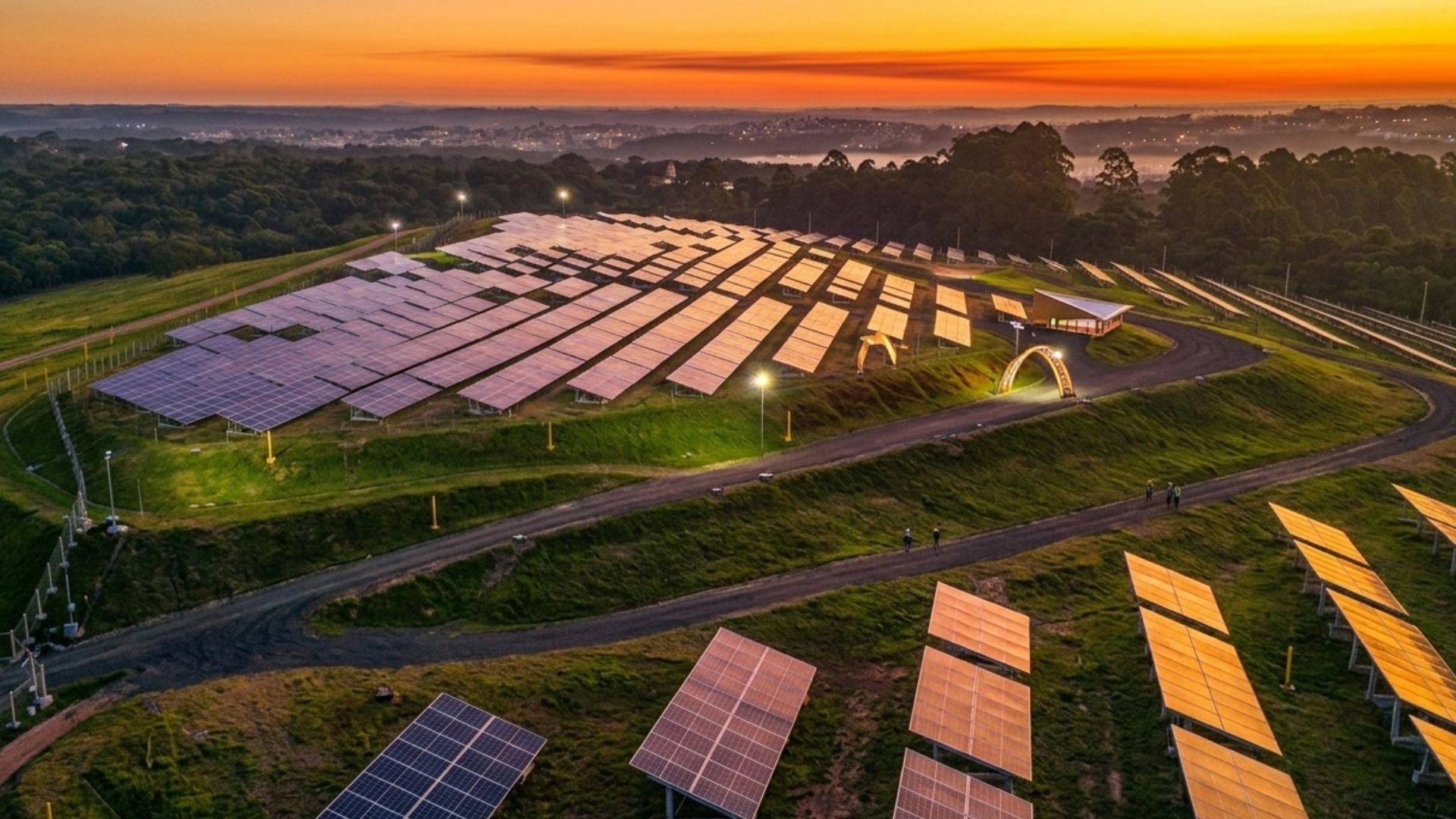
Solar Pyramid draws attention by converting solar energy into million-dollar savings and repositioning the City Hall of Curitiba as an example of innovation, sustainability, and intelligent use of public resources.
-
Europe records strong euro economy with solar energy in March and sparks curiosity about which country leads growth that redefines the energy market and reduces costs.

-
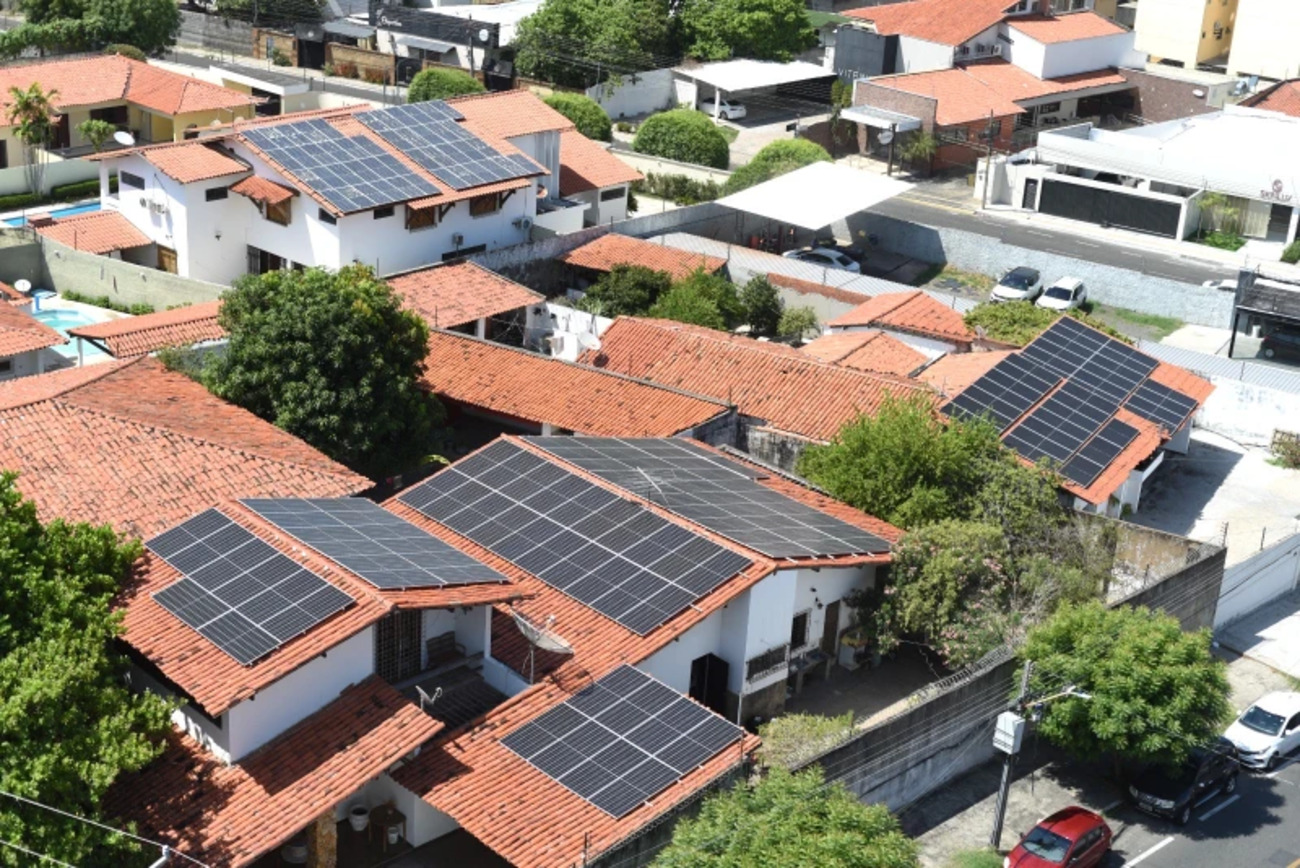
Piauí reaches a historic milestone in energy transition: State records nearly 160,000 households powered by solar energy and leads growth in the Northeast.

To achieve this, Sun-Ways developed, in partnership with the Swiss company Scheuchzer, a specific machine for the railway environment. The equipment allows the installation or removal of about 1,000 square meters of solar panels within a few hours, reducing operational risks and intervention costs.
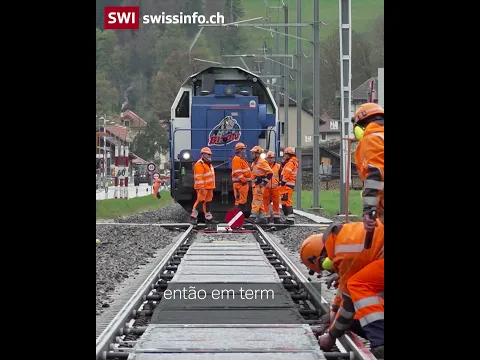

Additionally, the cleaning of the modules has been integrated into the railway routine. Cylindrical brushes attached to the back of the trains perform automatic cleaning during journeys, preventing dust buildup and ensuring consistent solar energy generation performance.
Local Production and Immediate Impact on the Electric Grid
The electricity generated by the pilot system amounts to around 16,000 kWh per year. Although the volume is sufficient to supply between four and six households, the project’s symbolic value is even greater. The energy produced is directly injected into the local grid, demonstrating the technical feasibility of integrating railways and distributed generation.
According to estimates from Sun-Ways, the initiative’s potential is significant. Switzerland has 5,320 kilometers of railway lines. Even excluding tunnels and areas with excessive shading, it would be possible to generate around 1 billion kWh per year. This volume is equivalent to the annual consumption of approximately 300,000 households, or about 2% of the country’s total electricity demand.
Public Support and Regulatory Caution Go Hand in Hand
The project received an investment of 585,000 Swiss francs, funded by the Swiss Innovation Promotion Agency (Innosuisse) and supported by around ten industrial partners. The Federal Office of Transport (FOT) also authorized the experiment but established strict conditions.
Since the trains on the Buttes section travel at a maximum speed of 70 km/h, the regulator approved the test for a period of three years. Initially, Sun-Ways had requested only six months. However, for the FOT, prolonged monitoring is essential to assess structural and operational impacts over time.
“It is crucial to observe the system’s behavior under real conditions, including climate variations and infrastructure wear,” stated Florence Pictet, a spokesperson for the agency. Nonetheless, the FOT acknowledged the initiative’s merit by highlighting the importance of public companies exploring ways to generate solar energy on existing assets.
International Interest Drives Technology Expansion
The Swiss innovation quickly crossed borders. Sun-Ways is already in negotiations with partners in South Korea, Spain, Romania, China, and the United States. In South Korea, where the railway network spans about 6,600 kilometers, industry representatives were present at the project’s inauguration.
Taebon Park, CEO of KRSPGPC, stated that the choice of Swiss technology stems from its compatibility with real railway operations. The expectation is to initiate a pilot project as early as 2025. In Japan, the Ministry of Land, Infrastructure, Transport and Tourism is following the experience, although it still raises questions about operational safety.
In Indonesia, the company Mutitron Automa plans to apply the solution initially in Bogor, on the island of Java, with the possibility of regional expansion if the results are positive.
Experts Debate Limits and Advantages of the Model
The use of removable panels is not a consensus among experts. Martin Heinrich, a researcher at the Fraunhofer Institute for Solar Energy Systems, positively evaluates the utilization of existing infrastructure but questions the need for frequent removals. According to him, conventional solar modules are designed to operate between 20 and 30 years with minimal intervention.
For Heinrich, each removal increases costs and damage risks. Still, the researcher recognizes the strategic value of the proposal. “The energy transition increasingly depends on the intelligent use of already occupied areas, especially in densely populated regions,” he states.
Multifunctional Infrastructure and Climate Goals on the Horizon
The discussion occurs at a decisive moment for Swiss energy policy. To meet its climate goals, the country needs to multiply solar energy production by seven times by 2035. In this context, solutions that do not require new areas or conflicts with land use gain prominence.
By transforming railway tracks—symbols of industrial mobility in the 19th century—into platforms for solar energy generation, Sun-Ways’ project points to a new concept of multifunctional infrastructure. In the coming years, the technical, economic, and regulatory performance of the system will be closely monitored by governments, investors, and energy sector companies worldwide.







-

-

4 pessoas reagiram a isso.