





 Portuguese
  English
  Spanish
  6 min of reading
  60 comments


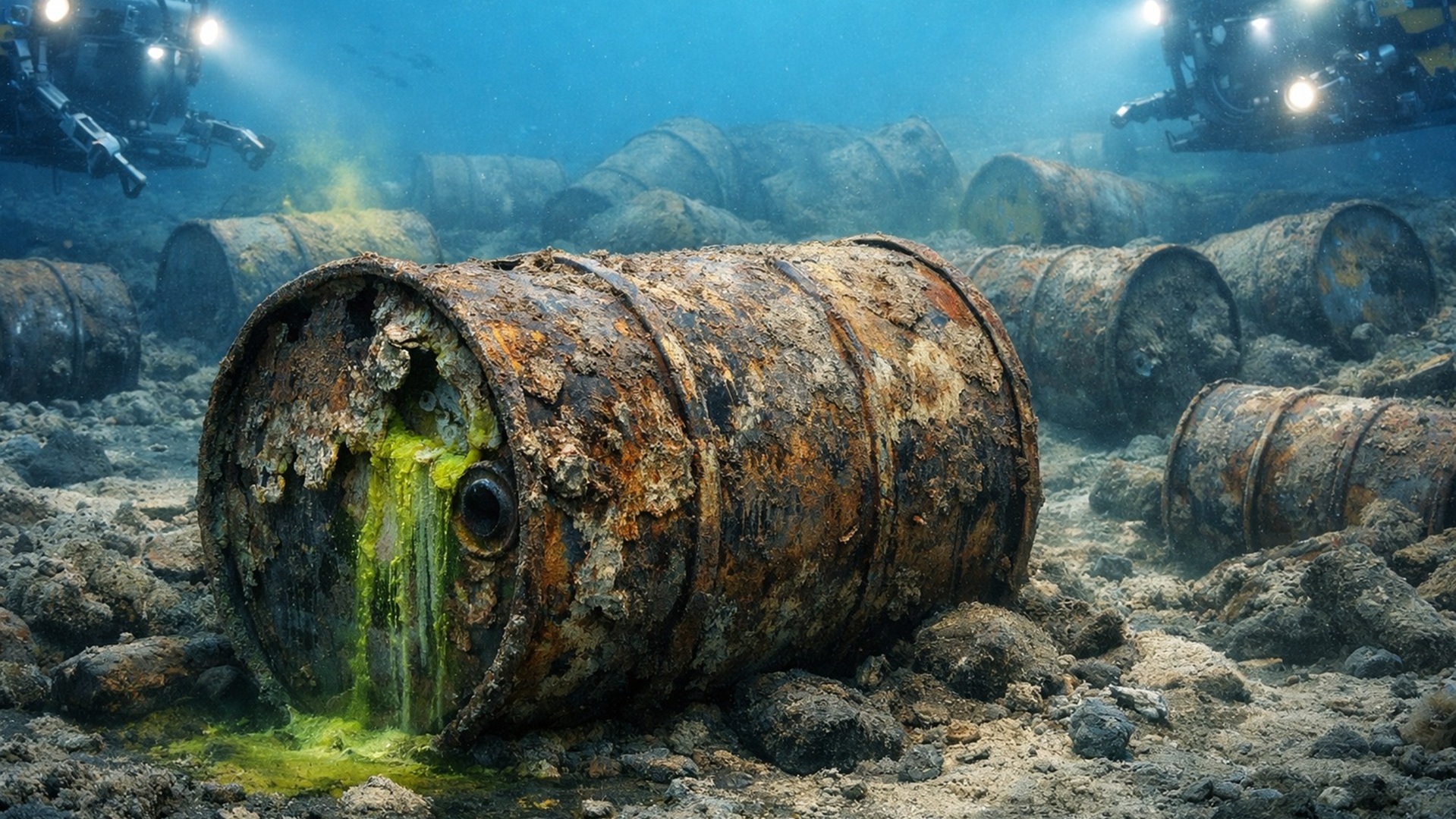


Between The 1930s And The Early 1970s, Thousands Of Drums Containing Radioactive, Industrial Chemical Residues, And Refinery Waste Were Discarded In Deep Ocean Areas, A Practice Allowed At The Time That Today Raises Environmental, Scientific, And Regulatory Alerts About Leakage, Marine Contamination, And Long-Term Risks
Did you know that, for decades, the United States dumped thousands of drums, called ‘halo drums’ containing radioactive and highly polluting waste on the ocean floor, in a poorly documented practice that is only now beginning to be investigated in detail.
This involves a vast deposit of waste deliberately dumped in deep waters over decades, whose environmental impacts are only now beginning to be more accurately understood.
Between the 1930s and the early 1970s, industrial companies and defense sectors dumped tons of waste into the Pacific Ocean, in areas officially designated for deep-water disposal along the southern California coast.
-
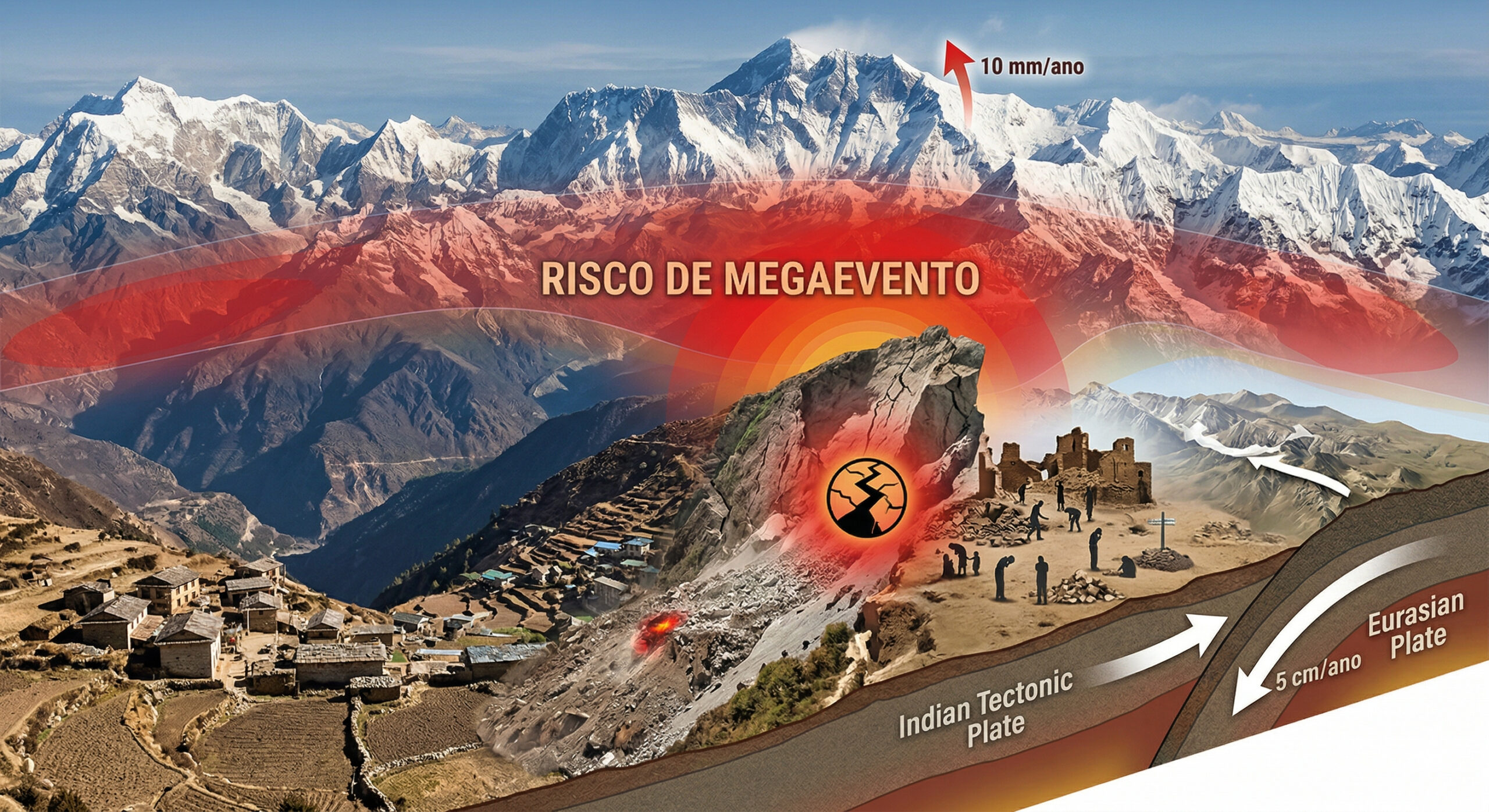
The Himalayas continue to grow to this day, with tectonic plates advancing 5 cm per year, mountains rising up to 10 mm annually, and the 2015 earthquake that killed 9,000 people may have increased the risk of an even larger seismic mega-event.
-
At an altitude of 400 km by astronauts from the International Space Station, Paris transforms at night into a golden mesh so precise that it reveals the outline of the Seine River, avenues, and entire neighborhoods like a luminous map drawn over the Earth.

-
iPhone 17 reaches historic low price with 256 GB, 120 Hz display, and drops to R$ 5,703 on Shopee, featuring A19 chip, dual 48 MP cameras, battery life of up to 30 hours, and advanced AI features.

-
Trip to Mars getting closer: Pulsar Fusion, from the UK, advances with plasma ignition in fusion engine and could drastically reduce space travel time, making crewed missions faster, safer, and economically viable.


At that time, the practice was permitted or loosely regulated, based on the premise that the deep ocean would act as a permanent dilution medium, capable of neutralizing toxic substances over time.
14 Disposal Sites

Report From The Southern California Coastal Water Research Project (SCCWRP) 1973 (pdf)
According to historical records compiled by the U.S. Environmental Protection Agency, at least 14 disposal sites were used to receive extremely diverse materials: low-level radioactive waste, petroleum refining by-products, industrial chemical waste, oil drilling waste, and even obsolete military explosives.
Many of these materials were housed in simple metal drums, with no planning for long-term storage.
For decades, these sites remained largely off the scientific radar and public debate. The great depth – often over 600 meters – , combined with technical challenges and the high cost of oceanographic expeditions, meant that the content and condition of these deposits were poorly investigated.
That has only changed recently, with the advancement of seabed mapping technologies and the use of remotely operated vehicles.
The Rediscovery Of The Submarine Chemical Graveyard

Public interest in the topic increased significantly in 2020, when an investigative report by the Los Angeles Times revealed that robotic expeditions had identified dozens of drums scattered across the sea floor.
The images showed corroded drums, partially buried in sediments, some surrounded by strange light spots on the seabed.
In the following years, broader scientific campaigns were conducted by the Scripps Institution of Oceanography, affiliated with the University of California.
In 2021 and 2023, high-resolution sonar surveys and submersible vehicles identified around 27,000 objects with a drum-like shape and over 100,000 debris scattered across the ocean floor.
These numbers reinforced the scale of the problem and raised new questions about the content of the drums. An initial hypothesis, widely discussed, was that many of them contained DDT, a pesticide widely used in the post-war era and later banned due to its environmental persistence and toxic effects.
The White “Halos” And Initial Suspicions Of DDT

The association with DDT did not arise by chance. The region has a history of contamination by this compound, and several drums observed in the underwater images were surrounded by whitish halos in the sediments – unusual formations that drew the attention of researchers.
The visual similarity to other DDT-contaminated sites led to the suspicion that the drums could be a direct source of this pesticide.
However, despite the relevance of the hypothesis, there was a lack of direct data proving the presence of the compound inside the specific drums observed on the seabed. This gap prompted a more detailed investigation, focused on the chemical and biological analysis of the sediments around the containers.
The Study That Changed The Focus Of The Investigation
In 2021, a team led by microbiologist Johanna Gutleben from the Scripps Institution, collected sediment samples near five drums using a remotely operated vehicle. The goal was to assess how the chemical composition and microbial life varied as they approached the containers.
The results, published on September 9 in the scientific journal PNAS Nexus, revealed an important surprise. The analyses showed that the levels of DDT did not increase near the drums, indicating that those specific containers did not contain the pesticide.
This finding led researchers to reconsider old hypotheses and to focus attention on other types of possibly more neglected waste.

Highly Alkaline Wastes And Extreme Environments
Three of the five analyzed drums had well-defined white halos around them. The samples collected in these areas revealed an alarming fact: the pH of the sediments was extremely high, around 12, a level considered strongly alkaline. For comparison, seawater typically has a pH around 8.
Environments with such high pH are hostile to most forms of life. This became evident in the biological analysis: the sediments near the drums with halos contained minimal amounts of microbial DNA, indicating a drastic reduction in microscopic life.
According to the team, the drums contained caustic alkaline waste, capable of destroying organic matter, profoundly altering the chemistry of the sediments, and releasing potentially toxic metals. At concentrations similar to those measured at the site, these wastes would be lethal to humans in cases of direct exposure.
What Alkaline Wastes Could These Be
The study did not specifically identify what chemical substances were inside the drums, but the researchers pointed to important clues. Common industrial processes at the time, such as the production of DDT and oil refining, generated large volumes of alkaline waste as by-products.
Gutleben highlights a relevant historical detail: the main waste from DDT production was acidic, and this material was not usually stored in drums for disposal at sea. This raises a crucial question: what type of waste was considered dangerous enough to justify the use of metal drums and disposal in deep waters?
This question remains unanswered, but it reinforces the seriousness of the material involved.
How The White Halos Form On The Ocean Floor
In addition to identifying the alkaline nature of the waste, scientists were able to explain the formation of the halos that gave the drums their name. When alkaline material leaks, it reacts with the magnesium present in seawater, forming a mineral called brucite, or magnesium hydroxide.
Brucite creates a rigid crust, similar to concrete, around the leak point. Over time, this mineral dissolves slowly, maintaining the high pH in the sediments and triggering new chemical reactions. One of these results in the formation of calcium carbonate, which deposits as a white powder around the drums, forming the visible halos.
This process helps explain why the waste persists for decades instead of rapidly diluting in seawater.
A Persistent Long-Term Pollutant
For the co-author of the study, Paul Jensen, the results indicate that alkaline waste should be treated as persistent pollutants, with environmental impact potential comparable to that of DDT.
More than 50 years after disposal, the chemical effects continue to be clearly detectable on the ocean floor. This suggests that the legacy of industrial dumping not only remains but may continue to influence the ecosystem for decades or even centuries.
What Is Still Unknown
Despite the advancements, uncertainties remain significant. The total number of drums on the seabed is still unknown, as is the exact content of most of them. It is not clear:
- How many containers remain intact
- How many have completely leaked
- What other types of waste, beyond alkaline, are present
- Whether contaminants are entering the food chain
Researchers estimate that about one-third of the drums analyzed so far display white halos, but it is unclear if this proportion will hold as new areas are mapped.
Next Steps In Research
The team suggests that the halos may be used as a visual indicator to identify drums containing alkaline wastes, helping to map the extent of contamination without the need for immediate sampling at all locations.
However, any monitoring strategy or potential removal faces enormous technical, financial, and environmental challenges.
The extreme depth, the fragility of corroded drums, and the risk of releasing even more pollutants make any intervention a complex dilemma.
This article was prepared based on data and information released by the U.S. Environmental Protection Agency, in reports from the Los Angeles Times, and in scientific research results conducted by the Scripps Institution of Oceanography, including the study published in the journal PNAS Nexus,









Algum peixe mutante kkkkk
a china faz isso vcs não fala nada né babá ovo de comunista
Crime ambiental, um dia a conta chega para os seres humanos, ate os inocentes vão pagar! Misericórdia de Deus
Os humanos que se danem. Como se esse fosse o único caso. A mãe terra (abordando tudo o que já sofrera) já foi muito mais que molestada.