





 Portuguese
  English
  Spanish
  3 min of reading
  0 comments


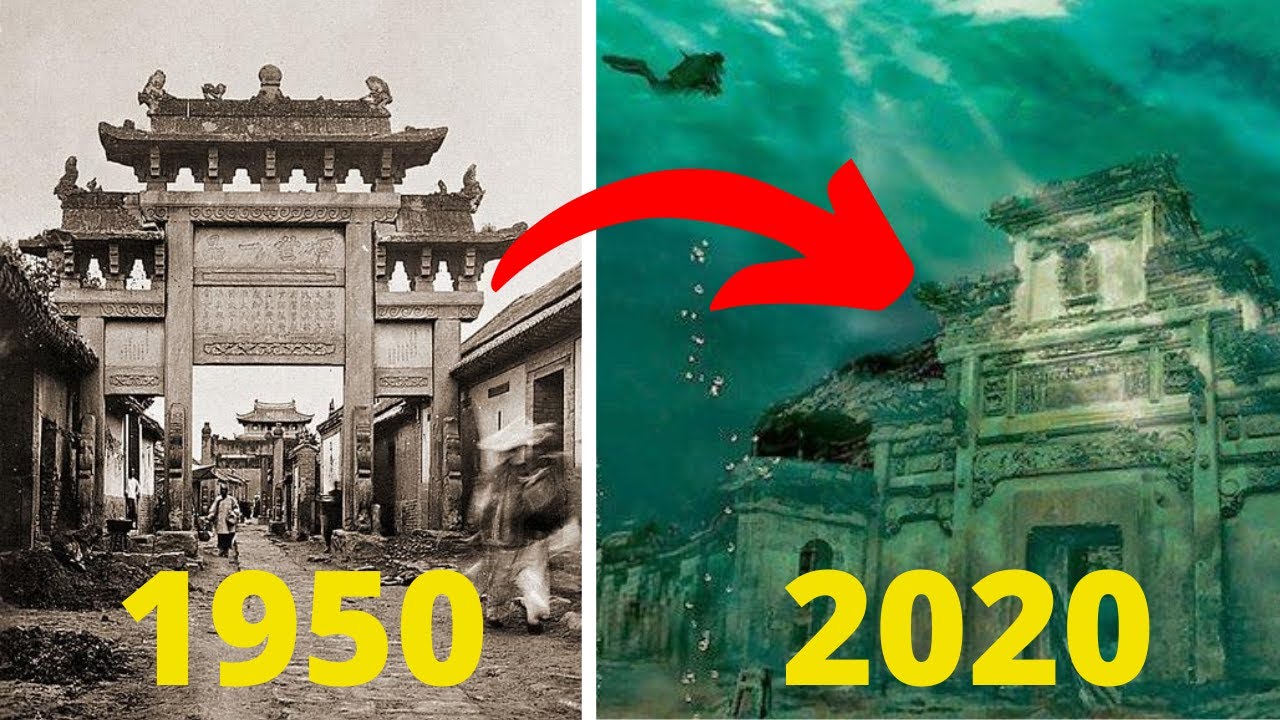
City of the Lion, submerged for 1,300 years, surfaces intact at the bottom of a Chinese lake with preserved streets, temples, and gates like an aquatic time capsule.
China is home to one of the most surprising underwater archaeological discoveries in the world: the City of the Lion, also known as Shi Cheng, an ancient urban center built over 1,300 years ago during the Eastern Han Dynasty.
Buried not by time, but by water, the city was completely submerged in the 1950s after the construction of the dam that formed Qiandao Lake, an artificial reservoir with over a thousand islands. What experts did not expect was that, decades later, the city would be almost intact under about 40 meters of depth, preserving temples, arches, paved streets, and sculptures with impressive details.
Today, Shi Cheng is considered one of the best-preserved underwater cities on the planet — a true time capsule that intrigues archaeologists and has become a treasure for historians and professional divers.
-
Friends have been building a small “town” for 30 years to grow old together, with compact houses, a common area, nature surrounding it, and a collective life project designed for friendship, coexistence, and simplicity.

-
This small town in Germany created its own currency 24 years ago, today it circulates millions per year, is accepted in over 300 stores, and the German government allowed all of this to happen under one condition.

-
Curitiba is shrinking and is expected to lose 97,000 residents by 2050, while inland cities in Paraná such as Sarandi, Araucária, and Toledo are experiencing accelerated growth that is changing the entire state’s map.

-
Tourists were poisoned on Everest in a million-dollar fraud scheme involving helicopters that diverted over $19 million and shocked international authorities.


A Millennia-Old Metropolis Preserved by Water: Temples, Gates, and Intact Architecture
Unlike other ancient ruins exposed to the elements, Shi Cheng was protected from erosion. The cold and calm water of Qiandao Lake acted as a natural shield, preserving:
- fossilized wooden structures,
- complete facades of carved stone,
- clearly visible paved streets,
- Buddhist temples and ceremonial gates,
- inscriptions in Traditional Chinese that are still legible.


The underwater cameras that recorded Shi Cheng reveal stunning scenes:
monumental gates decorated, entire staircases, perfectly aligned walls, and even architectural ornaments typical of the Ming Dynasty, despite the city having even older origins.
It is not just ruins: it is an entire city frozen in time.
The Construction of the Dam That Silenced a City and Created an Archaeological Mystery
In the 1950s, the Chinese government began the construction of the Xin’an Hydropower Plant, which required the flooding of a vast area of Zhejiang Province. The ancient Shi Cheng, already considered an important regional center, became completely submerged.
What seemed to be the end of the city ended up becoming its historical salvation. Without exposure to wind, rain, or vandalism, Shi Cheng remained untouched and long forgotten.
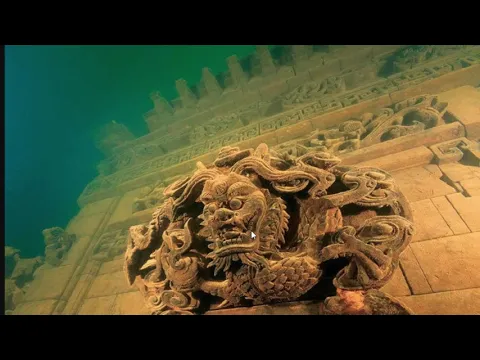
Only in 2001 did diving expeditions begin to document what was hidden at the bottom of the lake. The images amazed experts: the ceremonial arches still displayed intricate carvings, and the walls remained upright, suggesting a rare level of conservation.
Why Did the City of the Lion Remain So Preserved? Science Has an Answer
Archaeologists attribute the preservation of Shi Cheng to three main factors:
Cold and Deep Water
The 40 meters of depth create an environment with low light and stable temperature, preventing:
- deterioration by fungi,
- action of microorganisms,
- dissolution of organic materials.
Lack of Sufficient Oxygen to Corrode Structures
In low-oxygen environments, deterioration processes are drastically reduced.
Physical Protection Against Erosion and Looters
Unlike ruined cities on the surface, Shi Cheng was protected from human action. These conditions turned the city into a unique underwater archaeological laboratory.
Explorations Reveal That the City Is Bigger and More Complex Than Previously Imagined
Recent mappings using sonar and underwater drones indicate that Shi Cheng has:
- five large municipal gates,
- more than a dozen temples,
- complete preserved blocks,
- period administrative structures,
- wide streets with perfect geometric orientation.
It is so well preserved that divers claim it is possible to “swim through entire intact streets,” as if time had paused at the exact moment of flooding.
The New Frontier of Underwater Archaeological Tourism in China
Although access is restricted to preserve the ruins, China has begun promoting controlled dives in Shi Cheng. The released images are impressive:
- facades with dragon sculptures,
- imperial symbols,
- ceremonial stone pillars,
- ornate arches resembling gates of imperial cities.
Shi Cheng has earned the nickname “Atlantis of China”, but unlike the myth, this one is real and exceptionally preserved.











-

-

3 pessoas reagiram a isso.