





 Portuguese
  English
  Spanish
  6 min of reading
  0 comments


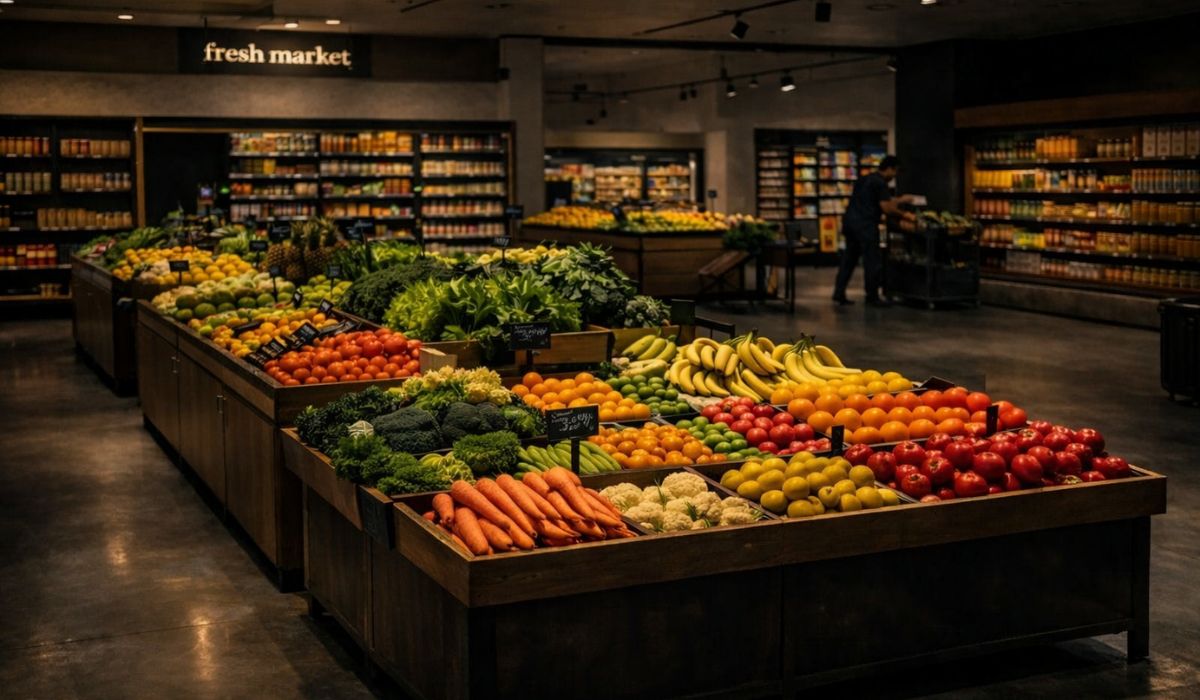
A Bet on Supermarket Fresh Products, with Million-Dollar Investment and Experience Proposal, Ended with the Closure of the Unit in Buenos Aires and Became a Reference in the Sector to Discuss Operational Costs, Consumer Behavior, and Format Adjustment in Periods of Pressed Consumption.
The Argentine chain Libertad closed the operation of a unit in Buenos Aires set up in the fresh market format, even after an estimated investment of US$ 3 million — around R$ 15.7 million, according to the conversion mentioned in the reference material.
The store operated in a space of approximately 1,800 m² in a classified premium area and had been presented as a bet on freshness, healthiness, and shopping experience.
The closure, however, began to be read in the sector as a sign of how more sophisticated formats can quickly lose viability when consumption, costs, and price sensitivity intensify.
-
The government requests the Federal Revenue Service for a new system to automate the income tax declaration, reducing errors, time, and bureaucracy for millions of Brazilians.

-
Pix in installments, international Pix, and contactless payment without internet: the Central Bank revealed the new features coming to the tool that is already used by almost every adult in Brazil.

-
Mercado Livre has just started selling medications with delivery in up to three hours to your door, and this move could completely change the way Brazilians buy medicines on a daily basis.

-
In Dubai, rising tensions from the war in the Middle East are causing super-rich individuals to leave the Gulf and direct their fortunes to a new financial refuge in Asia.


Shortly after opening, the project began to face an environment of weaker demand and high fixed costs, a scenario that pressures operations with perishable products and added services.
At the same time, competition from traditional stores, with leaner structures and a focus on prices, made the competition tougher in a region where consumers tend to compare the average ticket.
Fresh Market Format and Focus on Fresh Foods
The term fresh market describes a type of supermarket that prioritizes fresh and minimally processed foods.
In general, sectors such as fruits and vegetables, bakery, confectionery, butcher, and fishmonger stand out and occupy central areas of the store, with displays designed to reinforce the feeling of an open market, yet within a large retail operation.
In recent years, this format has advanced in different countries by following the search for healthier food and products perceived as of higher quality.
In many projects, the layout favors freer circulation, fewer visual barriers, and intense presentation of colors and volumes, in addition to including areas for quick consumption with juices, fruit salads, ready-to-eat dishes, and refrigerated beverages.
This design, according to frequent analyses of the food retail sector, tends to increase attractiveness and visit frequency when there is demand for convenience and services.
On the other hand, it also raises the complexity of the routine, as the promise of freshness depends on constant replenishment, loss control, and consistent quality standards.
Libertad Unit in Buenos Aires and Investment in Modern Concept
The Libertad unit in Buenos Aires was installed in a space of about 1,800 m² and received an estimated investment of US$ 3 million for renovations, layout, and operational structure, according to the available material.

The proposal was to cater to an urban audience with higher demands for fresh products, including items such as natural juices, fruit salads, ready-to-eat dishes, and artisanal products, always with an emphasis on controlled perishability.
In practice, the operation requires a more intensive setup than supermarkets focused on dry grocery.
Depending on the mix, areas for preparation, sanitary control, trained teams, and daily production routines enter the equation, along with the need to maintain variety without compromising turnover and quality.
Even with this structure, the sustainability of the model usually depends on volume and purchase frequency.
In locations with higher rent and fixed costs, the margin for error decreases, as the operation requires constant flow to dilute expenses and reduce the impact of losses.
Fall in Consumption and Consumer Price Sensitivity
The closure occurred in a context of weaker consumption and loss of family income, as described in the base material.
In such a scenario, customers tend to reorganize priorities, focusing more on essential items and paying closer attention to the final price of their shopping cart.
Furthermore, formats with added services may suffer more when part of the audience cuts back on spending on convenience, ready meals, or premium items.
The same logic applies to the setting: when budgets tighten, the shopping experience usually gives way to cost-benefit considerations.
As a result, competition from more traditional operations, with a more economical profile, tends to gain relevance.
In areas with varied options, customer flow may migrate towards stores that offer lower prices, even if they provide fewer services and less differentiation.
Operational Costs, Perishability, and Specialized Labor
In stores focused on fresh products, perishability is a determining cost factor.
Products with a short shelf life require frequent restocking, constant review of displays, and disposal when demand does not keep pace with planned volume.
When movement decreases, balancing variety with loss control becomes more challenging, a point noted as typical in this type of format.
Labor also weighs more heavily in this model.
Sectors such as bakery, confectionery, and areas for ready dishes typically require larger teams and preparation and replenishment routines throughout the day.
Additionally, quality standards tend to demand more rigorous training and supervision.
Fixed costs associated with spaces in shopping centers and malls, which often have higher occupancy costs and less flexibility for quick adjustments, add to these challenges.
Under these conditions, any drop in revenue impacts the operation more intensely, as a significant portion of costs does not decrease at the same pace.
Premium Location, Mall, and Competition in the Surrounding Area
A location in a premium area usually brings visibility and potential customer base, but it also increases the level of spending necessary to keep the store operational.
The base material points out that, in the same region, more traditional and lower-cost formats managed to capture part of the flow, especially with a consumer more sensitive to the average ticket.
This dynamic is common in the food retail sector: when the economic environment deteriorates, price comparison gains weight, and service differentiation may not compensate for the final difference in the cash register.
Therefore, stores with a premium proposal become more exposed if they cannot balance value promise and competitiveness.
Even though the concept aims at a demanding urban audience, performance depends on whether the customer is willing to pay consistently for items and services related to freshness, preparation, and convenience.
If disposable income decreases, adherence tends to drop, and the operation needs to react quickly to avoid imbalance.
Societal Change in 2024 and Adjustments in Interior Argentina
The material informs that, in 2024, the Argentine chain underwent a change in ownership control and was sold to a Latin American conglomerate, maintaining operations in cities in the interior such as Córdoba, Mendoza, and San Juan.
In areas outside the capital, according to the same description, the company adjusted format, store sizes, and mix to the local consumption profile, keeping a focus on fresh products but in leaner models.
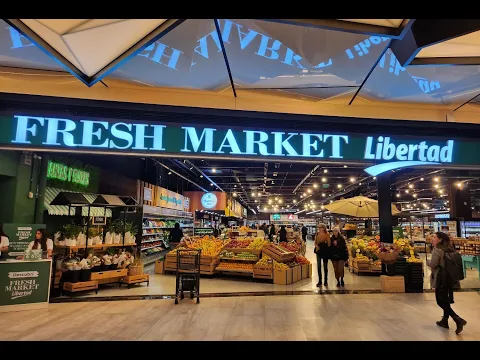

In retail terms, this difference between cities usually changes the business equation.
Occupancy costs, logistics, and competition vary significantly, and the same concept may require adaptations to sustain itself in environments with distinct income levels, shopping habits, and levels of competition.
The case of the Buenos Aires unit, in this context, does not eliminate the presence of the fresh market as a strategy but suggests that the format needs fine-tuning between value proposition, cost structure, and consumer behavior in each region.
What the Closure Signals for Food Retail
The closure of the unit in the Argentine capital has been seen in the sector as a warning about the risks of sophisticated formats in unstable scenarios, especially when there is dependence on high turnover and a public willing to pay more for services and ambiance.
In volatile markets, pressure for efficiency increases, and operations with perishables need to reinforce discipline in assortment, purchasing, pricing, and loss control, as is often pointed out by sector analyses.
At the same time, the case reinforces the importance of contracts and fixed costs that align with different demand scenarios.
When the operation is in an expensive location and revenue fluctuates, the sustainability of the model becomes more sensitive to any changes in consumption.








-

Uma pessoa reagiu a isso.