





 Portuguese
  English
  Spanish
  5 min of reading
  72 comments


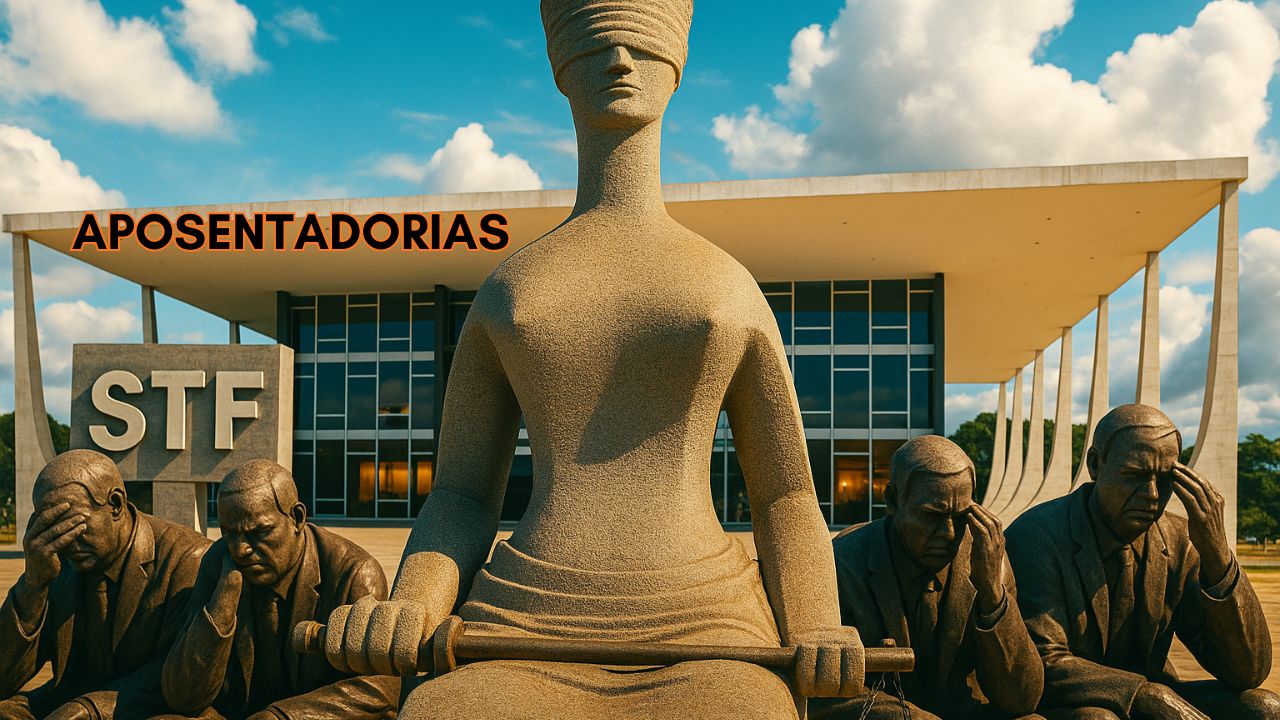


With a Score of 5 to 4 to Overturn the Reduction of Disability Pensions, STF Suspends Judgment of the Rule Created in 2019, Which Remains Effective Without a Date for New Review.
The Federal Supreme Court suspended the judgment that discusses whether the rule of the 2019 pension reform, responsible for reducing the amount of disability pensions in cases of severe, contagious, or incurable illness, is constitutional or not. Until the interruption, the score was 5 to 4 to consider this reduction unconstitutional, which would pave the way for the recovery of the full benefit amount in several situations.
While the legal debate progresses slowly, those dependent on disability pensions remain bound by a rule that pays less for those who have been definitively removed from work due to health issues. The process discusses an appeal from INSS against a decision from the Federal Court of Paraná, which guaranteed a policyholder the full payment of the benefit, and may have a direct impact on numerous similar cases across the country.
What Is at Stake in Disability Pensions
In practice, the STF is assessing whether the calculation method created in 2019 for disability pensions violates the Constitution. The former disability pension has come to be called permanent incapacity retirement, but the heaviest change has been to the policyholder’s pocket.
-
The Chamber opens a debate on driver’s licenses at 16 years old as part of a reform that includes around 270 proposals to change the Brazilian Traffic Code and may redesign rules for licensing, enforcement, and circulation in the country.

-
The new Civil Code could revolutionize marriages in Brazil with “express divorce” and changes that could exclude spouses from inheritance.
-
Banco do Brasil sues famous influencer for million-dollar debt and intensifies debate on delinquency, risks of seizure, and direct impact on Gkay’s credibility.

-
The Senate approves a bill that criminalizes misogyny, hatred, or aversion towards women, and includes the crime in the Racism Law with a penalty of up to 5 years.


Before the reform, those who had disability pensions due to severe, contagious, or incurable illness received the benefit in full. With the new rule, this situation changed: the amount was calculated at 60 percent of the arithmetic average of contributions, with an increase of 2 percentage points for each year that exceeds 20 years of contributions for men and 15 years for women. Full payment was restricted to cases of permanent incapacity resulting from work accidents.
How the 2019 Reform Changed the Calculation
The discussion in the STF revolves around whether this formula, created by the 2019 reform, unfairly treats those relying on disability pensions for severe illness. Under the new system, many policyholders began receiving significantly less just when they lose the ability to continue working altogether.
Under the current model, the permanent incapacity pension derived from severe illness is no longer automatically full. Instead, it follows the standard calculation of the reform, which reduces the initial amount and only increases it gradually based on additional contribution time.
For the ministers who see unconstitutionality, this violates the social protection guaranteed by the Constitution, as it affects exactly those who are in the most vulnerable situation.
Votes for Maintaining the 2019 Rule
The judgment began in a virtual environment in September, when the rapporteur, Minister Luís Roberto Barroso, voted in favor of the INSS to maintain the rule that reduced disability pensions. According to him, the changes from the 2019 reform would be valid and compatible with the need for fiscal balance in the social security system.
Upon resuming the case in a in-person session, the votes of Cristiano Zanin, André Mendonça, and Nunes Marques aligned with the rapporteur’s understanding. This group of ministers believes that the reform can establish new criteria for benefits, including for disability pensions, as long as they adhere to general constitutional parameters and consider the sustainability of social security accounts.
Votes Against the Reduction of Disability Pensions
A turning point occurred when Minister Flávio Dino presented his divergent vote, arguing that the reduction of disability pensions in cases of severe illness is unconstitutional.
He argued that, although pension reforms are necessary due to fiscal constraints, the social rights guaranteed by the Constitution must be preserved.
In his vote, Dino highlighted the concrete situation of the policyholder who was considered temporarily incapacitated and, upon being classified as permanently incapacitated, sees his income decrease.
The minister pointed out the contradiction of a person only receiving full protection if they suffer a work accident, while those who become ill throughout their working life may have their benefits reduced. He argued that all incapacity benefits should be reviewed within a period of 12 months, with corrections paid in a lump sum.
This view was supported by ministers Edson Fachin, Alexandre de Moraes, Dias Toffoli, and Cármen Lúcia, forming a provisional majority of 5 votes to overturn the rule reducing disability pensions for severe illness.
Tight Score and Suspended Judgment
With the score at 5 to 4 against the reduction of disability pensions, the judgment was suspended with no scheduled date for return. There are still votes from Gilmar Mendes and Luiz Fux, which could confirm the current trend or reverse the scenario.
While the STF does not conclude the analysis, the 2019 rule remains in effect. This means that, in practice, anyone applying today for permanent incapacity retirement due to severe illness is still subject to the reduced calculation, even with a provisional majority already formed in the Supreme Court indicating the unconstitutionality of the reduction.
What Could Happen to the Policyholders
If the understanding that considers the reduction of disability pensions unconstitutional is confirmed, the impact could be significant.
Benefits granted after the 2019 reform for severe, contagious, or incurable illness may be entitled to a reconstitution of the amount, coming closer again to the logic of full retirement in these cases.
On the other hand, if the INSS’s thesis prevails at the end of the judgment, the current rule will be consolidated by the STF, and the reduction of disability pensions will continue to be applied until a new legislative change occurs.
In both scenarios, the outcome should guide future decisions of the Justice system and the INSS itself, with direct repercussions on the income of those who depend on these benefits to survive.
And now, while the STF does not define the outcome, your opinion matters: do you think it is fair to maintain the 2019 rule that reduces disability pensions for severe illness, or should the benefit return to being full in these cases?








Absurdo: “necessidade de manter equilíbrio fiscal nas contas da previdência”. Quer dizer: o governo administra mal a previdência, e quem paga o rombo, que o governo ocasionou, é o lascado segurado. Eu pago a previdência desde 1973. Me aposentei em 2020 e continuo pagando a previdência. Já pago faz 52 anos. Enquanto isso, o trabalhador rural nunca deu um centavo pra previdência, e recebe seu salário e não paga nada. Como que pode?!? Marmota grande esse país ****
Sim com certeza só aposentado nesse sistema acreditei que Lula ia mudar mais foi só pra ganhar voto mais a resposta vai vim nas urnas 2026 e logo ali
Não. Na hora que se precisa de dinheiro para comprar medicamentos, o valor diminui.